

Table of Contents
- Why Small Bathroom Storage Fails (And How to Fix It)
- Over-the-Toilet Storage That Fits Real Bathrooms
- Under-Sink Bathroom Organizers That End the Avalanche
- Bathroom Storage Without Cabinets: Renter-Friendly Options
- Vertical Bathroom Storage: Use the Wall You Already Have
- Budget Tiers: What Affordable Actually Costs
- Matching Storage to Your Bathroom Layout
- Frequently Asked Questions
Last Updated: October 21, 2026
Why Small Bathroom Storage Fails (And How to Fix It)
Most small bathrooms don't fail for lack of space. They fail because the space gets used badly. A deep cabinet with one sad shelf, a bare wall above the toilet, a vanity packed so tight you can't see what you own: that's not a storage problem, it's a planning problem. At The Reset Aisle, we've built our whole catalog around one idea, which is that the belongings you already have can work harder before you buy anything new.
Measure First: The 15-Minute Space Audit
Grab a tape measure and a notepad, then record four numbers: the width and height of your empty wall space, the inside depth of your cabinet under the sink, and the clearance between your toilet tank and the wall. Write down where the plumbing trap sits too. That pipe is the reason most under-sink organizers get returned, because a shelf that ignores it wastes half the cabinet.
Over-the-Toilet Storage That Fits Real Bathrooms
Over-the-toilet storage is a shelving unit or cabinet that straddles the toilet tank to claim the dead wall space above it. It works best when you have at least 30 inches of clearance from the floor to any obstruction and a tank that sits close to the wall.
Here's the trade-off nobody mentions: over-the-toilet units put weight above a wet zone. Keep the heavy bottles on the bottom shelf and reserve the top for light items like toilet paper and rolled towels.
Under-Sink Bathroom Organizers That End the Avalanche
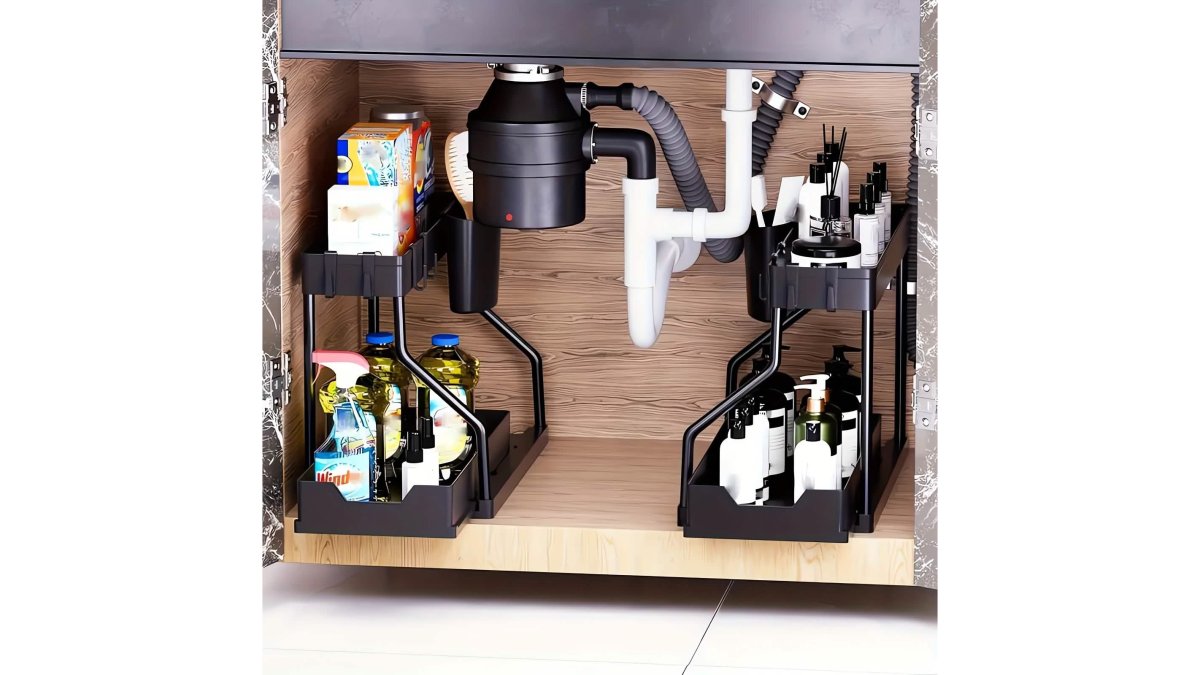
The fix for a cabinet that swallows everything is a pull-out organizer that brings the back of the cabinet to you. Our 2-Tier Under Sink Organizer at $49.99 includes removable side hooks and a hanging cup for brushes and small accessories. If you want the simplest version, the Under Sink Organizer with Sliding Shelves at $34.99 is a two-piece kit with plastic baskets on a metal frame.


What to Store Under a Bathroom Sink
Group by how often you reach for something, not by product type. Daily items like toothpaste, deodorant, and face wash go on the top tier. Weekly items like cleaning supplies and spare shampoo go below. Reserve the back corners for refills and backup toilet paper, and use the hooks for brushes so they dry instead of sitting in a puddle.
Bathroom Storage Without Cabinets: Renter-Friendly Options
No cabinets, no drilling, no problem, but "no-drill" is not one category. It is three, and each one fails in a different way. Pick the wrong one and you either lose your deposit to peeled paint or watch a shelf full of towels come down at 2 a.m.
The Three No-Drill Mounting Types
Adhesive mounts use pressure-sensitive strips or glue pads on smooth, non-porous surfaces: glazed tile, glass, sealed metal, and smooth painted drywall.
Tension-mounted poles and caddies wedge between floor and ceiling or between two walls using spring or twist pressure.
Freestanding units, over-the-toilet racks, rolling carts, slim floor cabinets, and leaning ladders, need no wall contact at all and are the most forgiving choice for renters.
Surface Prep That Decides Whether Adhesive Holds
- Wipe the surface with isopropyl alcohol and let it dry completely, steam and soap film are the two most common reasons adhesive fails.
- Mark your placement with painter's tape before you commit; adhesive strips are far less forgiving than a pencil line.
- Press the mount firmly for the full time the instructions specify, then wait the recommended cure period before hanging anything. Most failures happen because people hang weight in the first hour.
- Keep adhesive mounts out of direct shower spray and away from the hottest, steamiest zone; sustained humidity weakens the bond over months.
Our Wall-Mounted Hook Rack at $29.99 is an adhesive-mounted option with 4 to 10 adjustable hooks for towels, robes, and loofahs. It is designed for smooth, non-porous surfaces, skip it on textured or freshly painted walls that might peel.

Removal and Deposit Protection
Before you install anything adhesive, photograph the bare wall. When you move out, warm the strip slightly with a hair dryer, then pull slowly and parallel to the wall rather than out from it. Tension poles come down in seconds with no trace. Freestanding units leave nothing but dust. If your lease prohibits wall damage of any kind, freestanding and tension options are the only two categories that carry zero risk, plan around them first, then add adhesive only where you can afford to lose a little paint.
A Renter's Decision Shortcut
- Can't touch the walls at all? Freestanding over-the-toilet rack or rolling cart.
- Smooth tile, willing to risk a strip? Adhesive hook rack for towels and robes.
- Shower corner with a solid ceiling? Tension caddy for bottles and brushes.
Vertical Bathroom Storage: Use the Wall You Already Have
Vertical bathroom storage means going up, not out. A wall above the door, the strip beside the mirror, and the space behind the door are all unused real estate in most small bathrooms. Hooks and a slim wall-mounted rack turn that dead space into towel and robe storage. Floating shelves above the toilet hold baskets of toiletries. The rule that keeps it looking calm instead of cluttered: one vertical zone per wall, and nothing hung higher than you can reach without a stool.
Budget Tiers: What Affordable Actually Costs
Affordable is a range, not a single number. Here's how we'd tier it, with our own prices as reference points.
Pull-Out Cabinet Organizer – Under Sink Sliding Storage Drawer →
| Tier | Typical Spend | What You Get | Our Pick |
|---|---|---|---|
| Starter | Under $35 | One or two targeted fixes | Under Sink Organizer with Sliding Shelves, $34.99 |
| Mid | $35-$50 | Full under-sink or wall system | 2-Tier Under Sink Organizer, $49.99 |
| Add-on | Under $30 | Hooks, drain protection, small extras | Wall-Mounted Hook Rack, $29.99 |
You don't need to spend it all at once. Buy the piece that fixes your worst daily friction first, live with it for a week, then add the next.
Moisture, Weight, and Safety Checks
Bathrooms are humid, and humidity is what kills cheap storage. Wipe pull-out racks dry regularly, keep plastic organizers away from direct shower spray, and check adhesive mounts monthly since steam weakens the bond over time. Distribute weight evenly across shelves and never load a top tier with heavy bottles. For the floor, a Silicone Drain Hair Catcher at $19.99 keeps hair out of the drain and off your stored supplies.
Matching Storage to Your Bathroom Layout
The right setup depends on your floor plan, not a generic checklist. Competitors list ideas; the useful move is to match one solution to each constraint using the numbers from your audit. Here is how the common layouts break down, with the measurements that actually decide whether a product fits.
No Vanity (Pedestal Sink)
A pedestal sink gives you a basin and a pipe, no cabinet, no counter run. The floor around the pedestal is usually the only storage footprint you have, and it is narrow. Wall space above and beside the pedestal is your second zone: a floating shelf or a hook rack carries towels and daily toiletries that would otherwise live on the floor.
Tiny Full Bath With a Small Shower
When the shower stall eats one wall, the door swing eats another, and the toilet claims a third, your only reliable zone is vertical. Measure the wall above the toilet: you need roughly 30 inches of clear height from the floor to any obstruction for a standard over-the-toilet rack, and the unit's base legs must clear your baseboard. A wall-mounted rack beside the mirror and hooks on the back of the door add capacity without adding footprint.
Long, Narrow Bathroom
A long narrow room rewards a wall-to-wall floating shelf above the toilet and hooks on the end wall, because the long wall is the only surface with real run. The constraint here is depth: a shelf deeper than about 10 inches starts to feel like a low ceiling when you walk past it. Keep shelves shallow, mount them high enough to clear heads, and use the end wall for vertical towel storage rather than trying to squeeze a cabinet into the narrow floor strip.
Shared Bathroom
Shared bathrooms fail on ownership, not space. Give each person a labeled bin or basket on their own shelf tier, and keep the daily-use items on the tier closest to eye level so nobody digs. A two-tier pull-out under the sink works well here because each tier can belong to a different person. Reserve the back corners for shared refills and backup toilet paper, and use hooks for brushes so they dry instead of sitting in a puddle.
Powder Room With No Tub
A powder room needs towel hooks and a slim cabinet, nothing more. There is no shower humidity to fight, so materials are less of a concern, but the room is often the most visible in the house, favor closed storage over open baskets so the space reads calm. A single over-the-toilet cabinet or a narrow floor cabinet beside the sink is usually enough.
The Fit Checklist Before You Buy
- Door swing: tape the arc on the floor; any freestanding unit must sit outside it.
- Toilet clearance: at least 30 inches of floor-to-obstruction height for an over-the-toilet rack, and base legs that clear the baseboard.
- Shelf depth: keep wall shelves around 10 inches deep or less in walk-past zones.
Frequently Asked Questions
What are some cheap storage ideas for small spaces?
Start with the space you already have rather than buying new furniture. A pull-out under-sink organizer at $34.99 to $49.99 turns a deep cabinet into usable storage, and an adhesive wall hook rack at $29.99 adds hanging space without drilling. Stacking bins, over-the-door hooks, and shelf risers cost little and use vertical room you are not currently touching. Measure your cabinet depth and wall width first so you buy once, not three times.
How can I add storage to a small bathroom without remodeling?
Renter-friendly additions do the work: adhesive hook racks, over-the-toilet shelving, freestanding slim carts, and under-sink pull-out organizers. None require a contractor. The Wall-Mounted Hook Rack from The Reset Aisle uses adhesive on smooth, non-porous surfaces and holds towels, robes, and bath accessories. Pair it with a two-tier under-sink rack to reclaim cabinet space you cannot currently reach. Total cost stays under $100 for most bathrooms.
What can I store under a bathroom sink?
Under-sink space suits cleaning supplies, toiletries, extra shampoo and conditioner, backup toilet paper, and small tools. The catch is the plumbing trap, which eats the center of the cabinet. A pull-out organizer with sliding shelves works around it by letting you reach items without crawling inside. Keep heavy bottles on the lower tier and avoid placing excessively heavy items in plastic pull-out drawers, since the listing notes they are not built for that.
How can I use vertical space for bathroom storage?
Walls above the toilet, beside the vanity, and behind the door are usually empty. Over-the-toilet shelving adds three to four usable shelves in about 2 square feet of floor space. Adhesive hook racks hold towels and robes at eye level. Slim floating shelves above the toilet handle toiletries and decorative items. The rule: anything you use weekly should sit between knee and shoulder height, so you are not stretching or crouching daily.
What are the best affordable organizers for a small bathroom?
Three categories cover most small bathrooms: pull-out under-sink organizers ($34.99 to $49.99), adhesive wall hook racks ($29.99), and over-the-toilet shelving. The Reset Aisle's Under Sink Organizer with Sliding Shelves at $34.99 is the lowest-cost entry point and fits most standard cabinets. Add a 2-Tier Pull-Out rack at $49.99 if you have bottles and brushes to separate. Measure cabinet width and height before ordering, since a rack that does not clear the plumbing trap wastes money.
Small bathrooms don't need a remodel. They need a reset. At The Reset Aisle, we curate space-saving organizers built to make the belongings you already own work harder, from pull-out under-sink racks to no-drill wall hooks, all designed to bring calm and control to cluttered spaces. Start your reset with The Reset Aisle and turn your smallest room into your most organized one.