

Table of Contents
- Why Look Beyond IKEA for Home Organization?
- Best IKEA Alternatives for Home Organization: Quick Comparison
- The Reset Aisle: Curated Storage for Specific Spaces
- Affordable Home Organization Stores That Prioritize Quality
- How to Organize a Home with Limited Space: Key Principles
- Best Practices for Decluttering and Storage That Last
- Assembly, Durability, and Return Policies: What to Check Before Buying
- Conclusion: Choose Storage That Works With Your Life
- Frequently Asked Questions
Last Updated: September 7, 2026
IKEA has long been the default for affordable home organization, but its flat-pack furniture often struggles in awkward spaces and fails to hold up to daily use. For durable, space-saving solutions, the best IKEA alternatives for home organization go beyond particleboard shelving to offer curated, functional design.
The real cost of budget furniture isn't the price tag but the replacement cycle. Invest in organizers built for specific zones, pantries, closets, drawers, rather than generic units that fit nowhere perfectly.
Why Look Beyond IKEA for Home Organization?
Shoppers seek alternatives due to the mismatch between flat-pack logistics and real-world spaces. While IKEA excels at minimalist aesthetics and low pricing, its furniture requires significant assembly time and may lack sturdiness for heavy items like canned goods.
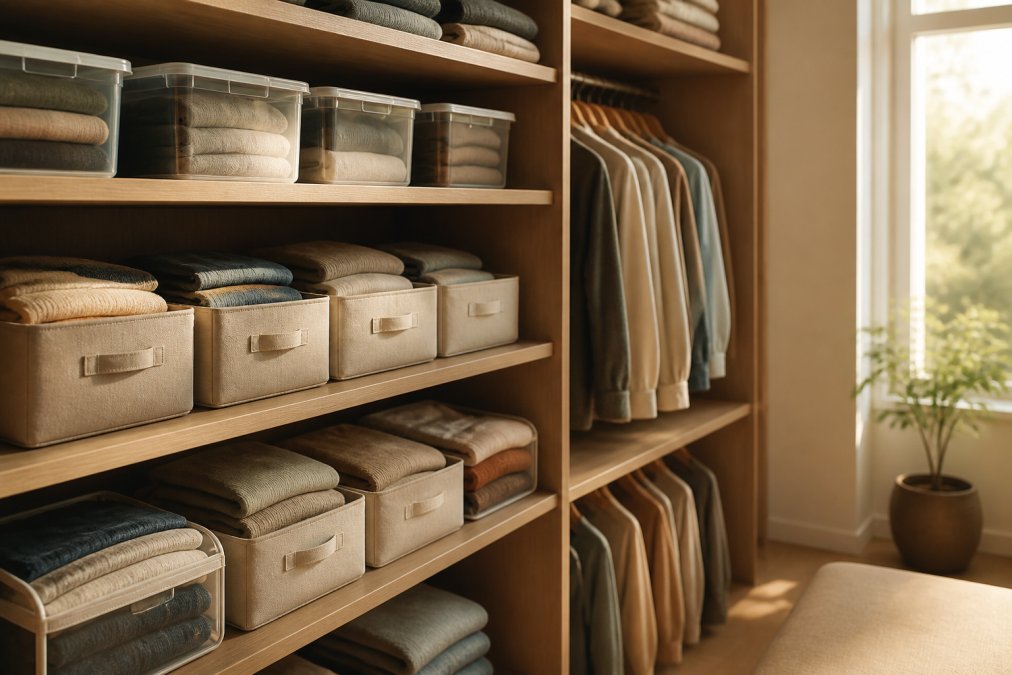
The search centers on three gaps: durable materials, ease of assembly, and specialized dimensions. Many retailers now offer metal frames and heavy-duty plastic that withstand busy households.
Best IKEA Alternatives for Home Organization: Quick Comparison
Choosing the right storage depends on your specific pain point, a chaotic pantry, overflowing closet, or tiny entryway. The best alternative solves that problem without introducing new clutter.
| Retailer / Product | Best For | Key Feature | Price Point |
|---|---|---|---|
| The Reset Aisle | Curated, zone-specific fixes | Sliding shelves & rotating racks | $19.99 - $34.99 |
| Big-Box Retailers | General shelving & bins | Wide variety, in-store pickup | Low |
| Specialty Container Stores | Closet systems | Customizable, high-end materials | Medium-High |
| Online Marketplaces | Budget-friendly finds | Lowest cost, direct shipping | Very Low |
The Reset Aisle skips the generic "one-size-fits-all" approach. Instead of selling a single type of bin, we curate solutions for specific zones, like an Under Sink Organizer with Sliding Shelves ($34.99) for cramped bathrooms or a Space Saving Pant Hanger ($19.99) that holds 40 pairs in the space of one. You buy a solution, not just a container.


The Reset Aisle: Curated Storage for Specific Spaces
For those tired of adapting generic furniture, The Reset Aisle offers a direct path to an organized home. We design for the awkward corners and specific pain points that generic retailers miss, making existing belongings work for you and reducing the need to buy more furniture.
Our catalog targets the three most chaotic zones: the pantry, the closet, and the drawer. The Double-Layer Rotating Spice Rack ($24.99) solves the "back row jar" problem with a 360-degree spin. Our Fabric Drawer Organizers for Socks & Underwear ($22.99) use high-quality stitching and durable supports to keep their shape, eliminating the daily "hunt" through messy drawers.

Affordable Home Organization Stores That Prioritize Quality
Big-box stores offer the lowest upfront cost, but durability often falls short. A cheap plastic drawer that cracks under sweaters isn't a bargain; it's a future replacement. Look for affordable home organization stores that use thicker plastics, reinforced stitching, or powder-coated metal frames.
Quality shows in details: do drawers glide smoothly? Are seams reinforced? Read reviews on the specific material used, not just the aesthetic appeal.
What "Quality" Actually Means in Storage Materials
Most shoppers default to price as a quality signal, but material science tells a different story. Here's how common materials stack up:
- Polypropylene (PP): The workhorse of clear bins and drawer units. It's food-safe, chemical-resistant, and won't crack under normal household loads. Look for a thickness of at least 1.5mm; anything thinner will flex and eventually split at the corners (peer-reviewed research).
- Powder-coated steel: The gold standard for shelving frames and under-sink organizers. The powder coating prevents rust in humid environments like bathrooms and laundry rooms. Check whether the coating is applied inside the tubes as well, if not, moisture can corrode the metal from within.
- Bamboo: A renewable material that offers a warmer aesthetic than plastic. Quality bamboo organizers use solid pieces, not veneer over particleboard. The telltale sign of quality is the edge treatment: solid bamboo shows end-grain dots; veneer shows a continuous printed pattern.
- Non-woven polypropylene fabric: Common in closet organizers and drawer dividers. The key metric is fabric weight (measured in grams per square meter). Budget versions around 80 gsm will sag within months; quality versions at 150 gsm or higher hold their shape for years (peer-reviewed research).
Retailer Categories and What They Actually Deliver
Specialty container stores (like The Container Store) excel at closet systems. Their in-house brand offers a 10-year warranty on many items, but pricing runs 30-50% higher than online-only options. The trade-off is seeing materials before buying.
Online-first retailers (like The Reset Aisle) compete on curation and specificity. By focusing on a narrow range, sliding shelves, rotating racks, drawer organizers, they source thicker materials and better mechanisms than generalists. The trade-off is no physical inspection, making a transparent return policy essential.
Big-box stores (Target, Walmart, Home Depot) offer immediate pickup and easy returns. Their house brands have improved, but material quality varies wildly between lines.
The Hidden Cost of Cheap Storage
Consider a typical pantry project. Five $10 plastic bins from a big-box store that crack within two years cost $50 to replace plus re-organizing time. Five $25 bins from a specialty retailer might last 8-10 years. Total cost of ownership over a decade:
- Budget bins: $50 initial + $50 replacement (at year 2) + $50 replacement (at year 6) = $150
- Quality bins: $125 initial + $0 replacement = $125
Red Flags to Avoid Regardless of Retailer
- Unspecified materials: If the product listing says "durable plastic" without naming the specific polymer, assume it's the cheapest option available.
- Weight capacity listed only for the whole unit: Quality manufacturers specify per-shelf or per-drawer capacity. Vague ratings hide weak points.
- No warranty information: A retailer that won't stand behind a product for at least 90 days is signaling low confidence in durability.
- Stock photos instead of product-specific images: If the listing uses generic lifestyle imagery rather than detailed shots of joints, glides, and edges, the manufacturer is hiding something.
How to Organize a Home with Limited Space: Key Principles
Organizing a small home isn't about squeezing in more shelves; it's about maximizing vertical space and eliminating wasted air. The most effective strategy for how to organize a home with limited space is the "zone" method, assigning a specific purpose to every square inch.
Start by measuring your space, including cabinet depth and closet rod height. Many fail by buying storage too deep or too tall, leaving gaps that invite clutter. Look for space-saving solutions like the Space Saving Pant Hanger ($19.99).
Best Practices for Decluttering and Storage That Last
Decluttering is a maintenance task, not a one-time event. The best practices for decluttering and storage involve a "reset" habit, spending 5-10 minutes each evening returning items to their zones.
Choose organizers that are easy to clean: fabric should be washable, plastic or metal wipeable. The Under Sink Organizer with Sliding Shelves ($34.99) handles spills without warping. Buying one high-quality organizer that lasts a decade is more eco-friendly than replacing cheap plastic every two years.
Assembly, Durability, and Return Policies: What to Check Before Buying
This is where the shopping experience diverges. IKEA assembly is notoriously time-consuming, and cam-lock fittings loosen over time. Check the assembly difficulty rating before committing.
The Assembly Difficulty Scale
Most retailers don't publish assembly ratings, so a standardized 1-5 scale can help you compare:
| Rating | Description | Time Estimate | Tools Required |
|---|---|---|---|
| 1 | Ready to use out of the box | 0 minutes | None |
| 2 | Minimal setup (insert, stack, or click together) | 5-10 minutes | None |
| 3 | Moderate assembly (screwdriver required, clear instructions) | 15-30 minutes | Phillips screwdriver |
| 4 | Complex assembly (multiple steps, alignment required) | 45-90 minutes | Screwdriver, possibly a mallet |
| 5 | IKEA-style cam-lock assembly with 50+ parts | 2+ hours | Full tool kit, patience |
What to look for: Products rated 1-2 eliminate the most common frustration with flat-pack furniture. Rated 3 is acceptable if instructions are clear. Rated 4-5 should offer a significant durability or design advantage to justify the time.
Durability Metrics That Actually Matter
Beyond material quality, three metrics separate durable organizers from disposable ones:
1. Weight capacity per shelf or drawer. A unit holding 50 pounds total but only 10 per shelf will fail under uneven loads. Look for per-component ratings. Pantry shelving needs at least 25 pounds per shelf for canned goods; closet systems need 15-20 pounds per drawer for folded clothing.
2. Cycle testing. Quality manufacturers test glides and hinges for open/close cycles. A 50,000-cycle rating (roughly 10 years of daily use) can indicate commercial-grade hardware (bifma.org). If a listing doesn't mention cycle testing, the mechanism may wear out in 2-3 years.
3. Moisture resistance. For bathroom, kitchen, or laundry storage, check if the product is rated for humid environments. Powder-coated steel and polypropylene handle moisture well; raw MDF or particleboard will swell within months. Look for explicit "moisture-resistant" or "bathroom-safe" language.
Return Policy Comparison: What the Fine Print Really Says
The return policy is your best proxy for how much a retailer trusts its products. Here's what major categories typically offer:
- Big-box retailers: 90-day returns, no restocking fees, in-store drop-off. Easiest experience, but rarely offer extended warranties.
- Specialty container stores: 30-60 day returns with original packaging. Some offer lifetime warranties on specific lines, ask before buying.
- Online-first retailers: Varies wildly. Some online-first retailers offer 30-60 day windows with free return shipping, while others may have shorter windows or charge restocking fees. If return shipping is paid by the customer on a heavy unit, the cost can be significant.
The Pre-Purchase Checklist
Run through this checklist before any home organization purchase:
- Assembly rating: Is it 1-3 on our scale? If 4-5, does the product offer a durability or design advantage that justifies the time?
- Weight capacity: Is the per-shelf or per-drawer capacity listed? Does it match what you'll actually store?
- Material specification: Is the specific material named (polypropylene, powder-coated steel, solid bamboo)? Or is it vague marketing language?
- Moisture rating: For bathroom or kitchen use, is it explicitly rated for humid environments?
- Return window: Is it at least 30 days? Who pays return shipping? Are there restocking fees?
- Warranty: Does the manufacturer offer any warranty beyond the minimum legal requirement? A 1-year warranty is common; longer warranties can signal genuine confidence.
The Bottom Line on Assembly, Durability, and Returns
Durability is often linked to the material warranty. Look for stated weight capacity and avoid anything flimsy in product images. A generous return window indicates the retailer trusts its quality. This separates a true IKEA alternative from a temporary solution.
Conclusion: Choose Storage That Works With Your Life
Finding the right storage means moving past one-size-fits-all and focusing on systems that address your daily friction points. The best IKEA alternatives for home organization offer durable materials, sensible dimensions, and a design that simplifies your routine.
At The Reset Aisle, we believe organization should reduce overwhelm, not add to it. Our curated tools, from the Double-Layer Rotating Spice Rack to the Canvas Bag Organizer Insert ($27.99), help you make what you own work more effectively. Start your reset today.
Frequently Asked Questions
What is a good alternative to IKEA for home organization?
A good alternative focuses on specific solutions rather than a one-size-fits-all approach. Look for retailers offering durable materials, clear return policies, and products designed for particular spaces like pantries or closets. The Reset Aisle, for example, provides curated items like the Under Sink Organizer with Sliding Shelves ($34.99) that solve a single problem well, which often beats a cheaper, less functional option.
Are IKEA alternatives more expensive?
Not necessarily. While IKEA has low entry prices, the total cost includes assembly time and potential replacement. Many affordable home organization stores offer better durability for a slightly higher price. A $22.99 Fabric Drawer Organizer that lasts for years is better value than a $10 option that loses its shape in months. Compare the price point against the product's lifespan, not just the initial tag.
What should I check before buying from an alternative storage brand?
Check three things: assembly difficulty, material quality, and the return policy. Look for clear assembly instructions and minimal tools required. For materials, read what the item is made of, like the sturdy metal frame on The Reset Aisle's under-sink rack. Finally, confirm the return window and process, so you are not stuck with a product that doesn't fit your space.
How do I choose storage solutions for a small or oddly shaped space?
Measure the space first, then find products designed for that specific footprint. Vertical solutions, like the Space Saving Pant Hanger that holds 40 pairs in the space of one hanger, maximize closet rods. For under sinks, a compact two-piece organizer fits around plumbing. Prioritize multi-functional and adjustable items that can adapt to your unique layout rather than forcing standard furniture into it.
Looking for storage that actually fits your life? Explore The Reset Aisle's curated collection of durable, space-saving organizers for your pantry, closet, and drawers. Get started with The Reset Aisle and bring calm to every room.