

Table of Contents
- Why Vertical Shelving Brings Control to Cluttered Spaces
- Wall-Mounted Shelving Systems for Permanent Organization
- How to Organize Cluttered Shelves Effectively
- Space-Saving Vertical Shelving Ideas for Every Room
- Over-the-Door and Ceiling-Mounted Storage Options
- Luxury Closet Organizers and Multi-Functional Vertical Storage
- Weight Capacity, Safety, and Renter-Friendly Installation
- Frequently Asked Questions
Last Updated: October 1, 2026
Why Vertical Shelving Brings Control to Cluttered Spaces
Clutter builds gradually as items accumulate on floors and countertops. Vertical shelving transforms that chaos by moving storage upward, reclaiming floor space while making everything visible and accessible, reducing daily overwhelm and creating systems that actually stick.
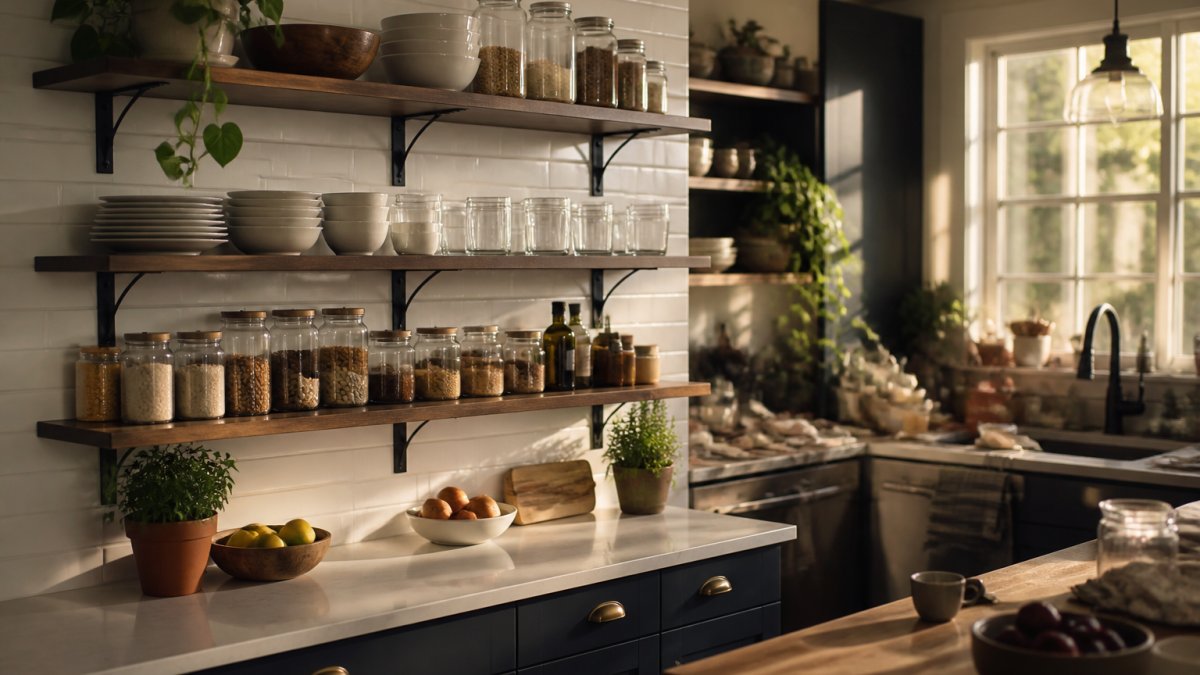
A single wall-mounted shelf system can hold as much as a dresser while occupying a fraction of the space. Homes using vertical storage report feeling less overwhelmed within the first week because items are organized and visible rather than piled haphazardly.
When belongings are displayed vertically at eye level, you actually use what you own, forgotten spice jars, extra mugs, and rarely-used gadgets become functional again. This approach works for renters since many vertical solutions require no permanent installation.
Wall-Mounted Shelving Systems for Permanent Organization
Wall-mounted shelving is the most versatile approach to vertical shelving because it works in nearly every room and uses wall space that would otherwise sit empty, ideal for small rooms where floor space is tight.
Select wall-mounted systems based on weight capacity and mounting surface. Drywall alone won't support heavy items; anchor into studs or use specialized wall anchors rated for your load. Most residential walls can handle 25-50 pounds per stud-mounted shelf.
The American Society of Home Inspectors provides guidance on proper shelf installation and weight distribution to help homeowners avoid structural damage. Before installing any wall-mounted shelving, identify your studs using a stud finder and plan your layout accordingly.
The Wall-Mounted Kitchen & Bathroom Hook Rack from The Reset Aisle offers a practical alternative when you need versatile hanging storage without drilling. This aluminum organizer features 4-10 adjustable hooks and uses adhesive installation on smooth, non-porous surfaces. At $29.99, it's ideal for hanging kitchen utensils, towels, or bathroom accessories while keeping items within arm's reach.

For heavier items like pots, pans, and cookware, the Pull-Out Pots & Pans Organizer provides stainless steel construction with adjustable dividers. At $89.99, this cabinet-mounted system maximizes vertical space inside existing cabinets while making contents accessible via a pull-out design. The adjustable dividers let you customize storage for different cookware sizes.
How to Organize Cluttered Shelves Effectively
Once your vertical shelving system is installed, organize using three steps: declutter first, categorize second, and arrange by frequency and reach zone third.
Remove everything and sort into three piles: keep, donate, and discard. Be honest about what you actually use, decorative items you haven't dusted in years, kitchen gadgets still in boxes, and "someday" project supplies take up valuable shelf space.
Group similar items together, spices with spices, books with books, bathroom supplies with bathroom supplies. This "zone organization" makes items easier to find and prevents chaos.
The Reach Zone Framework: Organizing by Frequency and Height
Vertical ergonomics, how you position items based on how often you use them, is where most organization systems fail. Your shelves have three distinct zones, each suited to different storage priorities:
Eye Level (Waist to Shoulder Height): This is your "prime real estate." Store most-used items here, spices, everyday dishes, frequently referenced books, or daily-use toiletries. For a kitchen: go-to coffee mugs, cooking oils, and salt. For a bathroom: everyday skincare and medications. This zone minimizes strain and maximizes efficiency.
Upper Shelves (Above Shoulder Height): Reserve for items used weekly or monthly, seasonal decorations, backup supplies, serving dishes, or bulk pantry items. You trade accessibility for storage density.
Lower Shelves (Below Waist Height): Use for heavy items (safer stored lower), infrequently used equipment, or items accessed while sitting. In a kitchen: large pots, baking sheets, bulk flour. In a bathroom: cleaning supplies, backup toilet paper. In a closet: off-season clothing or storage bins.
The Expandable Kitchen Storage Shelf from The Reset Aisle ($29.99) works well for this framework. Its two-tier design lets you dedicate the upper shelf to less-frequently used items (backup spices, serving pieces) and the lower shelf to daily-use bowls and plates. The expandable width adjusts from 36 cm to 69 cm, fitting most cabinet spaces without permanent installation.

Frequency-Based Arrangement Within Zones
Within each zone, arrange items by frequency of use. Place most-used items at center eye level. Weekly-use items move slightly left or right; monthly-use items occupy edges. In a closet, hang everyday work clothes at eye-level center; seasonal items move to upper shelves. In a pantry, staple ingredients (flour, sugar, oil) occupy prime eye-level center; specialty ingredients move to upper or lower zones.
This ergonomic approach reduces daily strain, makes your routine more efficient, and creates a system that feels natural rather than forced. You're not fighting your own body mechanics; you're working with them.
Space-Saving Vertical Shelving Ideas for Every Room
Vertical shelving solutions vary by room because storage needs differ.
Expandable Kitchen Storage Shelf – Freestanding Spice & Cabinet Organizer →
Kitchen & Pantry: Wall-mounted shelves above countertops or inside cabinets maximize pantry storage. The Magnetic Refrigerator Side Storage Rack ($34.99) stores spice jars, seasoning bottles, and snacks on the fridge side without drilling, freeing up cabinet space and perfect for renters.
Bathroom: Under-sink storage is often wasted space. The 2-Tier Under Sink Organizer ($49.99) uses vertical pull-out design to store cleaning supplies, toiletries, and bottles efficiently. The two tiers maximize height while the removable hooks and hanging cup add flexibility.
Closets: Vertical closet organization requires double-hang rods, shelf dividers, and stackable bins to maximize height. Slanted ceilings and odd-shaped closets are common challenges, measure your space carefully and choose adjustable systems rather than fixed shelving.
Utility & Laundry Rooms: The Wall-Mounted Mop & Broom Holder ($29.99) keeps cleaning tools off the floor while organized vertically. Available in 2-hook, 3-hook, and 5-hook configurations, the aluminum construction resists moisture and rust, making it ideal for damp utility spaces.

Home Office & Drawers: Stackable bins and pull-out organizers prevent desk drawers from becoming catch-all chaos. The Pull-Out Cabinet Organizer ($49.99) slides smoothly outward, making stored items easier to access without reaching deep into drawers or cabinets.
Over-the-Door and Ceiling-Mounted Storage Options
Over-the-door organizers and ceiling-mounted systems represent the final frontier for vertical shelving, they use space most people ignore completely.
Over-the-door storage works for lightweight items: shoes, accessories, cleaning supplies, pantry overflow, and bathroom essentials. Tension rods inside closet doors create hanging space for scarves, belts, or small bags with zero permanent installation.
Ceiling-mounted storage works well for seasonal items, bulk supplies, or items you don't need daily. Trade accessibility for storage; this approach works best in utility rooms, garages, or pantries where occasional access is acceptable.
Both options require careful weight consideration.
Luxury Closet Organizers and Multi-Functional Vertical Storage
Luxury closet organizers blend functionality with design aesthetics using premium materials and customizable configurations. Multi-functional vertical storage serves double duty: organizing items while functioning as decor. Open shelving displays curated collections, cookbooks, plants, and decorative boxes. The key is consistency, use matching containers, baskets, or bins to create a cohesive system rather than random storage.
Weight Capacity, Safety, and Renter-Friendly Installation
Understanding weight capacity and safe installation is essential before mounting anything. Shelves fail when weight exceeds design limits. For renters, improper installation can trigger lease violations or security deposit deductions.
Weight Capacity Basics:
- Drywall anchors alone: 10-25 pounds per anchor
- Studs with proper hardware: 50-100+ pounds per shelf
- Adhesive-mounted systems: typically 15-30 pounds maximum
- Pull-out cabinet organizers: limited by cabinet structure, usually 30-50 pounds per tier
Renter-Friendly Installation: The Damage-Free Framework
Tier 1: Adhesive and Magnetic Solutions (Zero Drilling)
Tier 3: Stud-Mounted Systems (Permanent but Damage-Repairable)
Cabinet and Under-Sink Solutions (No Wall Mounting Required)
Testing Before Full Installation
The Renter's Checklist Before Installing Anything
- Review your lease for storage modification restrictions.
- Photograph walls before installation as proof of original condition.
- Choose adhesive or tension-rod solutions first; stud-mounted systems only if your lease permits.
- Test your chosen method with a light load before full installation.
- Keep all product packaging and hardware for future removal or reinstallation.
- Document installation with photos and receipts.
Frequently Asked Questions
How do I maximize vertical space in small closets?
Maximize vertical closet space by installing double-hang rods to store twice as much in the same footprint, adding shelf dividers to stack items efficiently, and using pull-down shelves for hard-to-reach areas. Wall-mounted hooks and tension rods add hanging storage without taking up floor space. The key is using every inch of height, not width. Stackable bins keep items organized while maintaining vertical footprint control.
What makes vertical shelving better than traditional storage for clutter reduction?
Vertical shelving reduces visual clutter by moving items off floors and countertops onto walls, creating clear floor space that makes rooms feel larger and calmer. Wall-mounted and ceiling-mounted systems keep frequently used items at eye level for easy access, while overhead storage handles seasonal or rarely used goods. This vertical approach to space optimization eliminates the overwhelm of scattered belongings and brings control back to chaotic spaces.
Are vertical shelving organizers suitable for renters?
Yes, many renter-friendly options exist. Adhesive wall-mounted hooks, magnetic storage racks, and freestanding expandable shelves require no drilling or permanent modifications. The Wall-Mounted Kitchen & Bathroom Hook Rack ($29.99) uses adhesive installation, and the Magnetic Refrigerator Side Storage Rack ($34.99) attaches without screws. These solutions bring control to cluttered spaces while keeping your security deposit safe.
What weight capacity should I consider for vertical shelving?
Weight capacity depends on your wall type and mounting method. Heavy-duty mounting on studs supports significantly more weight than adhesive-only installation. Always distribute weight evenly across shelves and avoid concentrating heavy items in one spot. For cabinets and under-sink storage, the Pull-Out Pots & Pans Organizer ($89.99) uses stainless steel construction designed for cookware weight, while expandable kitchen shelves work best with lighter items like spices and tableware to maintain stability.