

Table of Contents
- Why Sustainable Home Organization Products Matter for Small Spaces
- Best Materials for Eco-Friendly Home Storage
- Plastic-Free Home Organization Ideas That Actually Work
- How to Declutter Small Spaces Sustainably
- Budget-Friendly DIY Upcycling Tutorials for Storage
- Evaluating the Lifecycle and End-of-Life Disposal of Storage Products
- Sustainable Kitchen and Bathroom Organization Solutions
- Conclusion: Building a Sustainable, Organized Home
- Frequently Asked Questions
Last Updated: September 24, 2026
Why Sustainable Home Organization Products Matter for Small Spaces
When you're living in a small space, every inch counts. The right storage solutions don't just help you fit more stuff, they transform how you feel about your home. Choosing sustainable home organization products creates calm instead of chaos.
Small spaces demand smart choices. Clutter builds stress. Poor storage multiplies it. But sustainable products do something conventional organizers miss: they work harder, last longer, and actually improve your living environment instead of just hiding problems.
The real issue isn't that small spaces are too small. It's that most people fill them with disposable storage that falls apart in months. You buy cheap plastic bins, they crack, you replace them, and the cycle continues. Sustainable home organization products break that cycle. They're built to last. They look better. And they actually help you keep things organized long-term instead of just pushing clutter around.
This guide covers everything you need to choose the right sustainable products for your specific space, from materials that hold up to strategies that actually stick.
Best Materials for Eco-Friendly Home Storage
Natural Fibers: Bamboo, Rattan, and Wicker
Natural fibers are the foundation of sustainable home organization. Bamboo, rattan, and wicker aren't just pretty, they're durable and biodegradable.
Bamboo grows fast and regenerates quickly. It's stronger than most wood and resists moisture better than you'd expect. Bamboo shelving and storage boxes handle weight without warping. The catch: not all bamboo is sustainably sourced, so check the supplier.
Rattan and wicker are flexible and lightweight. They work beautifully in small spaces because they don't feel bulky. A rattan basket takes up visual space but feels open. Wicker baskets fit under shelves and in corners without making rooms feel cramped. Both materials age gracefully, they actually look better after a few years of use.
Pros of natural fibers:
- Biodegradable and compostable at end of life
- Naturally antimicrobial (especially bamboo)
- Age well and improve with time
- Lightweight for small spaces
Cons of natural fibers:
- Can absorb moisture if not sealed
- Require occasional cleaning and maintenance
- More expensive upfront than plastic
- May splinter if damaged
Recycled Wood and Glass Alternatives
Recycled materials give old items a second life. This is circular economy thinking in practice.
Recycled wood storage comes from reclaimed barn wood, old pallets, or post-consumer waste. It's sturdy, unique, and requires zero new tree harvesting. Each piece has character. Recycled wood drawers, shelves, and organizers fit any aesthetic.
Glass jars and containers are infinitely recyclable. They don't degrade in quality no matter how many times they're recycled. Glass doesn't absorb odors or stains like plastic does. For pantry organization, glass canisters let you see what you have without opening them.
Pros of recycled materials:
- Reduces waste and landfill burden
- Often cheaper than virgin materials
- Glass is completely transparent for visibility
- Recycled wood has unique character
Cons of recycled materials:
- Heavy (especially glass)
- Glass can break if dropped
- Recycled wood may have inconsistent finishes
- Requires more careful handling
Plastic-Free Home Organization Ideas That Actually Work
The shift to plastic-free storage isn't about perfection. It's about choosing better alternatives where they exist.
Paper and cardboard dividers cost almost nothing and work surprisingly well. Kraft paper drawer dividers fold flat and customize to any drawer size. Cardboard boxes, when treated carefully, organize everything from socks to office supplies. They're compostable when you're done.
Fabric organizers made from organic cotton or linen hold their shape and breathe. Unlike plastic, fabric doesn't off-gas chemicals into your closet. The Reset Aisle's fabric drawer organizers use internal supports that keep compartments upright even when packed full. They fold flat for storage when not needed.

Metal wire baskets and shelving units are durable and open. You can see everything at a glance.
Quick wins for plastic-free organization:
- Swap plastic bins for fabric storage boxes
- Use glass jars instead of plastic containers
- Choose metal shelving over plastic shelving units
- Replace plastic drawer dividers with cardboard or fabric
- Pick ceramic or wood over plastic organizers
How to Declutter Small Spaces Sustainably
Decluttering isn't just about throwing things away. It's about being intentional with what stays.
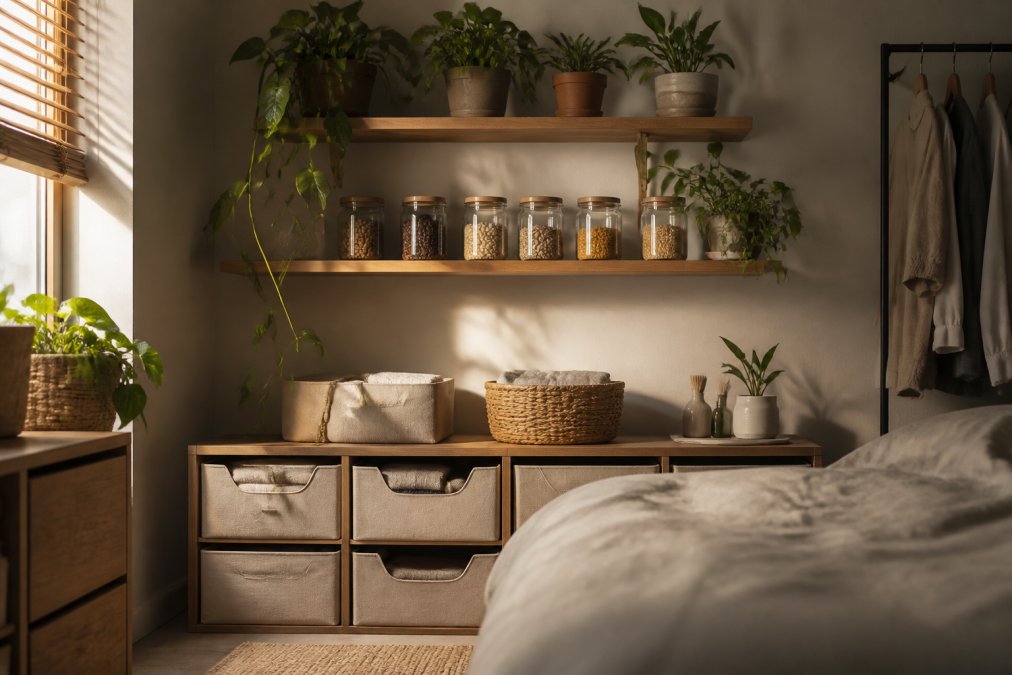
Step 1: Assess Your Current Storage and Identify Waste
Start by looking at what you actually have. Open every drawer, closet, and cabinet. Write down:
- What storage you currently own
- What's broken or doesn't work
- What takes up space but serves no purpose
- What you actually use regularly
This inventory reveals patterns. You might discover you have five half-empty containers doing the job of two. Or that broken organizers are taking up prime real estate. Once you see the waste, you can eliminate it.
Step 2: Choose Multipurpose, Modular Solutions
In small spaces, every item must earn its place. Multipurpose storage does double duty.
Step 3: Maximize Vertical Storage and Drawer Dividers
Small spaces need to go up, not out. Vertical storage is your best friend.
Step 4: Maintain and Clean Natural Materials
Natural materials need care, but not much. A few simple habits keep them lasting.
Budget-Friendly DIY Upcycling Tutorials for Storage
You don't need to buy everything new. Your home already contains storage solutions.
Repurposing Household Items for Organization
Old mason jars become spice containers or desk organizers. Wooden crates stack into shelving. Shoe boxes line drawers as dividers. Tin cans hold pens and small items. Empty wine bottles organize dried herbs or decorative items.
Creating Custom Drawer Dividers from Cardboard
Cardboard dividers cost nothing and customize to any drawer.
What you need:
- Cardboard (from shipping boxes, cereal boxes, or old folders)
- A ruler or measuring tape
- A utility knife or scissors
- Tape (optional)
Steps:
-
Measure your drawer width, length, and depth.
-
Cut cardboard strips to the height of your drawer (usually 4-6 inches).
-
Cut strips to the width you want for each compartment (3-6 inches works for most items).
-
Arrange strips in your drawer to create sections. Adjust until spacing feels right.
-
If strips slide around, tape them together at the base or use a small piece of tape to anchor them to the drawer bottom.
-
Place items in each compartment. Socks in one, underwear in another, accessories in a third.
-
Replace dividers when they wear out, cost is zero.
This works for socks, underwear, ties, scarves, office supplies, and kitchen utensils. Customize compartment sizes to match what you're storing.
Evaluating the Lifecycle and End-of-Life Disposal of Storage Products
Before purchasing any storage product, ask three questions:
How long will it last? Cheap plastic bins crack in two years. Bamboo shelving lasts 10-15 years. Natural materials age better than synthetic ones. Calculate cost-per-year to compare true value.
Sustainable Kitchen and Bathroom Organization Solutions
Kitchens and bathrooms are where organization matters most. They're also where waste happens fastest.
Pantry Organization with Space-Saving Rotating Racks
Pantry chaos happens when you can't see what you have. Items expire in the back. You buy duplicates. You waste money and food.
Use rotating racks for:
- Spices and seasonings
- Condiments and sauces
- Canned goods
- Jars of nuts and dried goods
- Medications and supplements
Under-Sink Storage That Reduces Clutter
Under-sink cabinets are disaster zones. Pipes get in the way. Everything slides around. Cleaning supplies mix with food storage. Nothing fits.
Use it for:
- Cleaning supplies and sponges
- Bathroom toiletries and medications
- Kitchen dish soaps and hand soaps
- Trash bags and recycling bags
- Spare paper towels and napkins
Conclusion: Building a Sustainable, Organized Home
Small spaces demand intention. Every item you bring in matters. Every organizer you choose shapes how you live.
Frequently Asked Questions
What materials should I look for in sustainable home organization products?
Prioritize natural fibers like bamboo, rattan, and wicker, which are renewable and biodegradable. Look for recycled wood, glass jars, and metal components instead of virgin plastics. Check product labels for certifications indicating sustainably sourced materials. Durable options like these last longer, reducing the need for replacement and lowering your overall carbon footprint. Avoid products labeled simply as 'eco-friendly' without specifics about material sourcing or end-of-life disposal.
How can I maximize storage in a small space without using plastic?
Use vertical storage solutions like adjustable shelving and wall-mounted racks to draw the eye upward and create more usable space. Incorporate multipurpose furniture with built-in storage, such as ottomans or benches. Add drawer dividers made from cardboard or fabric to organize small items efficiently. Consider rotating lazy susans or turntables for cabinets and pantries, they reduce wasted back-corner space. Glass jars and wire baskets work well for visible storage while keeping items dust-free and accessible.
Are bamboo and rattan good choices for small space storage?
Yes. Bamboo and rattan are excellent for small spaces because they're lightweight, durable, and visually appealing without looking bulky. Both materials are sustainably sourced when certified and naturally biodegradable at end-of-life. Rattan baskets and wicker storage solutions offer texture and warmth while taking up minimal visual weight. Bamboo shelving and organizers are sturdy enough for long-term use and resist warping better than untreated wood. Their natural appearance also supports minimalist aesthetics that work well in compact living environments.
How do I identify greenwashing when shopping for sustainable home organization products?
Look beyond vague marketing terms like 'eco-friendly' or 'natural.' Verify specific material sourcing, legitimate products list whether bamboo is FSC-certified or if recycled content percentages are stated. Check for third-party certifications from organizations that audit sustainability claims. Avoid products claiming 'biodegradable' without specifying timelines or disposal methods. Read customer reviews for durability feedback; truly sustainable products last years, not months. Be skeptical of premium pricing without transparent sourcing information. The Reset Aisle offers durable, multipurpose designs that reduce the need for replacement.
Organizing a small space sustainably means choosing products that earn their place and last for years. The Reset Aisle's curated storage solutions, from the Closet Reset Bundle to the Double-Layer Rotating Spice Rack, turn chaotic spaces into calm, efficient environments. Get started with The Reset Aisle and transform how your small space works for you.