

Table of Contents
- Why Look Beyond The Container Store for Pantry Organization
- Best Pantry Storage Containers by Use Case
- Affordable Pantry Organizers That Deliver Quality
- Durable Pantry Storage Containers for Long-Term Use
- Small Pantry Organization: Maximizing Limited Space
- Quick Comparison: Storage Solutions by Price and Function
- How to Choose the Right Pantry Organization System
- Frequently Asked Questions
Last Updated: October 8, 2026
Why Look Beyond The Container Store for Pantry Organization
Finding the right Container Store alternatives for pantry organization doesn't require premium prices. At The Reset Aisle, we offer practical storage that fits budgets and shelf layouts.
Expensive doesn't equal effective. A well-chosen bin, the right shelving, and thoughtful placement matter far more than brand names, it comes down to understanding your space and selecting containers that match what you store.
This guide covers pantry storage containers, affordable organizers, and durable systems that won't fail after a few months.
Best Pantry Storage Containers by Use Case
Clear bins, sealed jars, and rotating racks each solve different problems. The key is matching the container type to what you're storing.
Clear Bins for Visibility and Access
Clear storage boxes let you see what you have without opening every container, preventing duplicate purchases and expired items.
The best clear bins use durable plastic that resists cracking and staining, with secure lids that keep dry goods fresh and block pests.
A common mistake is choosing bins that are too large, they waste shelf space and are hard to move.
Cereal and Dry Goods Storage
Cereal boxes waste pantry space and topple over. Sealed cereal containers hold multiple boxes in the footprint of one and keep contents fresh longer.
For flour, sugar, rice, and pasta, airtight containers prevent moisture and pests. Unlike bags that tear, they stack neatly and let you see when you're running low.
The Double-Layer Rotating Spice Rack from The Reset Aisle solves spice storage in a way static shelves cannot.

Affordable Pantry Organizers That Deliver Quality
Price and durability don't have to be opposites. Many affordable organizers outlast expensive alternatives because they solve specific problems instead of adding features.
The Expandable Kitchen Storage Shelf from The Reset Aisle starts at $29.99 and adjusts to fit different cabinet widths, no tools or permanent modifications.

When evaluating affordable options, check whether they require installation. Free-standing shelves and clip-on dividers can be moved if your needs change or if you're renting.
Durable Pantry Storage Containers for Long-Term Use
What determines whether a bin survives three years of daily use comes down to four things: the resin, the wall thickness, the lid mechanism, and how it handles heat and cleaning.
Material trade-offs that matter
| Material | Typical feel | Heat tolerance | Best for | Watch out for |
|---|---|---|---|---|
| Polypropylene (PP, recycle code 5) | Slightly flexible, semi-opaque to clear | Handles hot-fill and dishwasher top rack on most grades | Everyday dry goods, stackable bins | Can stain with tomato-based or turmeric-heavy contents |
| ABS plastic | Rigid, glossy, holds shape | Moderate; avoid microwaving | Spice racks, magnetic mounts, structural organizers | More brittle than PP if dropped on a hard floor |
| PET / PETG | Very clear, glass-like | Low; warps with heat | Display bins, cereal containers | Scratches show over time |
| Tritan copolyester | Clear, tough, BPA-free | Moderate | Premium clear bins | Higher cost per unit |
| Borosilicate glass | Heavy, non-porous | High | Flour, sugar, oils, long-term staples | Weight and breakage risk on high shelves |
For pantry use, polypropylene and Tritan cover most needs. ABS is right when you need rigidity, a magnetic rack or spice turntable that holds its shape under load. Glass is worth it for long-term staples because it doesn't absorb odors or stain.
Food safety: what to actually check
Look for containers labeled food-safe and BPA-free. The FDA regulates food-contact plastics under 21 CFR, and reputable manufacturers state compliance on the packaging or product page. If a listing doesn't say food-safe, treat it as non-food storage.
Two practical rules:
- Do not reuse containers that originally held non-food products (paint, cleaning supplies, hardware) for pantry staples, even after washing. Residual compounds can migrate into dry goods.
- Match the container to the food. Airtight seals matter most for flour, sugar, rice, crackers, and anything that goes stale or attracts pantry moths. Loose-lidded bins are fine for individually wrapped snacks and boxed goods.
Care and cleaning
Dishwasher-safe claims usually mean top rack only, bottom-rack heat warps PP and clouds PET. Hand-washing in warm water with mild dish soap extends the life of clear containers.
A few habits that prevent premature failure:
- Let containers cool completely before stacking. Warm plastic deforms under the weight of the bin above it.
- Do not stack more than two heavy bins (flour, sugar) on top of each other; the bottom lid takes the load.
- Store spices away from the stove. Steam and radiant heat degrade both the spice and the plastic over time.
How to test durability before you commit
You cannot stress-test a bin in the store, but you can read the signals:
- Flex the wall. A bin that bows easily under thumb pressure will bow under a full load.
- Check the lid hinge. Hinged lids that stay attached outlast removable lids, which get lost or cracked at the rim.
- Look at the latch. A clamp-style latch with a silicone gasket is the most reliable seal at a mid-range price.
- Weigh it. For the same dimensions, a heavier bin usually has thicker walls. Very light bins at a low price are the ones that crack first.
Where this shows up in practice
The Magnetic Refrigerator Side Storage Rack uses ABS construction with a ventilated bottom, the right material for a rigid, load-bearing organizer against a metal surface. The Double-Layer Rotating Spice Rack relies on the same rigidity so tiers don't sag under jars. Per year of use, a bin that lasts four years costs less than four that last one year each.

Small Pantry Organization: Maximizing Limited Space
Small pantries demand strategy. You can't add square footage, so every inch must work harder.
Expandable Kitchen Storage Shelf – Freestanding Spice & Cabinet Organizer →
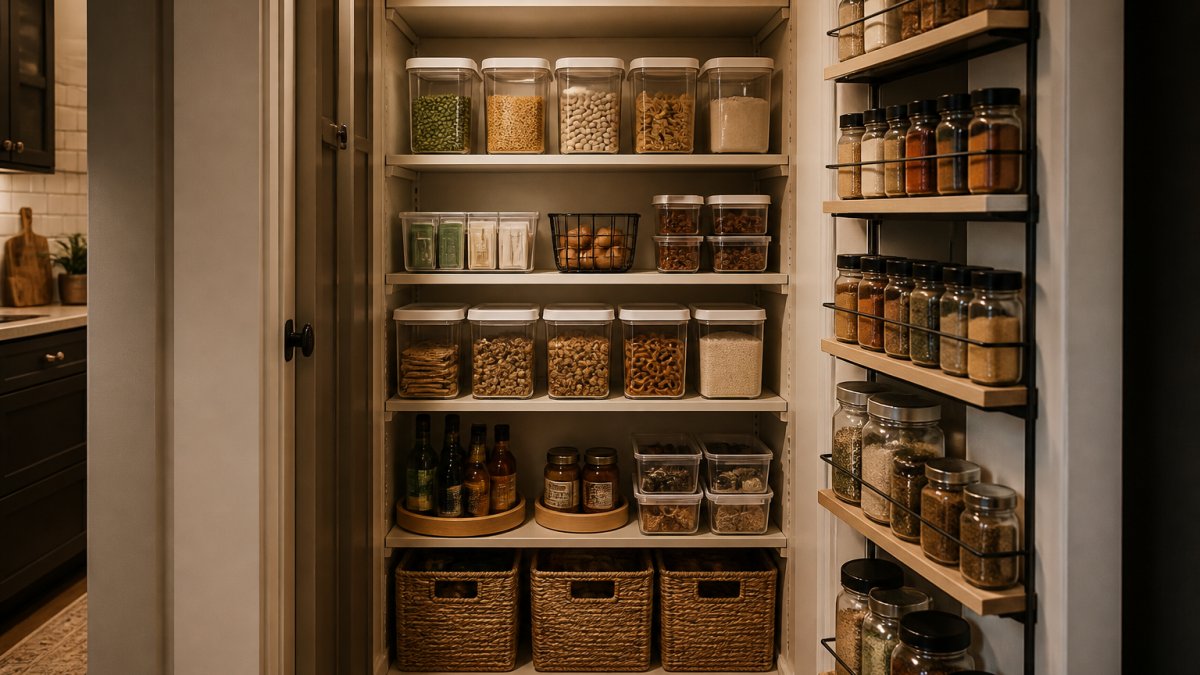
Adjustable shelving lets you customize spacing to match what you store.
Rotating organizers like the Double-Layer Rotating Spice Rack multiply usable space in a small footprint.
Vertical stacking is your best friend in tight spaces: stack clear bins, use stackable cereal containers, and mount magnetic racks on refrigerator sides.
Wall-mounted options work when shelf space is limited.
Quick Comparison: Storage Solutions by Price and Function
| Solution | Price | Best For | Key Benefit |
|---|---|---|---|
| Expandable Kitchen Storage Shelf | $29.99 | Cabinets & countertops | Two-tier storage, adjustable width |
| Double-Layer Rotating Spice Rack | $24.99 | Spices & seasonings | 360° access, no back-row waste |
| Adjustable Fridge Divider Clips | $14.99 | Refrigerator organization | Keeps bottles from shifting |
| Magnetic Refrigerator Side Rack | $34.99 | Small items & spices | No-drill installation, vertical storage |
| The Kitchen Reset Bundle | $52.99 | Spice & under-sink chaos | Two-problem solution, below separate cost |
Different price points address different problems. The most expensive option isn't necessarily best, a $14.99 fridge divider solves bottle chaos better than a $50 system designed for something else.
How to Choose the Right Pantry Organization System
Most guides say "measure your space" and stop. Here's the actual method, organized by need and budget.
Step 1: Measure before you buy anything
Write down four numbers for every shelf and cabinet:
- Interior width (wall to wall, inside the cabinet frame)
- Interior depth (front edge to back wall)
- Clearance height (the space between this shelf and the one above it)
Then subtract a buffer: at least 1 inch of clearance height above the tallest container, and 0.5 inch of width so bins aren't wedged in.
Step 2: Match container shape to shelf geometry
| Shelf situation | Best container shape | Why |
|---|---|---|
| Deep shelf (18 in+) | Square or rectangular bins, front-to-back orientation | Minimizes wasted depth; you can pull one bin without disturbing others |
| Shallow shelf (under 12 in) | Narrow, tall bins or risers | Wide bins waste depth and block access |
| Low clearance (under 8 in) | Shallow bins, stackable half-height | Tall containers will not fit; stacking doubles capacity |
| Narrow cabinet (under 15 in wide) | Single-column stackable bins | Two columns will not fit; one column with vertical stacking wins |
| Open shelving | Matching clear or opaque bins | Visual consistency reads as intentional, not cluttered |
Step 3: Organize by pantry need, not by product
Start with the problem and work backward, not with products.
Bulk dry goods (flour, sugar, rice, oats)
- Priority: airtight seal, food-safe material, stackable
- Budget pick: polypropylene bins with gasketed clamp lids
- Step-up: borosilicate glass with bamboo or silicone-sealed lids
Snacks and individually wrapped items
- Priority: visibility and easy access, not sealing
- Budget pick: clear open-front bins or a simple basket
- Step-up: stackable clear bins with removable dividers
Spices and small jars
- Priority: 360-degree access, tiered visibility
- Budget pick: a two-tier turntable
- Step-up: a pull-out spice drawer insert
Narrow or shallow shelves
- Priority: vertical stacking and slim profiles
- Budget pick: expandable shelf inserts
- Step-up: adjustable risers with a lip
Small-item chaos (batteries, clips, twist ties, kids' snacks)
- Priority: containment and labeling
- Budget pick: small clear bins with a single label
- Step-up: a drawer insert with fixed compartments
Step 4: Build a low-cost starter setup
You don't need a full system at once. A pattern that works:
- One expandable shelf insert for the cabinet with the worst vertical waste
- One turntable for spices
- Two or three clear bins for the snacks shelf
- One label maker or a pack of removable labels
That covers the four most common pantry pain points for a modest outlay, and each piece can be added independently.
Step 5: Sequence the upgrade
Add in this order, each step makes the next easier:
- Fix vertical waste first. Risers and expandable shelves add capacity without new containers.
- Then fix visibility. Clear bins and turntables stop duplicate purchases.
- Then fix sealing. Airtight containers for the staples that go stale or attract pests.
- Then fix labeling. Labels only help once the system is stable enough to stay put.
Step 6: Avoid the four most common mistakes
- Buying a matching set before measuring. Sets look great in photos and fit almost no real pantry perfectly.
- Choosing opaque bins for staples. You will forget what is inside and buy duplicates.
- Over-stacking. More than two heavy bins high and the bottom lid fails.
Frequently Asked Questions
What are the best alternatives to The Container Store for pantry organization?
The Reset Aisle offers curated pantry storage solutions at competitive prices. The Expandable Kitchen Storage Shelf ($29.99) adjusts to fit different cabinet spaces, while the Double-Layer Rotating Spice Rack ($24.99) maximizes visibility and access. For refrigerator organization, the Magnetic Refrigerator Side Storage Rack ($34.99) uses no-drill installation. The Kitchen Reset bundle ($52.99) combines two high-impact organizers at a savings. Each option prioritizes space-saving design and durability for everyday household use.
How do I choose the right bins and containers for my pantry?
Start by assessing what you store most: dry goods like cereal and flour benefit from clear, stackable containers with secure lids for visibility and freshness. Spices and small items work well with rotating organizers that bring every jar within reach. Measure your shelf depth and height before purchasing to avoid gaps and wasted space. Consider adjustable shelving if your pantry has non-standard spacing. Durable plastic or metal construction withstands daily use better than flimsy alternatives, especially in busy households with children.
What is the best way to organize a small pantry?
Maximize vertical space with adjustable shelving and two-tier organizers that double your storage footprint. Use clear containers so you can see contents without opening packages, reducing food waste and duplicate purchases. Rotating turntables for spices and condiments save shelf space while improving access. Store frequently used items at eye level and less-used items on higher or lower shelves. Group similar items together: cereals with grains, baking supplies with flours, snacks in one zone. This approach works in pantries with awkward shelf spacing or limited square footage.
Are clear or opaque pantry containers better?
Clear containers are superior for pantry organization because they eliminate the need to open every container to find what you need. You can see when items are running low and check expiration dates at a glance, reducing food waste and impulse buying. Opaque containers work for items you use regularly and know well, but clear storage is the practical choice for most pantry foods. Durable clear plastic resists clouding over time, maintaining visibility through years of daily use.