

Table of Contents
- Empty the Drawer and Assess What You Have
- Decide What Belongs: Rules for Keeping Items in Your Junk Drawer
- Sort Items Into Categories and Remove Excess
- Best Junk Drawer Organizer Ideas for Your Space
- Use Junk Drawer Dividers to Create Designated Spots
- How to Maintain an Organized Drawer Beyond Week One
- Frequently Asked Questions
Last Updated: October 18, 2026
Empty the Drawer and Assess What You Have
The first step to organize junk drawer is to pull everything out. Empty the entire drawer onto a clean surface, a table, countertop, or bed works well. Dump it all at once. This gives you a clear view of what you're actually working with.
Once everything is visible, you'll see patterns. You'll notice duplicates. You'll find items you forgot you owned. You'll spot things that belong in other rooms entirely.
Take a few minutes to wipe down the empty drawer with a damp cloth. This removes dust and debris that accumulate over time. A clean surface makes the organizing process feel fresher and helps your new system stick.
Decide What Belongs: Rules for Keeping Items in Your Junk Drawer
Not everything should live in your junk drawer. The trick is deciding what qualifies. A functional junk drawer isn't a dumping ground, it's a place for small items you use occasionally but don't have a dedicated home for.
Here's what belongs in a junk drawer:
- Small tools (screwdrivers, hex keys, tape measures)
- Phone chargers and cables
- Batteries (AAA, AA, 9V)
- Pens, pencils, and highlighters
- Paper clips, rubber bands, and sticky notes
- Small office supplies
- Flashlights
- Measuring spoons or cooking tools
What doesn't belong:
- Broken items you're "maybe" going to fix
- Expired medications or supplements
- Old receipts and papers
- Dried-up pens or markers
- Items that belong in other rooms
- Duplicate tools you don't need
The rule is simple: keep items you actually use. If you haven't touched something in six months, it's not earning its space. This is where many people struggle, they keep "just in case" items that clutter the drawer and make it harder to find what you need.
Sort Items Into Categories and Remove Excess
Once you've decided what stays and want to organize junk drawer, group similar items together. Create separate piles for each category. This is where organization actually begins.
Common categories work well:
- Writing supplies (pens, pencils, markers)
- Small tools (screwdrivers, wrenches, hex keys)
- Electronics (chargers, cables, batteries)
- Office supplies (paper clips, sticky notes, tape)
- Miscellaneous (flashlights, measuring spoons, rubber bands)
As you sort, remove excess. Do you really need eight pens? Keep your three favorites. Do you have five phone chargers? Keep one or two. Duplicates are the enemy of organization, they waste space and make the drawer feel cluttered even after you've organized it.
This sorting step takes time, but it's worth it. You're not just organizing, you're editing. You're deciding what truly deserves space in your home. Many people find this is the most satisfying part of the process because you can physically see the clutter leaving.
Best Junk Drawer Organizer Ideas for Your Space
The right organizer depends on your drawer's interior dimensions and the items you're storing. Not all drawers are the same, so your solution shouldn't be either. Before you buy anything, measure the drawer's inside width, depth, and height with a tape measure. Write those numbers down. Most standard kitchen drawers run about 20 to 24 inches wide and 16 to 18 inches deep, but base cabinets and bathroom vanities vary widely, so trust your own measurement over a general rule.
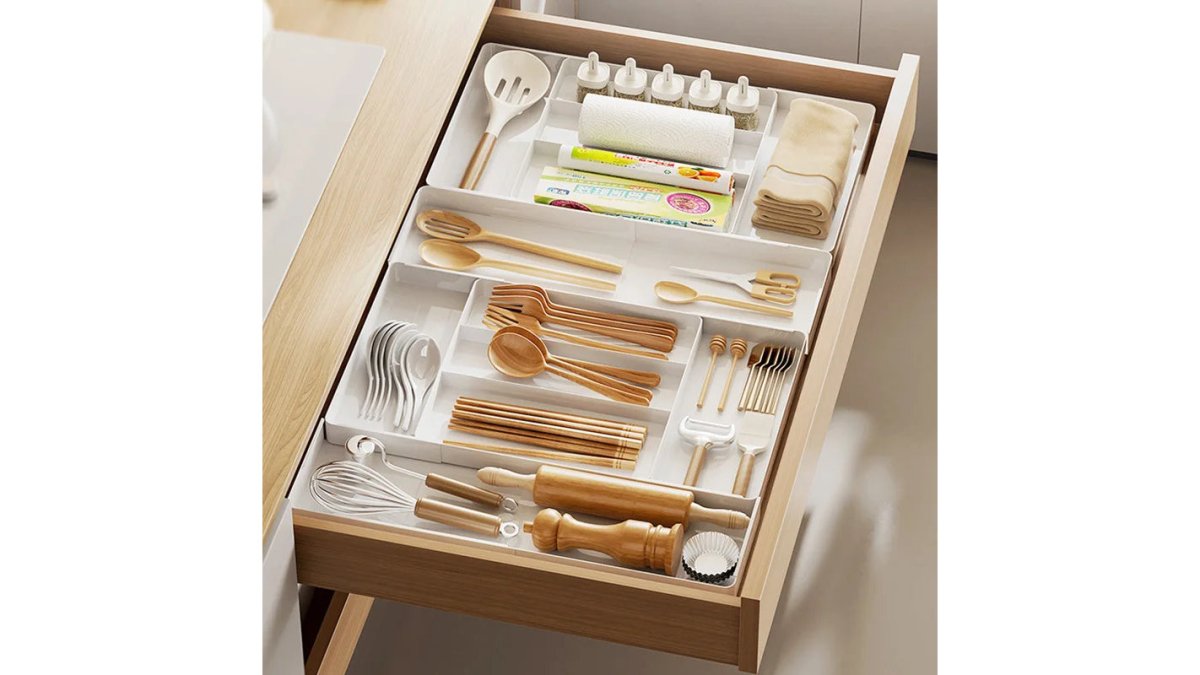
Expandable drawer organizers work well for most spaces because they adjust to fit the drawer's width, so there's no wasted space on the sides. The Expandable Drawer Organizer from The Reset Aisle features customizable compartments with removable dividers. You set the dividers where you need them, creating sections that match your actual items. At $59.99, it's built to last and handles everything from pens to batteries to small tools.

Small bins and containers work for awkward items. A shallow bin corrals phone chargers. A small box holds batteries. Containers keep tiny items from getting lost in the back. Choose clear containers so you can see contents without opening them, and pick bins that are no taller than the drawer's interior height minus a half inch.
Drawer dividers are the simplest option. They create sections without taking up extra space. Dividers let you see everything at a glance, which matters more than you'd think. Spring-loaded or tension dividers are easy to reposition; adhesive or screw-mounted dividers stay put but are harder to move later.
Drawer liner is the unsung hero of any organizer setup. A non-slip liner keeps bins and dividers from sliding when the drawer opens and closes, and it protects the drawer's finish. Cut it to size with scissors and lay it flat before placing any organizer.
When comparing materials, consider the trade-offs: bamboo and wood look warm but can warp in humid kitchens; molded plastic is easy to wipe clean and resists moisture; metal dividers are durable but can scratch items if the edges aren't finished. For a junk drawer that sees daily use, a wipe-clean plastic or coated metal organizer is usually the most practical choice.
Expandable Drawer Organizer – Adjustable Cutlery Tray for Spoons & Forks →
A tailored layout starts with your most-used items. Place frequently reached items, pens, chargers, scissors, near the front of the drawer, and reserve the back for occasional items like batteries and hardware. If you share the drawer with others, label each section with a small label maker or masking tape and a marker so everyone returns items to the right spot.
The best organizer is the one you'll actually use. If it's too complicated, you won't maintain it. If it doesn't fit your drawer, it won't work. Measure your drawer before buying anything, and favor adjustable compartments over fixed ones so the layout can evolve as your items change.
Use Junk Drawer Dividers to Create Designated Spots
Dividers transform a junk drawer from chaos to calm. Each category gets its own space. This matters because it creates accountability, you know exactly where things go, and you can tell immediately if something's out of place.
When you assign a spot to each category, the drawer stays organized longer. You're not hunting for a pen. You know it lives in the writing supplies section. You're not digging for a charger. It's in the electronics compartment.
The most effective junk drawer dividers are adjustable. Fixed dividers waste space if your items don't fit perfectly. Expandable dividers like those in The Reset Aisle's organizer let you customize each section. You can make the pen section wider and the battery section narrower. You adjust as your needs change.
Here's how to set up your dividers:
- Place the dividers first, before adding items back
- Start with your largest category and give it the most space
- Smaller categories get smaller sections
- Leave a bit of breathing room, don't pack sections too tight
- Make sure frequently used items are easy to reach
The goal is a layout you can maintain without thinking about it. If something's hard to access or doesn't fit naturally in its section, you'll abandon the system within a week. Make it intuitive.
How to Maintain an Organized Drawer Beyond Week One
The real challenge isn't organizing the drawer, it's keeping it organized. Most people organize once and watch it slide back into chaos within days or weeks. The fix is a maintenance routine tailored to how your household actually uses the drawer, plus clear rules that prevent it from becoming a catch-all again.
Build a weekly reset that fits your schedule. A five-minute reset once a week is enough for most households. Pick a day you're already home and have a few minutes, Sunday evening before the week starts works for many people. During the reset, pull out anything that doesn't belong, return items to their sections, and wipe down the organizer if needed. Set a timer so the task stays small. If five minutes feels like too much, do a two-minute version: just remove obvious intruders and close the drawer.
Set household rules everyone can follow. The system only works if everyone uses it. Agree on three rules: (1) everything that goes in the junk drawer goes in its designated spot, no exceptions; (2) items that don't belong in the drawer go to their actual home immediately, not into a 'later' pile; (3) if a section is full, something has to come out before something new goes in. Write the rules on a small card and tape it inside a cabinet door near the drawer so they're visible without being obtrusive.
Do a monthly five-minute audit. Once a month, open the drawer and look for three things: duplicates that crept back in, items that never get used, and anything broken or expired. Remove them on the spot. This monthly check catches drift before it becomes a full re-organization project.
Do a quarterly full reset. Every three months, pull everything out again and assess. Did you keep items you never use? Did new duplicates appear? Remove them. This quarterly reset takes about 15 minutes and prevents the drawer from slowly reverting to its old cluttered state. It's also a good time to re-check that dividers haven't shifted and that the liner is still flat.
Handle safety and disposal responsibly. Junk drawers often accumulate items that need special handling. Tape over the terminals of loose 9V batteries with electrical tape before storing them, and keep batteries away from metal objects that could short them. Store sharp items, box cutters, craft knives, loose blades, in a closed container or with the blade retracted and a guard on. Dispose of expired medications at a pharmacy take-back program rather than in the trash or down the drain (the FDA).
Prevent re-cluttering at the source. The drawer stays neat when items have somewhere else to go. Give incoming mail, receipts, and random hardware a designated home elsewhere, a mail tray, a receipt envelope, a garage bin, so they never land in the junk drawer by default. When you're tempted to toss something in 'just for now,' ask whether it has a real home. If it does, put it there. If it doesn't, decide whether it deserves a spot in the drawer or should leave the house.
Frequently Asked Questions
What should you keep in a junk drawer?
Keep items you reach for at least once a month: phone chargers, batteries, pens, scissors, tape, light bulbs, and small tools. Avoid expired medications, broken items, and things you've never used. The key is functionality, if an item doesn't serve a regular purpose, it doesn't belong. Use the one-month rule as your boundary.
How do you organize small items in a junk drawer?
Group similar items together using dividers or small bins. Pens and pencils go in one section, cables in another, batteries separate from fasteners. An expandable drawer organizer with removable dividers lets you customize compartments to fit your drawer's dimensions and your specific items. This prevents everything from sliding around and getting tangled.
How do you keep a junk drawer from getting messy again?
Set a weekly 5-minute reset: return items to their designated spots and remove anything that doesn't belong. Assign a specific place for each category so family members know where things go. When you add a new item, remove an old one to prevent overflow. This maintenance routine is what keeps the drawer functional beyond the first week.
How often should you declutter a junk drawer?
Do a full declutter every 3-4 months and a quick weekly reset. The monthly reset takes 5 minutes and prevents re-cluttering. Every quarter, pull everything out, toss expired items and broken things, and reassess whether you still use each category. This rhythm keeps the drawer from sliding back into chaos.