

Table of Contents
- The Real Cost of Acrylic Closet Storage
- Acrylic vs Plastic Storage Bins: Key Differences
- How to Organize a Closet with Acrylic Bins
- Durable Storage Bins for Kids: What to Look For
- The Hidden Downsides: Yellowing, Weight, and Sustainability
- Maintenance and Cleaning Tips for Acrylic Storage
- When Acrylic Closet Storage Is Worth the Investment
- Frequently Asked Questions
Last Updated: September 11, 2026
The Real Cost of Acrylic Closet Storage
Clear acrylic closet storage has moved from boutique shops to mainstream retailers, and the prices reflect that shift. A single stackable acrylic bin often costs several times what a basic plastic tote does, so the question isn't whether acrylic looks better on a shelf. It's whether the material earns back what you pay for it.
At The Reset Aisle, we hear the same hesitation from customers: "I can get bins and dividers cheaper elsewhere, so what makes these worth it?" That's a fair challenge. Acrylic's real value shows up in visibility, structure, and how it changes your daily routine, not in the sticker price alone. Below, we break down where acrylic earns its cost, where it doesn't, and how to decide for your own closet.
The honest answer: acrylic closet storage is worth it when you need to see what you own, protect delicate items, and stop digging through opaque piles. It's not worth it when you're storing heavy gear or filling deep, low-traffic shelves where nobody looks anyway.
Acrylic vs Plastic Storage Bins: Key Differences
The core difference comes down to material. Acrylic is a rigid, transparent plastic made from polymethyl methacrylate (PMMA), while standard storage bins are usually molded from softer, opaque plastics like polypropylene (PP) or polyethylene (PE). That single material choice drives everything else: clarity, scratch resistance, weight limits, and price.
Clarity and Scratch Resistance
Acrylic holds its transparency far better than most clear plastics, which tend to cloud over time as surface micro-scratches scatter light. It also resists scratching better than polypropylene, though it isn't scratch-proof. A common mistake is sliding acrylic bins across a rough shelf or stacking them against metal brackets, which leaves scuffs that dull the clarity you paid for.
Polycarbonate is the tougher cousin here. It offers similar transparency with more impact resistance, but it costs more and can yellow under prolonged UV exposure.
Weight Capacity and Structural Limits
Acrylic is rigid, not strong in every direction. A well-made bin handles folded sweaters, accessories, and shoes without bowing. Load it with heavy tools, books, or dense gear and the walls can crack at the corners, especially in cold rooms where the material gets more brittle. A useful rule of thumb: if a full bin weighs more than roughly 10 to 15 pounds, acrylic is the wrong container.
For heavy items, a reinforced plastic or fabric bin is the safer call. Acrylic shines in the light-to-medium range.
| Factor | Clear Acrylic | Standard Plastic | Fabric |
|---|---|---|---|
| Visibility | High, stays clear | Medium, clouds over time | None |
| Scratch resistance | Good, not scratch-proof | Moderate | N/A |
| Weight capacity | Light to medium (roughly 10-15 lb per bin) | Medium to heavy | Light to medium |
| Best for | Accessories, folded clothes | Bulk storage, gear | Soft goods, off-season |
| Aesthetic | Clean, uniform look | Utilitarian | Soft, textured |
| Typical cost per bin | Higher upfront | Low | Low to mid |
The Cost-Per-Year Math
Acrylic's sticker price looks steep next to a basic plastic tote, but the comparison only makes sense on a per-year basis. A cheap clear plastic bin that clouds, cracks, or gets replaced every couple of years can cost more over a decade than a single acrylic bin that stays clear. The catch is that this only holds if you actually keep the acrylic bin, buy it for a shelf you'll still be using in five years, not a temporary setup.
A practical way to frame it: divide the bin's price by the number of years you expect to use it. If the acrylic bin lasts three times as long as the plastic one but costs less than three times as much, it wins on cost per year. If you're outfitting a garage shelf or a rental you'll leave in a year, the cheap plastic bin is the smarter buy.
How to Organize a Closet with Acrylic Bins
Start by clearing the shelf and grouping items by how often you reach for them. The goal is to put the most-used items at eye level in clear bins, and push seasonal or occasional items higher or lower.
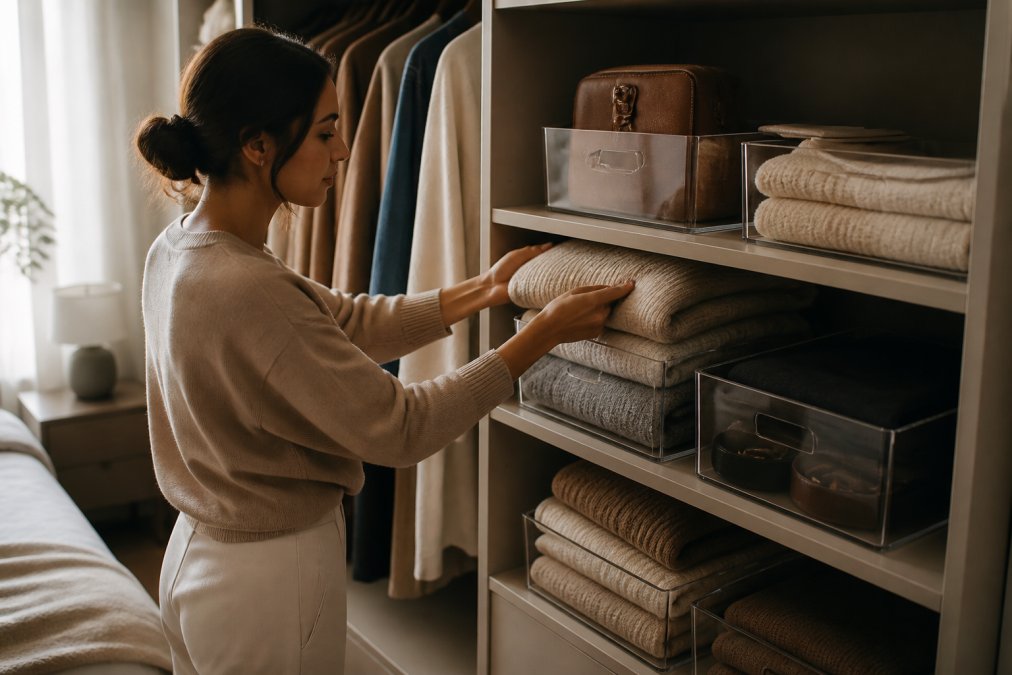
Here's a simple sequence that works in most closets:
- Empty one shelf at a time and sort into keep, donate, and relocate piles.
- Measure your shelf depth and height before buying any bin.
- Match bin size to category, not to the shelf, so you don't create dead space.
- Label the front edge of each bin so you can find items without pulling them out.
- Keep a consistent bin style across the shelf for a uniform look.
- Reserve the top shelf for low-traffic seasonal storage.
If your closet has slanted ceilings or awkward corners, modular storage is your friend. Stackable bins and shelf dividers let you build around the shape of the space instead of fighting it.
Durable Storage Bins for Kids: What to Look For
Durable storage bins for kids need to survive drops, tugging, and being sat on. Acrylic is a poor fit here. It cracks under impact, and the corners are the first to go.
Look for these traits instead:
- Rounded edges and no sharp corners
- Flexible plastic or reinforced fabric that bends instead of shattering
- Wide, easy-grip handles kids can actually use
- Stackable design that won't topple when pulled
- Easy-to-wipe surfaces for spills and sticky fingers
For a child's room, a mix works best: soft fabric bins for toys and clothes, and a couple of clear acrylic bins up high for items you want to see but kids don't need to reach.
The Hidden Downsides: Yellowing, Weight, and Sustainability
Acrylic's transparency is its selling point, and its weakness. Over time, exposure to direct sunlight and UV light can cause yellowing, especially in cheaper grades. A bin that sits in a bright window for a year may lose the crisp clarity that made it worth buying.
Weight is the second issue. Acrylic is denser than standard plastic, so a full shelf of acrylic bins adds noticeable load to closet shelving, particularly wire or thin particleboard systems. Check your shelf's rated capacity before loading up.
Sustainability deserves an honest look too. Acrylic is a petroleum-based plastic, and while it's recyclable in some facilities, curbside programs rarely accept it. The EPA's guidance on plastics and recycling notes that recycling access varies widely by material and location, so "recyclable" on a label doesn't guarantee your local program takes it. Buying fewer, better bins you'll keep for years beats buying cheap ones repeatedly.
Maintenance and Cleaning Tips for Acrylic Storage
Cleaning acrylic is simple if you avoid the wrong products. Never use ammonia-based glass cleaner, abrasive pads, or alcohol, all of which can cloud or craze the surface. The bigger maintenance story, though, is the two failure modes most guides skip: yellowing from UV exposure and cracking at the corners under load.
Routine Cleaning
Use this routine:
- Dust weekly with a soft microfiber cloth.
- Wipe smudges with warm water and a drop of mild dish soap.
- Rinse and dry with a clean, lint-free cloth to avoid water spots.
- For scratches, a plastic polish can buff out light scuffs.
- Keep bins out of direct sun to slow yellowing.
The American Cleaning Institute's surface care resources recommends matching the cleaner to the material, since harsh chemicals can damage plastics that look durable. A few minutes of care a month keeps clarity intact for years.
Yellowing and UV Degradation
Acrylic's transparency is its selling point, and its weakness. Over time, exposure to direct sunlight and UV light can cause yellowing, especially in cheaper grades. A bin that sits in a bright window for a year may lose the crisp clarity that made it worth buying. This is the single most common complaint from long-term acrylic owners, and it's almost never mentioned in product listings.
A few practical defenses:
- Rotate bins so no single one sits in the brightest spot year-round.
- Add a sheer curtain or UV-filtering film to a closet window.
- Choose bins labeled UV-stabilized if the closet gets direct sun.
- Accept that no acrylic bin is fully immune, plan on replacing the most sun-exposed pieces every few years.
Cracking Under Load
The second long-term issue is structural. Acrylic cracks at the corners first, and the crack usually starts when a bin is overfilled, dropped, or pulled off a shelf while heavy. Cold rooms make it worse, because the material gets more brittle as temperatures drop.
To extend the life of your bins:
- Keep each bin under roughly 10 to 15 pounds of contents.
- Lift bins straight up rather than dragging them across shelf edges.
- Avoid stacking heavy bins more than two high.
- Let bins warm to room temperature before handling if they've been in a cold garage or storage unit.
Sustainability and End of Life
Sustainability deserves an honest look too. Acrylic is a petroleum-based plastic, and while it's recyclable in some facilities, curbside programs rarely accept it. The EPA's guidance on plastics and recycling notes that recycling access varies widely by material and location, so "recyclable" on a label doesn't guarantee your local program takes it. Buying fewer, better bins you'll keep for years beats buying cheap ones repeatedly, and it's the strongest environmental argument for acrylic over disposable plastic totes.
When Acrylic Closet Storage Is Worth the Investment
Acrylic closet storage is worth the investment when visibility and structure matter more than raw capacity. That means high-traffic shelves, accessory drawers, vanity organization, and anywhere you want a clean, uniform look that makes the space feel calmer.
It's not worth it when you're storing heavy gear, filling deep low-traffic shelves, or outfitting a kid's room where impact resistance matters more than clarity.
For a practical middle ground, The Reset Aisle's Closet Reset Bundle pairs a space-saving pant hanger with a fabric drawer organizer, so you free up rod space and end the drawer pile without overbuying bins. The bundle is $36.99, and the Fabric Drawer Organizers for Socks & Underwear run $22.99 on their own. Both are built for the everyday items you reach for daily, which is exactly where organization either holds or falls apart.


If you're weighing acrylic against fabric, think about the job. Acrylic for visible, structured storage. Fabric for flexible, soft, high-impact storage. Most well-organized closets use both.
Frequently Asked Questions
Do acrylic closet bins scratch easily?
Acrylic is more scratch-prone than polycarbonate, which is a tougher alternative. Everyday use with soft items like clothes or towels causes minimal scratching, but sliding bins across rough shelves or storing metal items can leave marks. To protect your acrylic closet storage, line shelves with felt pads and lift bins rather than dragging them. Minor scratches can be buffed out with a plastic polish, though deep gouges are permanent.
Is acrylic storage better than plastic for closets?
Acrylic offers superior clarity and a more polished look than standard plastic bins, which often yellow or cloud over time. However, acrylic costs more and is heavier. For high-visibility areas like closet shelves or vanity tops, acrylic closet storage justifies the price. For deep storage or kids' rooms where bins get rough handling, durable storage bins for kids made from polypropylene or fabric often hold up better and cost less.
How do you clean and maintain clear acrylic storage?
Dust acrylic bins weekly with a microfiber cloth. For deeper cleaning, use a mild soap solution and a soft cloth, then rinse and dry immediately to avoid water spots. Never use ammonia-based cleaners like Windex, which can cause clouding. Avoid abrasive sponges. If yellowing occurs from UV exposure, move bins away from direct sunlight. Proper maintenance keeps acrylic closet storage looking clear for years.
Are there cheaper alternatives to acrylic closet organizers?
Yes. Clear plastic bins from brands like Sterilite cost significantly less than acrylic, though they scratch more easily and may yellow faster. Fabric drawer organizers, like The Reset Aisle's $22.99 option, offer a budget-friendly way to sort socks and underwear without the weight of acrylic. For closets with heavy items or tight budgets, mixing acrylic closet storage on visible shelves with fabric or plastic in drawers balances cost and aesthetics.
The real challenge with closet storage isn't picking a material. It's building a system that survives a busy week and still looks the way it did on day one. At The Reset Aisle, we focus on practical, space-saving solutions that make the items you already own work harder for you, from drawer organizers that hold their shape to bundles that free up hanging space. Start your reset and turn a chaotic closet into a calm, efficient routine.