

Table of Contents
- Is Custom Drawer Insert Cost Worth It? The Short Answer
- Custom Kitchen Drawer Organizer Cost: What You Actually Pay
- How to Measure a Drawer for an Organizer Before You Order
- Custom Drawer Inserts vs Store-Bought Organizers: The Real Trade-Offs
- DIY Kitchen Drawer Organizer: When Building It Yourself Pays Off
- Durability, Maintenance, and Replacement Costs Over Time
- A Decision Framework: When Custom Is Worth It (and When It Isn't)
- Conclusion: Matching the Spend to the Drawer
- Frequently Asked Questions
Last Updated: October 12, 2026
Is Custom Drawer Insert Cost Worth It? The Short Answer
A custom drawer insert is a made-to-measure organizer built for one specific drawer, and its cost is usually worth it when a drawer is deep, oddly sized, or used daily. This guide from The Reset Aisle covers what you pay, how to measure before ordering, and when a store-bought tray wins instead.
Custom inserts rarely pay off in small, standard drawers. They pay off in the awkward ones you fight with every morning, a deep drawer packed with loose pots, or a 12-inch silverware drawer no standard tray fits.
Custom Kitchen Drawer Organizer Cost: What You Actually Pay
Custom kitchen drawer organizer cost depends on material, size, and how much shaping the drawer needs.

Expect the price to climb with every non-standard angle, cutout, and tier. A rectangular drawer with square corners is cheap to fit; one with a curved front, plumbing notch, or narrowing back edge is not.
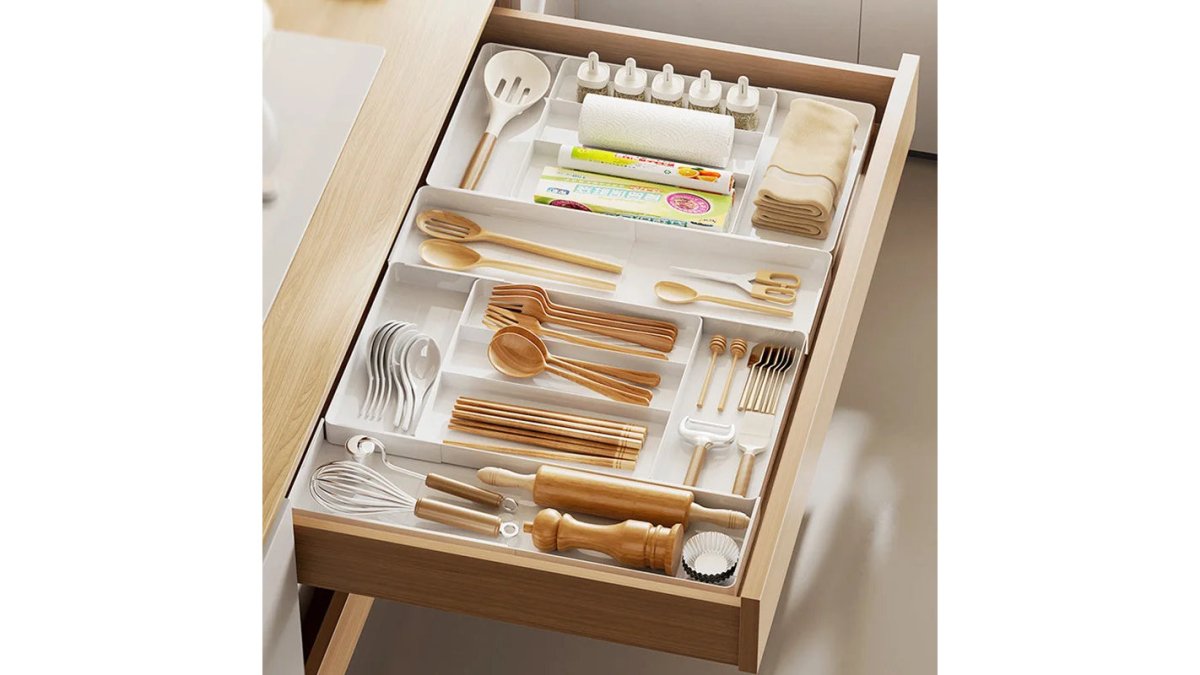
Realistic Price Ranges by Drawer Type
Most custom shops quote by the drawer, not the square foot, so sanity-check a quote against these typical ranges for a single finished insert, excluding shipping and installation:
| Drawer Type | Typical Custom Price Range | Typical Off-the-Shelf Price |
|---|---|---|
| Standard silverware drawer (roughly 12-18 in. wide) | $60-$150 | $15-$60 |
| Shallow utensil or spice drawer | $75-$180 | $20-$70 |
| Deep pot-and-pan drawer (roughly 24-36 in. wide) | $200-$600 | $40-$150 |
| Full-width deep drawer with tiers or sliding trays | $350-$900+ | $80-$250 |
| Odd-shaped or corner drawer with cutouts | $250-$700+ | Rarely fits well |
A small insert is often cheaper than people expect. The deep drawer surprises buyers, because material volume and cutting time both scale with width and depth.
What Actually Drives the Quote
Five variables move the price most:
- Dimensions. Width and depth set material volume. A 30-inch-wide drawer can use three to four times the material of a 12-inch cutlery drawer.
- Wood species and material. Baltic birch plywood is the workhorse for deep drawers because it stays flat and resists warping. Hardwoods like maple, walnut, or white oak cost more and are usually reserved for visible or high-end drawers. PET plastic and foam board sit at the bottom.
- Finish. Raw or sealed? A wipe-on oil or water-based polyurethane adds labor and a small materials cost, but it is what keeps wood from swelling in a humid kitchen.
- Compartment count and layout. Every additional divider, notch, or custom cutout adds cutting and assembly time. A simple grid is fast. A layout shaped around a specific knife set, spice jar collection, or pan stack is not.
- Labor and design time. Measuring, templating, cutting, sanding, and finishing are the bulk of the price. A drawer with awkward geometry can double design time before a single cut is made.
Rule of thumb: material is the smaller share of a custom quote; labor and design are larger. That's why two inserts from the same plywood can differ by hundreds of dollars.
How to Read a Quote Without Getting Surprised
Ask the maker to itemize material, finish, and labor. If it's a lump sum, ask what changes it, extra compartments, a different wood, a rush timeline. Most shops will say which line items are fixed and which are negotiable.
If you want to see how much value a well-designed insert adds per dollar, it helps to compare it against consumer spending data on home organization from the U.S. Bureau of Labor Statistics, which shows how much households typically put toward home goods each year.
Where the Money Goes: Labor, Design, and Hardware
Most of a custom insert's price isn't the wood, it's measuring, layout planning, cutting, and finishing. Awkward dimensions eat more design time.
Hardware adds the rest. Removable dividers, tiered risers, and sliding trays all push the number up. If you want to see how much value a well-designed insert adds per dollar, it helps to compare it against consumer spending data on home organization from the U.S. Bureau of Labor Statistics, which shows how much households typically put toward home goods each year.
How to Measure a Drawer for an Organizer Before You Order
Measure the inside of the drawer, not the outside, at the top, middle, and bottom. Drawers taper, so a tray that fits the top opening can jam halfway down.
Follow this order:
- Remove the drawer and set it on a flat surface.
- Measure interior width at the front, middle, and back.
- Measure interior depth from front edge to back wall.
- Measure interior height from floor to the top edge.
- Note any obstructions: hinges, runners, or a narrowing back.
- Write down the smallest number for each dimension.
Use the smallest width and depth you find. That's your true drawer fit. Order to that number, not the largest.
Custom Drawer Inserts vs Store-Bought Organizers: The Real Trade-Offs
The trade-off is fit versus cost. Store-bought organizers win on price and speed; custom drawer inserts win on usable space, because they're shaped to your drawer instead of forcing it to accept a standard rectangle.
An adjustable off-the-shelf tray, like our Expandable Drawer Organizer at $59.99, handles most standard cutlery drawers. It expands to fit a range of widths, and removable dividers set compartments for spoons, forks, and knives.
Store-bought falls short in the odd drawer. If yours is unusually deep or narrow, a fixed tray leaves gaps along the edges, wasted space that custom sizing solves.
| Factor | Custom Insert | Store-Bought Organizer |
|---|---|---|
| Upfront cost | Higher | Lower |
| Fit in odd drawers | Exact | Approximate |
| Wasted space | Minimal | Common at edges |
| Time to get it | Days to weeks | Same day |
| Best for | Deep, non-standard drawers | Standard, shallow drawers |
If your clutter problem is clothes rather than cutlery, our Fabric Drawer Organizers for Socks & Underwear at $22.99 divide a drawer into sections and fold flat when unused, a low-cost way to test whether a divided drawer changes your routine before you spend on custom work.

DIY Kitchen Drawer Organizer: When Building It Yourself Pays Off
A DIY kitchen drawer organizer pays off when your drawer is simple and your time is cheap. A rectangular drawer with square corners is easy to build from foam board or plywood with a straight edge and utility knife.
Expandable Drawer Organizer – Adjustable Cutlery Tray for Spoons & Forks →
The catch is finishing. Raw wood swells and warps near moisture, so it needs sealing; foam board is quick but dents under heavy pots.
Build it yourself if the drawer is square and you enjoy the project. Buy it if the drawer is irregular, deep, or holds heavy items, a homemade insert that sags in six months wastes money and time twice.
Durability, Maintenance, and Replacement Costs Over Time
Durability changes the math. Foam board and contact paper versions often need replacing within a year or two in a busy kitchen.
Maintenance is simple: wipe with a damp cloth and dry thoroughly. PET plastic handles this best.
The real cost is replacement: an insert you replace twice costs more than one you buy once.
Expected Lifespan by Material
Lifespan depends on material, moisture exposure, and contents weight. These are common patterns, not guarantees:
| Material | Typical Lifespan in a Kitchen Drawer | What Shortens It |
|---|---|---|
| Foam board | 6-18 months | Heavy pots, damp drawers, repeated wiping |
| Contact paper over foam | 6-18 months | Peeling edges, moisture under the paper |
| PET plastic | 3-7 years | Cracking under heavy load, UV if near a window |
| Sealed Baltic birch plywood | 5-10+ years | Standing water, skipped re-sealing |
| Solid hardwood | 10+ years | Moisture swings, heavy impact, no finish |
Cleaning and Maintenance by Material
-
Plastic (PET): Wipe with a damp cloth and mild dish soap. Avoid abrasive pads, which dull the surface. Air-dry fully before reloading.
-
Foam board: Spot-clean only. Moisture breaks down the paper facing and the foam core.
One habit extends any insert's life: never put a wet pot, pan, or utensil back in the drawer. Water is the biggest killer of drawer organizers.
The Replacement-Cost Math
This is where custom inserts often win on total cost, not just fit. The crossover depends on how long the cheaper option lasts. Replace a $40 tray every year and you've spent $400 in a decade, more than many custom inserts.
A Decision Framework: When Custom Is Worth It (and When It Isn't)
Decide in under a minute:
- Choose custom if the drawer is deeper than standard, has an irregular shape, or you open it several times a day.
- Choose adjustable store-bought if the drawer is a standard size and shallow, like most cutlery drawers.
- Choose DIY if the drawer is square, the contents are light, and you want to spend the least.
- Skip both if the drawer is rarely used. Organizing a drawer you open twice a month rarely changes anything.
The deciding question isn't "which is best" but "how much of this drawer's space is wasted, and how often do I feel it?" If the answer is "a lot" and "daily," custom sizing earns its cost.
Conclusion: Matching the Spend to the Drawer
The hardest part of organizing isn't buying the insert, it's admitting which drawers need one and which just need less stuff. Match the spend to the drawer, and the money stops feeling wasted.
At The Reset Aisle, we build our range around making the belongings you already own work harder.
Start with the drawer that frustrates you most. Get started with The Reset Aisle and turn that one chaotic space into something calm and under control.
Frequently Asked Questions
How much do custom kitchen drawer inserts cost?
Custom inserts typically run higher than off-the-shelf trays because you are paying for measurement, design, cutting, and material. The final price depends on drawer count, material (solid wood costs more than birch plywood or foam board), and whether you order one insert or a full kitchen set. For a single drawer, many homeowners find a well-made adjustable organizer like an expandable cutlery tray at $59.99 covers the same job for far less.
Are custom drawer inserts worth the cost compared to store-bought organizers?
It depends on your drawers. Custom inserts win when your cabinet layout is non-standard, you have deep drawers for pots and pans, or you want every inch of usable space filled. Store-bought organizers win when your drawers are standard sizes and your budget is tight. A $22.99 fabric drawer organizer or a $59.99 expandable tray solves most everyday needs without the custom price tag.
How do I measure a drawer for an organizer?
Measure the inside of the drawer box, not the cabinet opening. Record the interior width, depth, and height at the front, middle, and back, since many drawers taper. Subtract at least a quarter inch from the narrowest width so the organizer slides in without scraping. Also note the drawer's interior height so tiered organizers or spice racks clear the cabinet frame when closed.
Can I build a DIY kitchen drawer organizer instead?
Yes, and it is often the cheapest route if you already own a saw and measuring tools. Foam board, birch plywood, and pre-cut wood strips are common materials. The trade-off is time: a DIY insert for one drawer can take an afternoon, and fit errors mean starting over. If your goal is speed and a clean finish, an adjustable store-bought organizer usually gets you there faster.