

Table of Contents
- Why Space-Saving Desk Solutions Matter in Small Bedrooms
- Wall-Mounted Folding Desks: Compact and Rental-Friendly
- Corner Desk Ideas for Small Rooms
- Floating Desk Designs with Vertical Storage Integration
- How to Organize a Small Home Office with Multi-Purpose Furniture
- Closet Office Conversions and Loft Bed Desk Integration
- Cable Management and Ergonomic Chair Compatibility for Small Desks
- Conclusion
- Frequently Asked Questions
Last Updated: September 25, 2026
Why Space-Saving Desk Solutions Matter in Small Bedrooms
A small bedroom doesn't mean sacrificing a functional workspace. Choosing the right desk setup becomes the difference between a room that feels calm and one that feels chaotic.
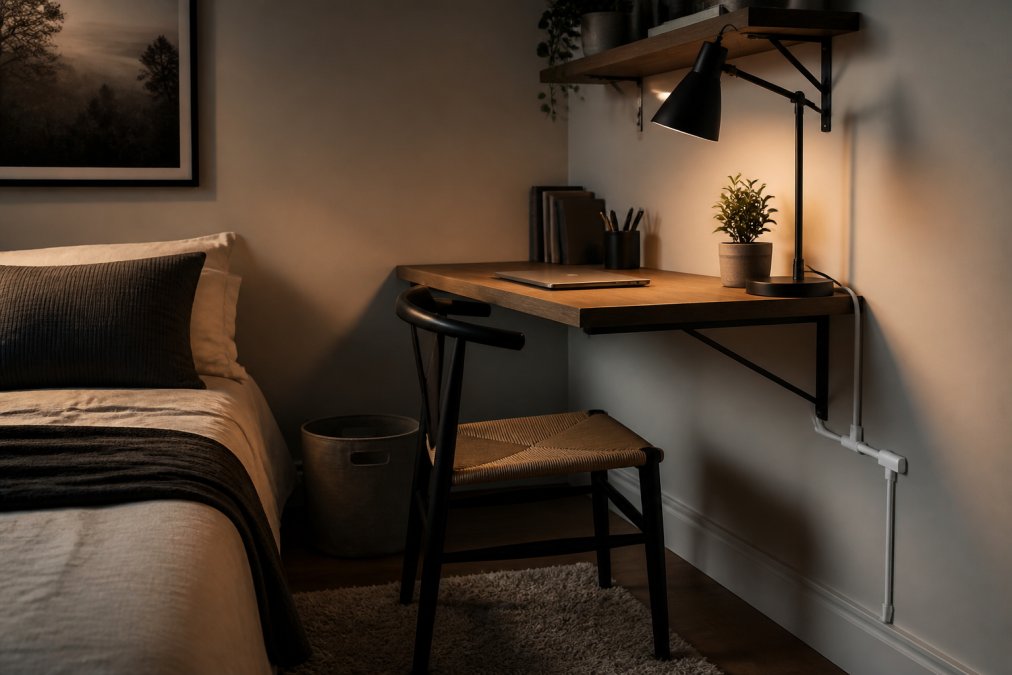
Space-saving desk ideas use vertical storage, wall-mounted surfaces, and multi-purpose furniture. The goal is to create a functional, ergonomic workspace that doesn't overwhelm the room.
At The Reset Aisle, we focus on practical solutions that make your existing space work better. Below, we'll show you exactly how to find the best space-saving desk ideas for your specific situation.
Wall-Mounted Folding Desks: Compact and Rental-Friendly
A wall-mounted folding desk is the most flexible option for small bedrooms. When folded up, it disappears completely. When you need to work, it drops down to create a full work surface, typically 36-48 inches wide with 18-24 inches of depth.
Folding desks can be mounted with adhesive strips or light anchors that won't damage walls, making them ideal for renters.
What to consider:
- Cable management is critical when the desk folds. Adhesive cable holder clips (like those from The Reset Aisle at $1.88) keep cords organized and prevent tangling.
The trade-off: Folding desks work well for lightweight setups, laptop, notebook, maybe a small monitor. If you need multiple monitors, printers, or heavy equipment, the weight limit and surface area become constraints.

Best for: Remote workers, students, and renters who need flexibility and minimal floor footprint.
Corner Desk Ideas for Small Rooms
Corner desks maximize unused space by fitting into the natural nooks of your room. A corner desk transforms that dead space into functional square footage without consuming additional floor area.
Measurement and clearance checklist:
- Measure the corner depth at desk height (28-30 inches) and at the floor. Most corners are 90 degrees, but older homes may vary.
- Account for door swings and closet openings. Your desk cannot intrude into the door's arc.
- Leave at least 24 inches of clearance in front of the desk for your chair to roll backward.
- Check for baseboards, outlets, or radiators that may prevent the desk from sitting flush against the corner.
Chair footprint and ergonomic positioning:
- You need at least 3-4 inches of clearance behind you to push back without hitting the wall.
- Test the chair angle by rotating left and right. If armrests or wheels hit the walls, the corner is too tight.
- Consider a compact task chair without armrests or with retractable armrests. Brands like Autonomous and Fully offer compact models designed for small offices.
- If chair clearance is impossible, a corner desk becomes standing-only, which limits work duration.
Cable management in corners:
Lighting in corner positions:
Rental-friendly corner desk installation:
Floating Desk Designs with Vertical Storage Integration
Floating desks mount directly to the wall with no legs, creating the illusion of more floor space and making your bedroom feel more open.
Installation requirements:
- Floating desks must be anchored into wall studs for safety.
- Measure your chair height and arm position to ensure ergonomic alignment.
- Route cords along the wall and hide them behind the desk surface or with adhesive clips.
Vertical storage options:
- Floating shelves work well for books, organizers, and decorative items.
- Wall-mounted cabinets with doors hide clutter and reduce visual weight.
- Pegboards add flexibility, you adjust hooks and organizers as your needs change.
How to Organize a Small Home Office with Multi-Purpose Furniture
Multi-purpose furniture does double duty in small bedrooms. A desk with built-in storage, a bookshelf that doubles as a room divider, or a bed with under-bed drawers reduce the number of separate pieces you need. The real challenge is ensuring your chair has room to function without consuming the entire floor space.
The chair footprint problem:
Solution: Choose furniture that accommodates chair movement.
- Select a desk with open legroom underneath (at least 26 inches). This allows your chair to tuck fully under the desk when not in use.
- Avoid desks with closed bases or drawers that extend the full width, which force your chair further into the room.
- Use a compact task chair without wide armrests or with retractable armrests. This saves 4-6 inches of width.
- Consider a chair with a smaller base. Brands like Steelcase and Herman Miller offer compact models.
- Choose a chair that rolls smoothly on hard floors, which reduces the footprint needed for movement.
Multi-purpose furniture strategy:
Organization strategies:
- Drawer dividers keep small items organized. Fabric organizers with internal supports prevent collapsing.
- Vertical filing systems replace traditional filing cabinets. A wall-mounted file holder can help organize documents.
- Use adhesive cable holder clips to bundle cables along the wall or desk edge, preventing tangling and keeping the space clean.
- Shallow rolling bins under the bed hold office supplies and archived documents without requiring deep reaching.
- Pegboards on the wall above or beside your desk keep frequently used items within arm's reach.
Furniture placement for optimal flow:

- Position your desk perpendicular to the bedroom door to keep the door swing clear.
- Leave enough walking space between your desk and the opposite wall.
- Consider a closet office conversion to keep your workspace separate from your sleep space.
- Use vertical space aggressively with wall-mounted shelves, pegboards, and cable management systems.
Closet Office Conversions and Loft Bed Desk Integration
If your bedroom is genuinely tight, consider unconventional solutions. A closet can become a dedicated office nook with a small floating desk, creating a separate workspace that closes off when you're done working.
Closet office specifics:
- Ventilation matters. Leave the door open or install a small battery-powered fan.
- Lighting is critical. Mount a clip lamp or LED strip to the shelf above your desk.
- Hide cords along the back wall.
Loft bed considerations:
- Measure clearance carefully. You need enough height to sit upright with good posture and room above your head.
- Ensure the loft bed structure can support a desk mounted underneath. Some loft beds have weight limits that include the desk and equipment.
- Natural light becomes important. Position your desk near a window if possible, or use a daylight lamp to reduce eye strain.
Cable Management and Ergonomic Chair Compatibility for Small Desks
Small desks create cable management challenges. Adhesive cable holder clips ($1.88 from The Reset Aisle) mount directly to your desk or wall, bundling cables and keeping them accessible.
Cable management setup:
- Identify every cable and count them before choosing clips.
- Route cables vertically along the wall, then horizontally along the desk back edge.
- Label cables with small tags for easy troubleshooting.
- Use cable trays or sleeves for larger bundles.
Chair selection for small spaces:
- Choose a chair with locking wheels for mobility.
- Look for compact chairs without wide armrests.
- Adjustable height is non-negotiable to match your desk height.
- Ensure lumbar support to prevent back strain.
Monitor positioning:
- The top of your monitor should be at eye level when you sit with good posture.
- If your desk is too small for a monitor stand, mount the monitor on an adjustable arm that clamps to the desk.
- Keep the monitor at a comfortable distance from your eyes to reduce eye strain.
Conclusion
Small bedroom spaces don't require compromise. Wall-mounted folding desks, corner solutions, floating designs with vertical storage, multi-purpose furniture, closet conversions, and loft bed integration all create functional workspaces in tight quarters. The key is matching the solution to your specific situation: rental vs. owned, temporary vs. permanent, and the type of work you do.
Frequently Asked Questions
What is the best desk for a small bedroom?
The best space-saving desk ideas depend on your room layout and workflow. Wall-mounted folding desks work for renters and tight spaces since they mount securely without permanent damage. Corner desks maximize unused angles, while floating designs free up floor space and create an airy feel. Consider your chair size and cable management needs before choosing. A desk that folds away or fits under a loft bed gives you flexibility to reclaim space when you're not working.
How can I fit a desk in a tiny bedroom without losing floor space?
Wall-mounted and floating desks are your best options for preserving floor space. Mount a folding desk on an empty wall, and it stores vertically when not in use. Alternatively, position a corner desk along two walls to use otherwise wasted space. Under-loft bed desks integrate workspace directly into your sleeping area. Use adhesive cable holder clips ($1.88) to manage cords vertically, keeping your desk surface clear and your floor uncluttered.
Are wall-mounted desks good for small spaces?
Yes, wall-mounted folding desks are excellent for small bedrooms, especially if you rent. They mount securely to studs and fold flat when you're done working, instantly reclaiming your room. They're ideal for remote workers who need a dedicated workspace but don't want permanent furniture. The main consideration is wall strength and cable management, use adhesive clips to route cords neatly and avoid a tangled mess behind your desk.
How do I organize a small home office to stay productive and clutter-free?
Organize vertically to maximize your limited desk footprint. Use fabric drawer organizers ($22.99) to sort office supplies and keep drawers tidy. Mount cable clips above or beside your desk to eliminate cord clutter. Add under-bed storage ($14.92) for seasonal items or backup supplies. Keep only active work items on your desk surface, file papers away daily. A minimalist approach to desk accessories prevents visual overwhelm and helps you focus on your actual work.
What should I do about cable management on a small desk?
Cable clutter makes small desks feel chaotic. Use adhesive cable holder clips (available in 3-hole, 5-hole, and 7-hole configurations at $1.88) to route charging cables, USB wires, and power cords vertically along your desk edge or wall. Clean the surface thoroughly before applying the double-faced adhesive backing, then wait 3 hours before use for best grip. This keeps cables accessible but out of sight, preserving your desk surface and preventing the tangled mess that accumulates behind tight workspaces.
The Reset Aisle helps you build organized workspaces that reduce daily overwhelm. Our fabric drawer organizers, cable management clips, and storage solutions transform chaotic corners into calm, functional areas. Start your reset today and create a home office that actually works in your space.