

Table of Contents
- Why Apartments Need a Different Approach to Organization
- Vertical Storage Solutions for Renters
- Multi-Functional Furniture for Small Spaces
- Small Apartment Organization Hacks That Cost Under $35
- Zone-by-Zone Guide to Maximize Every Square Foot
- Common Space Saving Mistakes That Make Clutter Worse
- Conclusion: Build a System That Lasts
- Frequently Asked Questions
Last Updated: September 9, 2026
Why Apartments Need a Different Approach to Organization
Most storage advice assumes you have a garage, a basement, and walk-in closets. Apartments rarely offer any of that, so space saving solutions for apartment living require a mindset shift: stop trying to store more and make what you own work harder.

At The Reset Aisle, we focus on reducing overwhelm through practical storage. A 700-square-foot apartment will never hold the same volume as a house, but it can feel just as calm. The difference comes down to vertical space, multi-functional furniture, and seasonal rotation.
Clutter has a psychological cost. When your entryway is a landing strip of shoes and your kitchen counter is buried, your brain registers that chaos as unfinished business. The fix is not more bins but a deliberate system where every item has a home.
Vertical Storage Solutions for Renters
Renting changes the rules because most landlords will not let you bolt heavy shelving into walls. The workaround is to think upward with tension rods, over-the-door hooks, and freestanding units that lean rather than mount.
Vertical storage is the single highest-use move in a small apartment. A wall-mounted shelf above a door, a kitchen pegboard, or a bathroom storage ladder turns dead air into usable real estate. These solutions are rental-friendly: they leave no holes to patch when you move.
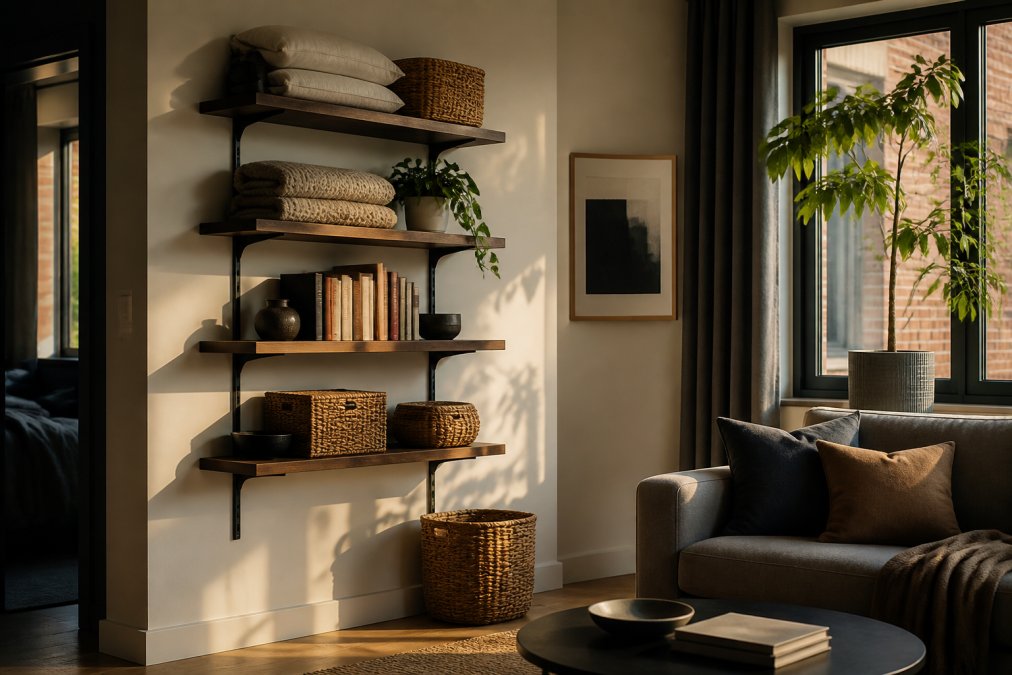
Wall-mounted options work best when you cluster them. One floating shelf looks decorative; three shelves from floor to ceiling create a storage wall. For renters worried about damage, tension rod systems in closets and over doors give you the same effect without a single screw. According to guidance on rental-friendly home improvements, most leases allow temporary fixtures as long as they are removed before move-out.
Reserve eye-level and below for daily-use items, and push seasonal or occasional items to the top shelf.
Multi-Functional Furniture for Small Spaces
Furniture that does one job only is a luxury apartments cannot afford. Multi-functional furniture for small spaces turns a studio into a livable home, but the wrong piece wastes money and floor space.
Storage Beds: Drawers vs. Hydraulic Lifts
Platform beds with built-in drawers work best when you have at least 18 inches of clearance on one side. A hydraulic lift bed raises the entire mattress platform, giving one large open cavity for bulky items like suitcases or off-season blankets. The trade-off: you must clear the top to lift it, so it is not for daily-use items. Measure clearance under the frame before buying; standard bed risers add 3 to 5 inches of height but also raise the bed's visual mass.
Sofa Beds and Futons: The Sleeper Mechanism Matters
A pull-out sofa bed with a metal frame is heavier and harder to maneuver than a click-clack futon that folds flat. In a studio, the click-clack is often more practical because it does not require pulling the sofa from the wall, though the sleeping surface is firmer. If you host guests a few times a year, a high-density foam futon mattress (at least 6 inches thick) is a reasonable compromise. For nightly use, invest in a Murphy bed with a wall-mounted mechanism.
Lift-Top Coffee Tables: The Hidden Desk
A lift-top coffee table with a gas piston mechanism raises the tabletop to desk height, typically 26 to 30 inches, turning your living room into a temporary workspace. Look for a solid base and a piston rated for at least 50 pounds of lift. The storage compartment underneath is shallow, usually 4 to 6 inches deep, so it is best for laptops, notebooks, and remote controls, not bulky files.
Storage Ottomans and Benches: Weight Limits and Access
A storage ottoman with a hinged lid hides throw blankets, but you must clear the top to open it. For daily-use items like shoes or bags, a bench with open cubbies is more practical since you can grab items without lifting the seat. Check the hinge weight limit; most are rated for 200 to 300 pounds, fine for sitting, but if you plan to use it as a coffee table, ensure the top is scratch-resistant.
The mistake most people make is buying furniture that stores things they do not need. Before investing in a storage bed, ask what you would actually put in it. If the answer is nothing, you are paying a premium for space you will never use.
For renters, installation method matters as much as function. A Murphy bed requires bolting into studs, which many leases restrict. A freestanding storage bed or ottoman requires no drilling and moves with you.
Small Apartment Organization Hacks That Cost Under $35
You do not need a professional organizer or a renovation budget to make a dent. Small apartment organization hacks under $35 can transform the worst trouble spots in a single afternoon.
Risers double the usable height in kitchen cabinets by creating a second tier for plates and mugs. Cube organizers provide modular, stackable storage that adapts to any room. Over-the-door hooks turn the back of a closet door into hanging space for bags, belts, and robes.
One of the best budget moves is the Space Saving Pant Hanger, which holds 40 pairs of pants on 10 clips for just $19.99. It takes up the rod space of a single hanger but clears out the pile that has been living on your chair. For drawers, the Fabric Drawer Organizers at $22.99 divide socks, underwear, and accessories into separate compartments with internal supports that hold their shape even when full.
| Hack | Cost | Problem It Fixes | Time to Set Up |
|---|---|---|---|
| Space Saving Pant Hanger | $19.99 | Pants piled on chairs and floor | 5 minutes |
| Fabric Drawer Organizers | $22.99 | Tangled socks and underwear | 10 minutes |
| Double-Layer Rotating Spice Rack | $24.99 | Jars lost in the back of cabinets | 2 minutes |
| Under Sink Organizer | $34.99 | Cleaning supplies crammed around pipes | 15 minutes |
Zone-by-Zone Guide to Maximize Every Square Foot
The fastest way to feel the impact of space saving is to work room by room. Trying to organize the whole apartment at once leads to burnout. Pick one zone, finish it, and move on. But the most effective approach is to measure first, then act.

Kitchen: Reclaim the Cabinet and Pantry
The kitchen is where space saving solutions for apartment living matter most because it holds the most stuff per square foot. Start with the cabinet under the sink, usually a black hole of bottles and sponges. The Under Sink Organizer with Sliding Shelves at $34.99 fits around the pipes and pulls out so you can reach the back row. Before installing, measure the cabinet depth and the P-trap height.
Spices are the second biggest culprit. The Double-Layer Rotating Spice Rack spins 360 degrees, so the jar you knocked over reaching for the paprika is now the one that comes to you. At $24.99, it turns a cabinet shelf that held twelve jars in a jumble into one footprint you can see at a glance. To maximize it, group spices by frequency of use: the front row for daily items like salt and pepper, the back row for baking spices you reach for weekly.

Closet: Double the Hanging Space
A closet rod holds far fewer items than you think because every hanger takes up lateral space. Swap bulky hangers for slim hangers and you immediately gain room. Then tackle the pants problem. The Closet Reset bundle combines the Space Saving Pant Hanger with a Fabric Drawer Organizer at $36.99, priced below buying them separately. To double your hanging space without a second rod, use a hanging shelf with a rod underneath. Measure the height of your longest garment first; a maxi dress needs at least 60 inches of clearance, which may not fit in a standard 80-inch closet with a shelf above.
Entryway and Bathroom: Hidden Storage Wins
The entryway is the first thing you see when you walk in, and clutter here sets the tone for the whole apartment. A storage bench with hooks above it gives you a place to sit, a place to hang coats, and a place to hide shoes. For renters who cannot drill, use over-the-door hooks on the entry door itself or a tension rod between two walls to create a hanging rail.
In the bathroom, the under-sink cabinet is the same problem as the kitchen, just smaller. The vertical design of the Under Sink Organizer fits tight spaces and keeps toiletries arranged and accessible. Over-the-toilet shelving and a storage ladder in the corner add capacity without touching your limited floor space. A tension rod under the sink can hold spray bottles by their necks, keeping them off the cabinet floor and visible.
Seasonal Rotation: The Missing Step
Most zone-by-zone guides stop at organizing what you own, but apartments lack the storage to keep everything visible year-round. Seasonal rotation is the step that makes the system last. At the start of each season, pull out the items you will use for the next three months and move the rest to under-bed bins, high shelves, or the top of the closet. Use clear bins with labels so you can see what is inside without opening every box. Store off-season items in the hardest-to-reach spots, like the top shelf or under the bed, and keep daily-use items at eye level or below.
The Order of Operations
Work through zones in this order: entryway first, because it sets the daily tone; then kitchen, because it has the most stuff per square foot; then closet, because it is the largest single storage area; and bathroom last, because it is usually the smallest. Finish one zone before starting the next. Complete one zone, live with it for a week, and then move to the next.
Common Space Saving Mistakes That Make Clutter Worse
Good intentions often backfire. The most common mistake is buying storage containers before measuring the space they are meant for.
The second mistake is vertical neglect. Most people store everything at waist height and leave the top two feet of every closet empty.
The third mistake is skipping seasonal rotation. Apartments do not have the luxury of storing winter coats next to summer dresses all year. advice on seasonal wardrobe rotation suggests swapping out-of-season items to under-bed storage or high shelves, which keeps daily decision-making simple and frees prime real estate.
Finally, do not buy a system that requires constant maintenance to stay organized. research on habit formation and environment design shows that environments which make the desired behavior easy are the ones that stick. If your organizer takes three steps to access, you will stop using it within a month. The Reset Aisle designs for this reality, focusing on making the items you already own work more effectively for your lifestyle rather than adding more stuff to manage.
Conclusion: Build a System That Lasts
The best space saving solutions for apartment living are the ones that survive contact with real life. That means rental-friendly installation you can reverse, furniture that earns its square footage, and organizers that make the correct behavior the easy behavior.
Start with one zone, declutter first, and choose tools that fit both your space and your budget. The Kitchen Reset bundle at $52.99 tackles the two worst kitchen trouble spots in one afternoon, and the Closet Reset does the same for your wardrobe. These bundles are priced below buying the pieces separately because they are designed to work together.
A calm, organized apartment is not about perfection. It is about reducing the daily friction that comes from digging for what you need. Get started with The Reset Aisle and turn your chaotic spaces into peaceful, efficient environments that actually stay that way.
Frequently Asked Questions
What are some space saving ideas for apartment living?
Effective space saving solutions for apartment living start with using vertical wall space. Mount floating shelves or install tension rods in cabinets to create a second level of storage. Swap freestanding furniture for multi-functional pieces like ottomans with hidden compartments or beds with drawers underneath. In the closet, replace individual hangers with a space saving pant hanger that holds up to 40 pairs on one rod, instantly clearing clutter.
How can I optimize vertical space in a rental apartment without damaging walls?
For vertical storage solutions for renters, look for damage-free installation methods. Tension rod systems work well inside cabinets and closets without screws. For wall-mounted options, use heavy-duty removable adhesive strips rated for your item's weight. Over-the-door hooks and hanging organizers fit standard doors and require no drilling. Always check your lease, but these methods typically leave no marks and come down cleanly when you move.
What are the best multi-functional furniture pieces for small spaces?
The best multi-functional furniture for small spaces includes a storage ottoman that serves as seating and hides blankets, a drop-leaf table that expands for guests and folds flat against the wall, and a bed frame with built-in drawers. A loft bed or Murphy bed frees up entire floor space for a desk or seating area. Look for pieces that earn their square footage by solving at least two problems at once.
Where do you store stuff you have no place for in your apartment?
Start by separating items into daily use, occasional use, and seasonal. Daily items belong in accessible zones like under the sink or on open shelves. For seasonal items, use the space under your bed with flat storage bins. If you have a closet with high shelves, that top shelf is prime real estate for rarely used items. Rotate seasonal gear twice a year so your prime storage areas only hold what you actually need right now.
How do I organize a small apartment without looking cluttered?
The key is hiding the visual noise. Use closed storage like baskets and fabric bins to contain smaller items, so surfaces stay clear. In drawers, use fabric drawer organizers to give socks, underwear, and accessories a designated compartment instead of a tangled pile. Limit what sits on countertops and shelves to a few intentional pieces. When everything has a home and most items are out of sight, the space looks calm and intentional.
How do I keep my apartment organized long-term instead of relapsing into chaos?
A lasting system survives because it is easier to maintain than to abandon. Choose organizers that match how you actually live, not an idealized version. For example, a double-layer rotating spice rack ensures you can see every jar, so you will put it back. A sliding under-sink organizer makes reaching cleaning supplies effortless. When putting something away takes less than five seconds and requires no digging, the habit sticks.