

Table of Contents
- Why Space-Saving Storage Matters for Your Home
- Small Space Organization Ideas That Actually Work
- How to Maximize Closet Space with Smart Organization
- Functional Home Storage Solutions for Every Room
- Decluttering Strategies That Stick Long-Term
- Choosing Durable, Quality Storage Products
- Frequently Asked Questions
Last Updated: October 3, 2026
Why Space-Saving Storage Matters for Your Home
Clutter drains your energy and wastes time. When your closet, pantry, and drawers are packed, finding what you need becomes exhausting. Space-saving storage solutions transform chaotic spaces into calm, functional areas.
The real problem isn't that you own too much, it's that your storage system wasn't designed for your actual life. Generic bins don't fit. Shelves gap. Drawers overflow. Nothing stays organized without the right strategy.
The right storage approach transforms your space. Your mornings move faster. You can see what you have. Your space feels peaceful instead of overwhelming.
Small Space Organization Ideas That Actually Work
Living in a small space forces intentional choices and pushes you to find solutions that work.
Vertical Storage and Wall-Mounted Solutions
Your walls are underutilized real estate. Most people ignore the vertical dimension entirely.
Wall-mounted storage pulls items off the floor and surfaces. A wall-mounted hook rack keeps kitchen utensils and towels within reach without eating up cabinet space. The American Psychological Association research on environmental stress shows that visual clutter increases cortisol levels, mounting items on walls reduces what you see at eye level, creating a calmer environment.
Consider these vertical options:
- Hook racks for kitchens and bathrooms: Store frequently used items where you need them. The Wall-Mounted Kitchen & Bathroom Hook Rack from The Reset Aisle features adjustable aluminum hooks that install without drilling, making it ideal for renters and homeowners alike.
- Over-the-door organizers: Doors represent dead space. Hanging organizers on closet doors, bathroom doors, or pantry doors add storage instantly.
- Wall-mounted mop and broom holders: Cleaning tools shouldn't sit in corners. A 5-hook aluminum organizer keeps them visible and accessible while freeing up floor space.
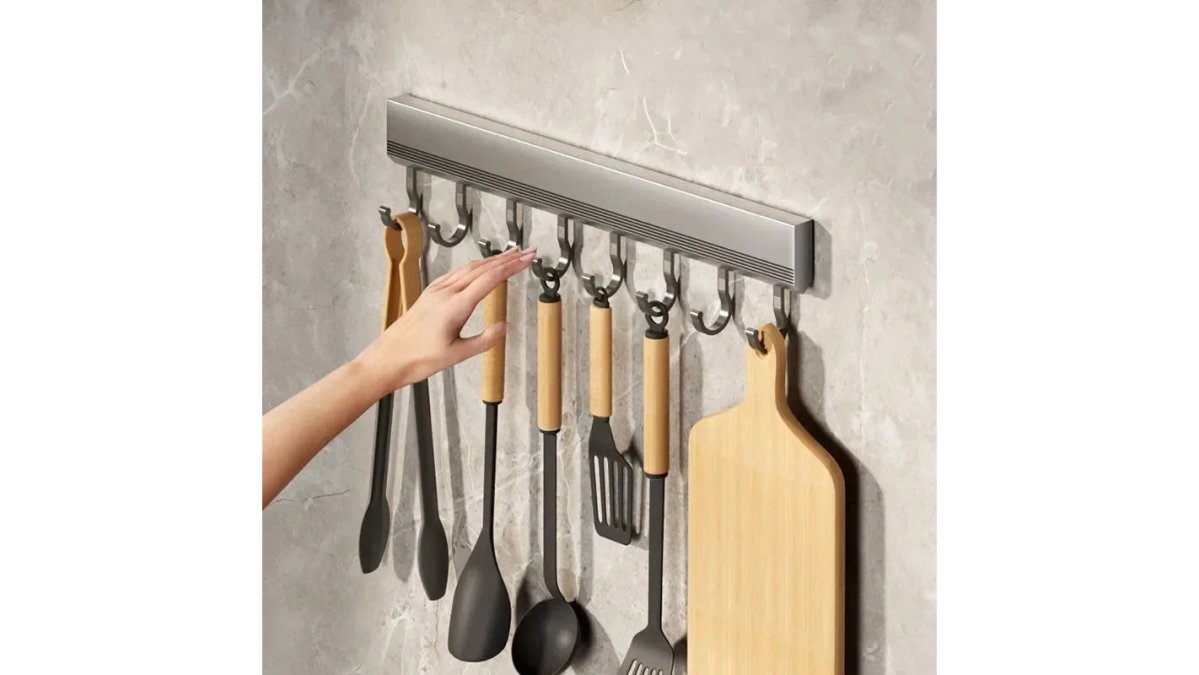
Choose durable materials that won't sag or fail. Aluminum resists moisture and rust.

Modular and Stackable Systems
Modular storage adapts to your space. Unlike built-in shelving, modular systems expand or contract as your needs change and move with you.
Stackable containers create vertical layers without additional floor space. The Expandable Kitchen Storage Shelf adjusts from 36 cm to 69 cm wide, fitting cabinets and cupboards of different sizes.
When storage is flexible, you're more likely to maintain it. Modular systems feel like they're working with you, not against you.
How to Maximize Closet Space with Smart Organization
A well-organized closet saves time every morning and reduces decision fatigue.
When everything is visible and accessible, you choose faster and save time each morning.
Multi-Functional Hangers and Compression Storage
The Space Saving Pant Hanger holds 40 pairs of pants using 10 strong clips, taking up the space of one hanger but clearing out the clutter.
The 5-Hole Rotating Clothes Hanger organizes five pieces on one hanger, making access easy without disrupting the stack.
Vacuum storage bags compress bulky items like winter coats and comforters to a fraction of their original size. The Vacuum Storage Bags from The Reset Aisle use a no-pump design and are reusable year after year.

When you can see everything you own, you stop buying duplicates and wear more of what you have.
Functional Home Storage Solutions for Every Room
Storage needs vary by room. A kitchen pantry requires different organization than a bathroom cabinet.
Kitchen and Pantry Organization
Kitchen storage requires two things: quick access to frequently used items and containment of smaller items.
A pull-out cabinet organizer solves the access problem. A sliding drawer organizer pulls forward, giving you full visibility and easy access to cleaning supplies and essentials.

The Pull-Out Pots & Pans Organizer with adjustable dividers keeps cookware organized and accessible. Stainless steel construction withstands daily use and moisture.
An expandable kitchen shelf adds a second tier to cabinet space, doubling your storage capacity for spices, cups, bowls, and plates.
Bedroom and Under-Bed Storage
An under-bed shoe storage organizer with a clear cover lets you see what's stored without opening the container, working for shoes, seasonal clothing, and accessories.
The clear cover matters, hidden storage becomes forgotten storage, leading to duplicate purchases. Visibility prevents waste.
Bathroom and Utility Spaces
A 2-tier pull-out under-sink organizer maximizes awkward bathroom sink space with multiple ways to organize toiletries and supplies.
The pull-out design is critical, it makes items visible and accessible instead of buried in deep cabinets.
Decluttering Strategies That Stick Long-Term
Organization fails without decluttering first. Adding storage to unused items creates organized clutter. Decluttering is a behavioral reset that prevents clutter from returning.
Vacuum Storage Bags – Space-Saving Clothes & Quilt Organizer →
The Psychology Behind Clutter Accumulation
Clutter accumulates because of decision fatigue, emotional attachment, and unclear ownership. Without a system for making decisions, items pile up.
Visual clutter increases cognitive load, leaving less mental energy for other tasks.
Many people keep items because of guilt, obligation, or aspirational thinking. Acknowledging this emotional weight is the first step to moving past it.
A Decluttering Framework That Works
Sort everything into keep, donate, discard, and uncertain. Box uncertain items, label with today's date, and store out of sight. If unopened after three months, donate without reviewing. This removes emotional decision-making.
If you haven't touched something in a year and it doesn't bring joy or serve a function, let it go. Keeping unused items doesn't honor your investment, it wastes space and mental energy.
For clothing, use the hanger test: hang all clothes backward, then forward when worn. After three months, donate everything still hanging backward.
Maintaining Organization Long-Term
Preventing clutter from returning requires a maintenance system, not just willpower.
Implement a one-in-one-out rule: for every new item, remove one item of similar category. This prevents gradual accumulation and forces intentional purchasing.
Schedule a monthly 15-minute reset to return items to their designated places. This prevents the slow creep of clutter.
Create a donation box that lives in your closet or garage. When you notice something you no longer use, immediately place it in the box. When the box is full, donate it. This prevents the mental burden of deciding what to donate and makes the process automatic rather than overwhelming.
The psychological shift matters most. When your space contains only things you value and use, maintaining it becomes natural. You're protecting something that matters, not fighting against chaos. This shift from reactive organization to proactive curation is what makes long-term organization possible.
Choosing Durable, Quality Storage Products
Not all storage is created equal. Cheap bins crack. Plastic hangers bend. Flimsy organizers collapse under weight. But durability isn't just about material strength, it's about environmental impact, maintenance requirements, and long-term value.
Materials That Last: Durability Versus Sustainability
The Reset Aisle focuses on materials that balance durability with environmental responsibility:
- Stainless steel for kitchen organizers: resists rust and corrosion, fully recyclable at end of life, and requires minimal maintenance beyond occasional wiping.
- Aluminum construction for wall-mounted racks: lightweight but strong, resistant to moisture, and 100% recyclable.
- PA+PE composite material for vacuum bags: withstands repeated compression without degrading, and the material is recyclable through specialized programs.
- Recycled plastic for pull-out organizers and containers: increasingly available as an alternative to virgin plastic.
- Bamboo or sustainably harvested wood for shelving and drawer organizers: biodegradable at end of life, renewable, and naturally antimicrobial. Wood requires more maintenance (occasional oiling or sealing) but offers aesthetic appeal and longevity when properly cared for.
Maintenance Protocols That Extend Product Life
Durable products require maintenance. Understanding how to care for your storage system is the difference between a 3-year lifespan and a 10-year lifespan.
For stainless steel organizers: Wipe down monthly with a damp cloth and dry immediately. For stubborn spots, use a mixture of equal parts white vinegar and water. Avoid abrasive scrubbers that scratch the surface. In high-moisture areas like bathrooms, ensure adequate ventilation to prevent water spots.
For aluminum racks: Dust regularly with a soft cloth. Aluminum naturally oxidizes (develops a white coating), which actually protects the underlying metal. If you want to maintain the shiny finish, use a commercial aluminum cleaner quarterly. For wall-mounted racks, check mounting hardware twice yearly to ensure bolts remain tight.
For vacuum storage bags: After each use, ensure the seal is completely closed. Store bags in a cool, dry location away from direct sunlight, which degrades the plastic over time. Before reusing, inspect seals for cracks.
For pull-out organizers: Check slides and rollers monthly for debris. Wipe tracks with a dry cloth to remove dust that causes sticking. Avoid overloading beyond the weight rating, which causes premature wear on slides.
For wooden shelving: Oil or seal wood annually depending on the finish. Wipe spills immediately to prevent water damage. Avoid placing hot items directly on wood surfaces. In humid environments, ensure adequate air circulation to prevent mold and warping.
Evaluating True Cost and Environmental Impact
When you invest in quality, you're not spending more, you're spending once. A $50 organizer that lasts five years costs $10 per year. A $15 organizer that fails in two years costs $7.50 per year upfront but requires replacement, adding to landfill waste and total lifetime cost.
Consider the environmental cost of replacement. Manufacturing new products requires energy and raw materials. Shipping generates emissions. Disposal creates waste. A durable product you keep for a decade has a lower environmental footprint than three cheap products you replace over the same period.
When evaluating storage products, ask these questions:
- What is the warranty?
- What are the weight ratings?
- Are replacement parts available? If a slide breaks, can you replace just the slide or must you replace the entire organizer?
- Is the product repairable?
- What materials are used? Check the product description for specific material names, not vague terms like "durable plastic."
Quality storage also feels better. A smooth-sliding pull-out drawer is a pleasure to use. A flimsy plastic organizer feels like a compromise. When your storage system feels good to use, you're more likely to maintain it and less likely to abandon your organization system.
Frequently Asked Questions
What are the best space-saving storage solutions for small apartments?
The most effective solutions combine vertical storage, modular systems, and multi-functional furniture. Wall-mounted racks and hooks use unused wall space without taking up floor area. Pull-out cabinet organizers maximize deep storage spaces by making items accessible. Vacuum storage bags compress bulky clothing and seasonal items, reducing volume significantly. Stackable containers and adjustable shelving adapt to your specific space constraints. The key is matching your storage tools to your room layout and daily habits.
How can I organize my home to maximize storage efficiency?
Start by assessing what you actually own and removing items you don't use. Then assign each category a dedicated storage zone: clothing in closets with multi-functional hangers, kitchen items in pull-out organizers, and seasonal goods in under-bed containers. Use vertical space with wall-mounted hooks and expandable shelves. Group similar items together for quick access. Regularly review your system and adjust dividers and shelves as your needs change. This prevents clutter from accumulating and keeps everything functional.
Are modular storage systems worth the investment for small spaces?
Yes, modular systems offer long-term value because they adapt as your needs change. Unlike fixed shelving, adjustable dividers and expandable designs grow with your household. Quality materials resist wear from frequent access and repositioning. While initial costs may be higher than basic bins, modular systems last years longer and prevent the frustration of replacing failed organizers. They also reduce the psychological overwhelm of clutter by creating clear, accessible zones for everything you own.
How do I know if storage products will actually fit my space?
Measure your cabinet depth, shelf width, and clearance height before purchasing. Note any awkward angles, slanted ceilings, or unusual shelf spacing. Vacuum storage bags compress to about 2-3 inches thick, fitting easily under beds or in closets. Expandable shelves adjust from 27.5 to 53 inches wide, accommodating most cabinet widths. Wall-mounted solutions work on smooth, non-porous surfaces. If you're unsure, choose adjustable systems that can be customized to your exact dimensions.