

Table of Contents
- The Real Reason Home Organization Systems Keep Failing
- Decluttering Mistakes to Avoid Before You Buy a Single Bin
- Why Behavioral Patterns Matter More Than Storage Solutions
- Daily Habits for an Organized Home That Stays That Way
- Don't Forget Digital Clutter: The Hidden Drain on Home Management
- Best Home Organization Products for Small Spaces That Won't Let You Down
- How to Build Home Organization Systems That Survive Real Life
- Conclusion
Last Updated: August 11, 2026
Home organization systems fail not because people are lazy or disorganized by nature, but because the systems themselves are built on a flawed foundation. This guide breaks down exactly why home organization systems stop working and, more importantly, what to do about it.
The core problem isn't storage. It's behavior.
The Real Reason Home Organization Systems Keep Failing
Most home organization systems are designed to look good on a shelf, not to survive contact with real life. The gap between a Pinterest-perfect pantry and a functional one that holds up through busy mornings, grocery runs, and sick days is almost entirely behavioral, not structural.
A home is a living system. Things move, quantities change, habits shift. A static organizational system applied to a dynamic household is a system that's already failing.
Organizing Is Not the Same as Decluttering
Organizing is the arrangement of items you already have. Decluttering is deciding which items deserve space in your home at all. These are two entirely different activities, and conflating them is the single most common reason home organization systems collapse.
Organizing clutter just makes clutter neater. When the system inevitably overflows, it feels like an organizational failure. It isn't. It's a decluttering failure. Always declutter before you organize.
New Items Break Every System You Build
A system calibrated for 40 items breaks when you bring home 50. Most people design their organizational systems around current inventory without accounting for inflow. Groceries arrive weekly. Kids bring home school projects. Online orders accumulate.
Sustainable home organization requires an inventory management mindset. For every item that enters a space, something should exit.
Decluttering Mistakes to Avoid Before You Buy a Single Bin
The most expensive decluttering mistake is buying storage products before you know what you're storing. Resist the temptation to buy first and sort later.
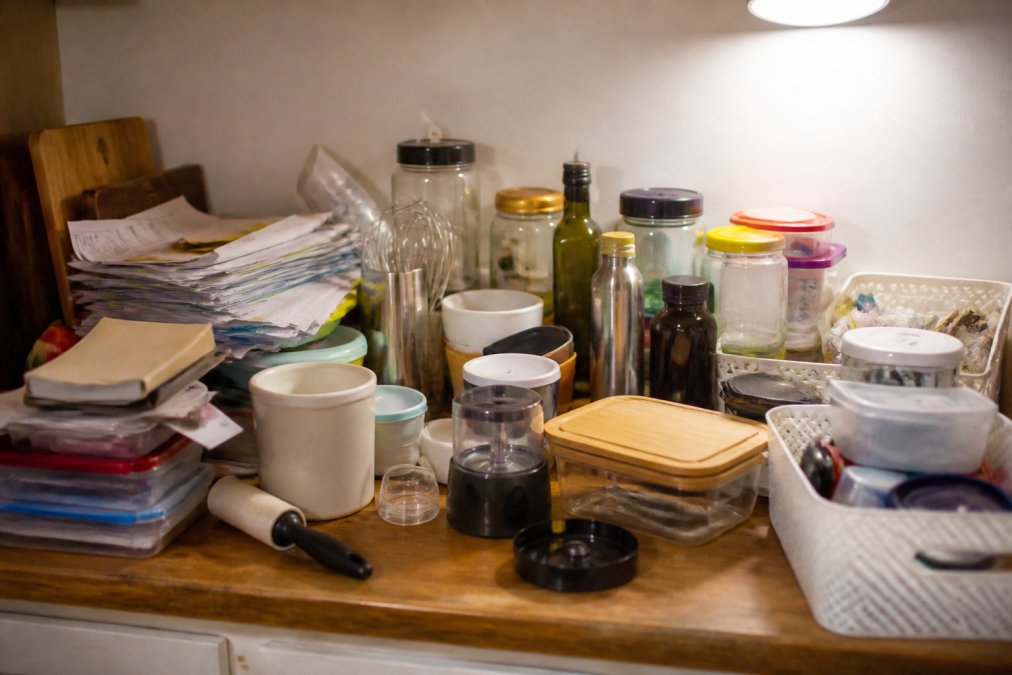
Buying storage before decluttering is the organizational equivalent of buying a larger wardrobe to deal with clothes you never wear. According to the National Association of Productivity and Organizing Professionals, the average American home contains more than 300,000 items. Most households are not storage-limited. They're decision-limited.
The Sunk Cost Trap: When Past Purchases Hold You Back
Many people hold onto organizational products that never worked because they spent money on them. The bin that doesn't fit the shelf, the drawer divider that's the wrong depth, the label maker that requires too much maintenance. These items take up space and generate guilt without contributing to a functional system.
Keeping a product that doesn't work because you paid for it is a choice to let a past decision override a present need. Donate it or discard it, and start fresh with products that actually fit your space.
Skipping the Root Cause Audit
Before reorganizing any space, spend ten minutes asking why it got cluttered in the first place. Is the pantry disorganized because there's no logical zone for snacks? Is the junk drawer overflowing because there's no designated home for batteries and tape elsewhere?
A lifestyle audit of each problem area should answer three questions:
- What categories of items consistently end up here?
- Why is this the path of least resistance for those items?
- What would make the correct behavior easier than the incorrect one?
The answers shape the system. The system shapes the habit.
Why Behavioral Patterns Matter More Than Storage Solutions
Storage solutions are tools. They don't change behavior on their own. A beautiful spice rack doesn't make someone put spices back in the right spot. A labeled bin doesn't guarantee items land inside it. Behavioral patterns determine whether any system survives long-term.

Decision Fatigue and Executive Function
Decision fatigue is the deterioration of decision quality after a long period of making choices. By the end of a busy day, the cognitive load required to put something in the "right" place instead of the nearest flat surface is genuinely higher than it was in the morning. This is not a character flaw. It's how human cognition works.
Systems that require constant decisions fail faster than systems that make the correct choice automatic. Zone-based storage, where every category has a fixed home, reduces the number of micro-decisions required to maintain order. According to research on executive function and daily habits, the brain's capacity for effortful self-regulation is finite and depletes throughout the day. Organizational systems that ignore this reality are designed for a version of you that doesn't exist after 6pm.
Neurodivergent-Friendly Organization: Building Systems That Actually Fit
Standard organizational advice assumes neurotypical executive function: the ability to categorize intuitively, remember where things belong, and sustain attention during tidying. For people with ADHD, autism, or other neurodivergent profiles, these assumptions don't hold.
Neurodivergent-friendly organization prioritizes visibility over aesthetics. Closed bins that hide contents create "out of sight, out of mind" failure modes. Open bins, clear containers, and minimal categorization layers work better.
A few principles that work across neurodivergent profiles:
- Fewer categories: Broad zones beat granular subcategories for people who struggle with sorting decisions
- Visual accessibility: If you can't see it, it doesn't exist. Open storage or transparent containers reduce this risk
- Short reset cycles: Daily five-minute resets beat weekly overhauls for maintaining momentum
- Forgiving systems: A system that tolerates imperfect use without collapsing is more sustainable than one requiring precision
Daily Habits for an Organized Home That Stays That Way
The difference between a home that stays organized and one that doesn't is rarely the quality of the products. It's the presence or absence of daily habits that reset the space. Effective maintenance habits don't require large blocks of time. They require consistency and smart integration into what you already do.
Habit Stacking: Attach Resets to What You Already Do
Habit stacking is the practice of attaching a new behavior to an existing one. It's one of the most reliable methods for building sustainable household routines without adding perceived burden to your day.
Practical examples:
- While the coffee brews, clear the kitchen counter
- While brushing teeth, put away anything on the bathroom vanity
- When bringing in groceries, remove one item from the pantry that's expired or no longer needed
- Before bed, do a two-minute living room reset
These micro-habits create a maintenance cycle that prevents clutter accumulation without requiring dedicated organizing sessions.
A Simple Weekly Maintenance Checklist
A weekly review catches what daily habits miss. A 15-minute walkthrough with a consistent checklist is enough for most households.
| Area | Task | Frequency |
|---|---|---|
| Pantry | Check expiry dates, return misplaced items | Weekly |
| Closet | Return clothes to correct zones, remove worn items | Weekly |
| Drawers | Clear surface items, return to designated bins | Weekly |
| Entryway | Clear accumulated mail, bags, and shoes | Daily |
| Digital files | Archive completed documents, empty downloads folder | Weekly |
| Under-sink storage | Check supplies, discard empties | Bi-weekly |
The checklist isn't about perfection. It's about preventing small drifts from becoming full resets.
Don't Forget Digital Clutter: The Hidden Drain on Home Management
Digital clutter generates the same low-level cognitive load as physical clutter. An overflowing email inbox, a desktop covered in unnamed files, and a phone camera roll with thousands of unreviewed photos all occupy mental bandwidth that would otherwise support better household decision-making.
Digital organization follows the same principles as physical organization. Zone-based folder structures replace zone-based storage. Regular archiving replaces the weekly maintenance walkthrough. Tools like Todoist for task and household management can help translate physical household routines into trackable digital habits.
Digital clutter often generates physical clutter. Unreviewed online orders, unread recipe bookmarks that lead to unused pantry purchases, and unmanaged subscription boxes all feed physical accumulation. Managing the digital inflow is part of managing the physical space.
Best Home Organization Products for Small Spaces That Won't Let You Down
Products matter, but only after the behavioral foundation is in place. For small spaces, the priority is space optimization: products that do more with less footprint and adapt to awkward dimensions.
The Reset Aisle offers storage solutions for spaces that need to optimize existing storage. A few products worth knowing:
- Under Sink Organizer with Sliding Shelves ($34.99): The sliding shelf design solves one of the most common small-space problems: deep storage areas where items at the back become invisible and inaccessible.
- Fabric Drawer Organizers for Socks and Underwear ($22.99): Soft-sided organizers conform to irregular drawer dimensions better than rigid dividers.
- Space Saving Pant Hanger ($19.99): Holds 40 pairs of pants on a single hanger using 10 horizontal rungs. For small closets where rod space is the limiting factor, this is one of the highest-impact products available.
- Double-Layer Rotating Spice Rack ($24.99): A lazy-Susan-style spice organizer eliminates the most common pantry frustration: items buried behind other items.
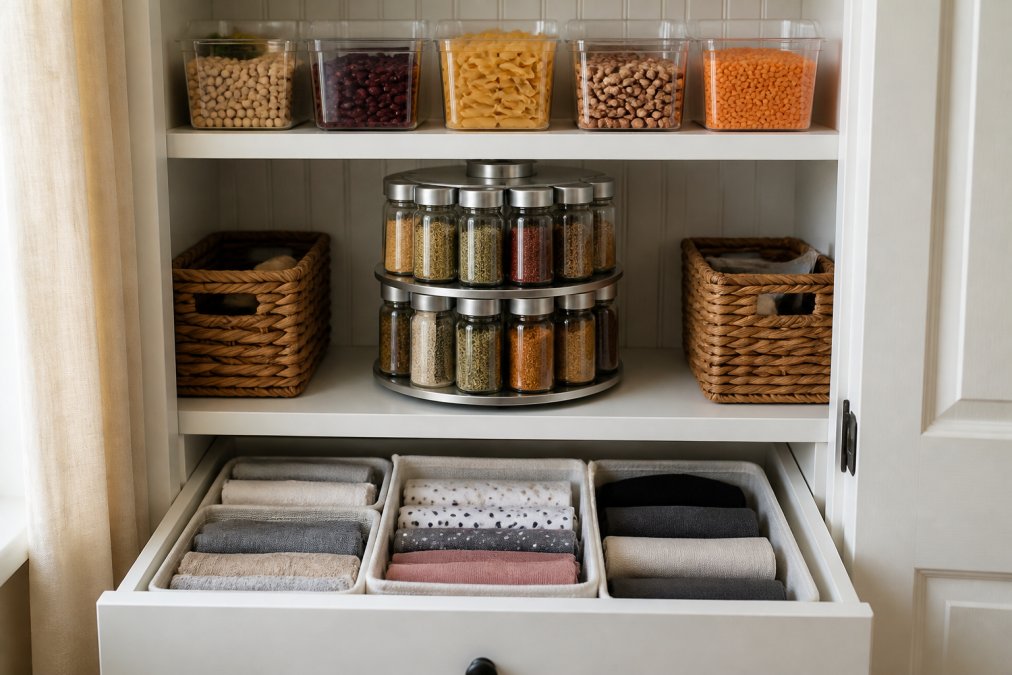
For awkward spaces, measure before you buy, and prioritize accessibility over aesthetics. A beautiful bin that makes items hard to reach will be abandoned within a month.

How to Build Home Organization Systems That Survive Real Life
Home organization systems that survive real life share three characteristics: they're forgiving of imperfect use, they require minimal daily decision-making, and they account for life transitions.
Life transitions are the most common reason a working system stops working. A new baby, a job change, a move, a new hobby. Systems built without transition tolerance need to be rebuilt from scratch every time life changes. Systems built with flexibility adapt.
Here's a practical framework for building transition-tolerant home organization systems:
Step 1: Audit the space, not just the stuff. Identify how the space is actually used day-to-day, not how you intend to use it.
Step 2: Declutter before you organize. Remove everything that doesn't belong in the space.
Step 3: Assign zones based on frequency of use. High-frequency items belong at eye level and within arm's reach. Low-frequency items go high, deep, or out of primary zones.
Step 4: Choose products that fit the space as it is, not as you wish it were. Measure twice. Buy once. Prioritize adjustability for spaces likely to change.
Step 5: Build a maintenance habit before you need it. Introduce the daily and weekly reset habits before the system has a chance to drift.
Step 6: Schedule a quarterly review. Every three months, reassess whether the system still fits your life. A 20-minute review every 90 days prevents drift before it becomes a full reset.
Clutter accumulates when systems can't keep pace with real life. The Reset Aisle exists for exactly this challenge: practical, space-saving storage solutions designed to make the things you already own work more effectively for your lifestyle. From the under-sink organizer that reclaims dead storage space to the fabric drawer organizers that adapt to non-standard dimensions, every product is chosen to reduce daily overwhelm rather than add to it. Start Your Reset at The Reset Aisle and build a system that actually holds up.

Frequently Asked Questions
What are the most common reasons home organization systems fail?
Home organization systems fail because they address storage without addressing behavior. The most common culprits are buying products before decluttering, building systems that don't match how you actually live, and skipping a maintenance routine. When new items enter the home faster than old ones leave, even a well-designed system collapses within weeks. The fix starts with a lifestyle audit before a single bin is purchased.
Is it better to declutter before buying organization products?
Yes, always. Buying storage before decluttering is one of the most expensive decluttering mistakes to avoid. You end up organizing things you don't need, filling containers with items that should have been donated or discarded. Declutter by category first, then measure your remaining inventory and choose products sized to fit what stays. This approach prevents wasted spending and keeps your system from becoming overcrowded from day one.
How do you maintain an organization system long-term?
Long-term maintenance depends on daily habits for an organized home, not willpower. Attach small resets to existing routines: put items back while the coffee brews, sort mail before dinner. A weekly 10-minute scan of high-traffic zones catches drift before it becomes clutter accumulation. Zone-based storage, where every category has a fixed home, reduces the daily decisions that cause systems to break down over time.
Why does my house get messy again so quickly?
Clutter returns quickly when the system doesn't match your behavioral patterns. If a bin is hard to open, items pile up next to it. If a drawer requires two steps to close, it stays open. Friction is the enemy of home organization systems. Assess each zone for accessibility: can you put something away in under three seconds? If not, redesign the system around how you actually move through the space, not how you wish you did.
This article was written using GrandRanker