

Table of Contents
- 1. Use Glass Pantry Storage Containers for Dry Goods
- 2. Create Zones to Categorize Pantry Items
- 3. How to Organize Deep Pantry Shelves with Vertical Storage
- 4. Install Bamboo and Wood Organizers for Natural Storage
- 5. Add Door-Mounted Hooks and Racks for Small Items
- 6. Label Everything with a Simple System
- 7. Declutter and Maintain Your Plastic-Free Pantry
- Frequently Asked Questions
Last Updated: October 2, 2026
1. Use Glass Pantry Storage Containers for Dry Goods
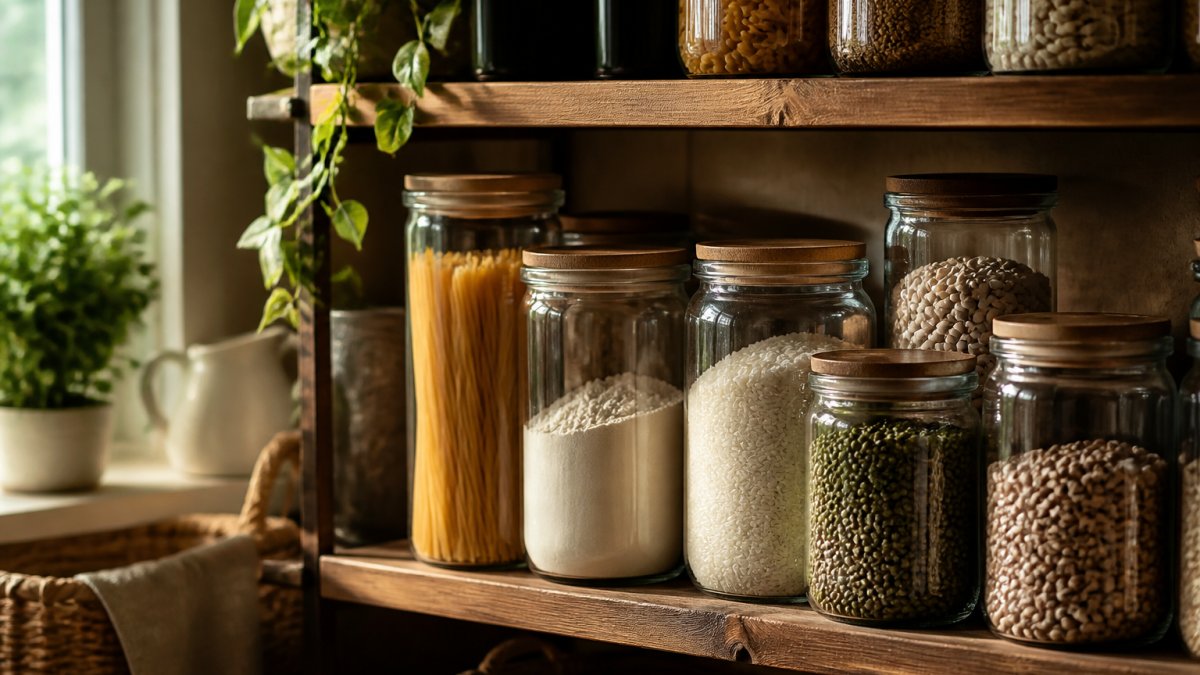
Glass containers are the foundation of a plastic-free pantry, and they're central to these 7 ways to organize a pantry without plastic.
Start by measuring your shelf space. Glass jars come in standard sizes, quart, half-gallon, and gallon capacities work well for most pantries. Fill them with staples like pasta, rice, flour, sugar, cereal, and dried beans.
Label everything clearly. Use a permanent marker or adhesive labels to write the contents and the date you filled each jar. This simple step prevents confusion and helps you rotate stock properly. Many people find that labeling transforms their entire approach to pantry maintenance, suddenly the system becomes intuitive rather than chaotic.
Glass containers eliminate the guesswork around what you have on hand, making meal planning and grocery shopping more efficient. You'll know exactly what needs replenishing.
2. Create Zones to Categorize Pantry Items
Organizing by zone means grouping similar items together so your pantry workflow matches how you actually cook and eat. This is the zone method, and it transforms a cluttered pantry into a functional kitchen workspace.
Divide your pantry into logical zones: baking supplies in one area, grains and pasta in another, snacks together, canned goods grouped, and oils and seasonings clustered near your cooking surface. The key is placing frequently used items at eye level and arm's reach.
Deep pantry shelves benefit most from zoning because the depth can hide items at the back. Create a baking zone on one shelf, a breakfast zone on another. Use vertical dividers or small shelves to separate zones within a single shelf space. This prevents items from sliding to the back and getting lost.
Consider your cooking patterns. If you bake frequently, your baking zone should be easily accessible. If you meal prep on weekends, keep proteins and prep ingredients clustered together. Our expandable shelving solutions help you create distinct zones without permanent modifications to your cabinets.

3. How to Organize Deep Pantry Shelves with Vertical Storage
Deep pantry shelves present a challenge: items disappear into the back, and you can't see what you have. Vertical storage solves this by using height instead of depth.
Install adjustable shelving inside your existing pantry shelves to create a second tier. This instantly doubles your usable space and brings items at the back forward. Stackable containers work well here, place heavier items on lower shelves and lighter ones on top.
Tiered shelf risers create visual separation and prevent items from hiding behind each other. A simple two-tier riser can transform a single shelf into two usable levels. This approach works especially well for canned goods, boxed items, and jars.
The Expandable Kitchen Storage Shelf ($29.99) from The Reset Aisle is specifically designed for this challenge. Its two-tier design adjusts to fit different cabinet depths, and the expandable width means it adapts to your exact space. No installation required, simply place it where you need it and adjust as your storage needs change.
For really deep shelves, pull-out drawers or sliding organizers bring back items without reaching. These work especially well for items you use regularly but don't want taking up prime real estate.
4. Install Bamboo and Wood Organizers for Natural Storage
Bamboo and wood organizers bring warmth to your pantry while staying completely plastic-free. They're durable, sustainable, and age beautifully, unlike plastic, which yellows and becomes brittle.
Bamboo shelf dividers prevent items from toppling over. Use them to separate different pasta shapes, grain varieties, or snack categories. Bamboo drawer organizers work in pantry drawers for utensils, small tools, and packets.
Wood crates stack neatly and create open storage for items you want visible. Use them for fresh produce, bread, or bulk items you've decanted into glass jars.
Bamboo drawer dividers fit standard kitchen drawers and adjust to your exact width. They keep utensils, scissors, and small gadgets from sliding around. Wood organizers are heavier and more stable than plastic alternatives, so items stay in place even in busy kitchens.
The investment in natural materials pays off over time. Bamboo and wood organizers last for years without degrading, and they look better with age. Unlike plastic, which cracks and becomes discolored, natural materials develop character and patina.
5. Add Door-Mounted Hooks and Racks for Small Items
Pantry doors are wasted space in most homes. Install hooks or racks on the inside of your pantry door to store small items, bags, and frequently used tools.
Adhesive hooks work on smooth surfaces without drilling. Hang cloth bags for onions and garlic, or use hooks for measuring cups and spoons. Over-the-door racks create multiple shelves for spice jars, small containers, or frequently grabbed snacks.
Pull-Out Pots & Pans Organizer – Adjustable Cabinet Storage Rack with Dividers →
The Wall-Mounted Kitchen & Bathroom Hook Rack ($29.99) from The Reset Aisle uses adhesive installation with no drilling required. Its adjustable hooks let you customize spacing for different items. The aluminum construction is durable and won't rust or degrade over time.

Hanging shoe organizers work surprisingly well on pantry doors. Each pocket holds small items like snack packets, tea bags, or spice jars. This keeps them visible and accessible without taking up shelf space.
The key is using vertical door space that would otherwise sit empty. A pantry door can hold as much as a small shelf when organized with hooks and racks. This approach is especially valuable in small kitchens where every inch matters.
6. Label Everything with a Simple System
Labeling is the difference between an organized pantry that stays organized and one that devolves into chaos within weeks. A clear labeling system makes it obvious where everything goes and when items need replenishing.
Use a consistent labeling method. Permanent markers work on glass jars, but adhesive labels are more professional and easier to update. Write the contents clearly and include the date you filled the container.
Create a legend for your system if you have multiple pantries or share cooking duties with others. This prevents confusion and ensures everyone knows where to find and return items.
Color-coded labels help visually organize by category. Use one color for baking supplies, another for grains, another for snacks. This visual system works even before you read the label, you can grab the right category by color alone.
Digital inventory systems work for serious home cooks. Take photos of your pantry, note what's in each container, and keep a simple spreadsheet or notes app on your phone.
7. Declutter and Maintain Your Plastic-Free Pantry
Organization only works if you maintain it, which is why maintenance is the final step in these 7 ways to organize a pantry without plastic.
Schedule a monthly pantry check. Pull everything forward, wipe down shelves, and discard expired items.
Rotate stock using the first-in, first-out method. When you refill a container, place new items behind older ones.
Declutter seasonally. As seasons change, your pantry needs shift. Winter might mean more baking supplies, while summer emphasizes fresh ingredients and cold beverages. Adjust your zones and storage accordingly.
Our expandable organizers make maintenance easier because they adapt to changing needs.
Build a maintenance habit. Spend five minutes each week tidying your pantry, straightening containers, wiping spills, checking labels.
A plastic-free pantry isn't just better for the environment, it's more functional, longer-lasting, and genuinely more pleasant to use.
The Reset Aisle helps you build a pantry system that actually works. Our curated organizers are designed to work together, adapting to your space and your needs.
Frequently Asked Questions
What are the best non-plastic alternatives for pantry storage?
Glass jars, stainless steel containers, and bamboo organizers are excellent plastic-free options. Glass works well for dry goods like grains, pasta, and spices because it keeps food fresh and lets you see contents at a glance. Stainless steel is durable for heavier items, while bamboo and wood organizers work great for dividing shelves and creating zones. Each material is food-safe and long-lasting, making them better investments than plastic containers that degrade over time.
How can I organize my pantry on a budget without plastic bins?
Start with items you already own: mason jars, glass containers, and cardboard boxes. Use shelf dividers made from bamboo or repurposed wood to create zones. The Expandable Kitchen Storage Shelf ($29.99) provides two-tier organization without plastic and adjusts to fit your space. Focus on decluttering first to reduce what you actually need to store, then invest in one or two quality organizers rather than many cheap plastic bins.
Are glass containers better for pantry organization than plastic?
Yes, glass containers offer several advantages for pantry organization. They don't leach chemicals into food, last indefinitely without degrading, and allow you to see contents without opening them. Glass is also easier to clean and maintain. The downside is weight, so avoid stacking too many on high shelves. For organizing a pantry without plastic, glass is the most sustainable and food-safe choice, especially for dry goods stored long-term.
How do I keep my pantry organized without using plastic containers?
Use the zone method: group similar items together (baking supplies, grains, snacks, canned goods). Store items in glass jars or stainless steel containers, then label each section clearly. Use vertical shelving and pull-out organizers like The Kitchen Reset ($52.99) to maximize space and prevent items from getting lost. Maintain your system by checking expiration dates monthly and returning items to their designated zones after use.