

Table of Contents
- Why Desk Drawer Organizers for Pens Matter
- How to Organize a Messy Desk Drawer
- Best Desk Drawer Dividers for Office Supplies
- Material Types and Durability
- Dimensions and Sizing Requirements
- Stackable and Modular Storage Solutions
- Space-Saving Organization for Small Workspaces
- Conclusion
- Frequently Asked Questions
Last Updated: October 1, 2026
Why Desk Drawer Organizers for Pens Matter
A messy desk drawer steals time every single morning. You're hunting for a pen that actually works, digging through a tangle of ballpoints and markers, losing focus before your day even starts. This is where desk drawer organizers for pens become essential.

The real problem isn't that you have too many pens. It's that they're scattered across your drawer with no system, no compartments, no logic. A good organizer changes that instantly. It transforms a chaotic drawer into a functional workspace accessory that keeps your writing instruments accessible and your desk setup efficient.
At The Reset Aisle, we understand that small organizational changes compound into real calm. When your pens are sorted by type and color, when you can grab what you need without thinking, your workspace becomes more productive. That's the entire point of desk drawer organizers for pens: they eliminate the friction between you and the tools you use every day.
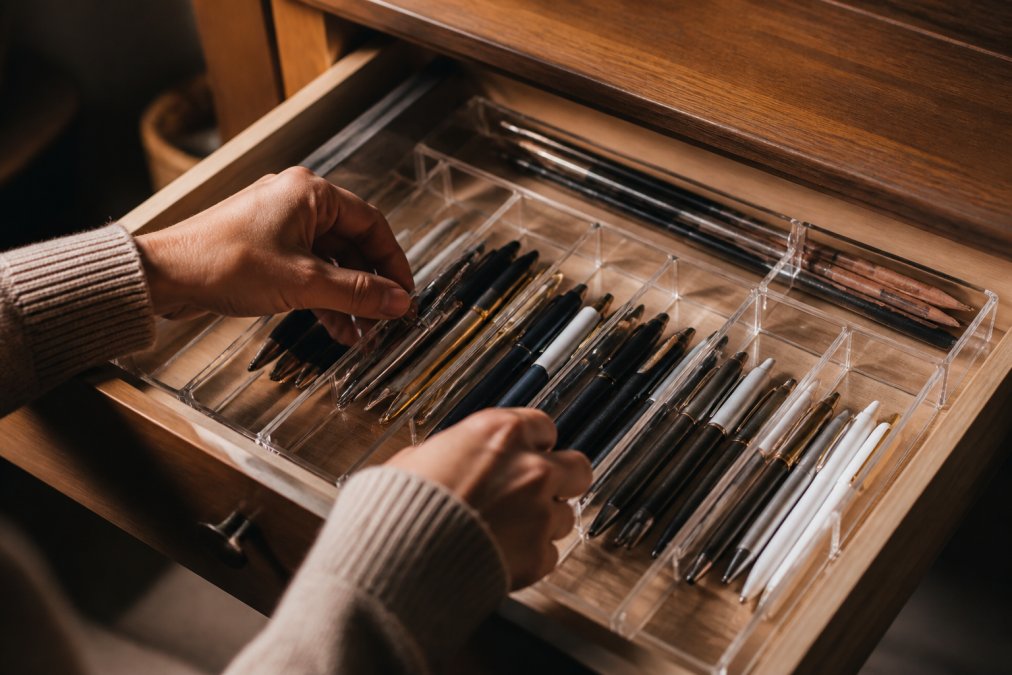
This guide covers everything you need to know about selecting and using desk drawer organizers for pens. We'll walk through how to evaluate materials, understand sizing, and build a system that actually sticks.
How to Organize a Messy Desk Drawer
The first step is honest assessment. Open your drawer and look at what you actually have. Count your pens. Separate them by type: ballpoints, gel pens, markers, highlighters, fountain pens. This categorization is the foundation of any system that will last longer than a week.
Once you know what you're working with, measure your drawer dimensions and assess your pen accessibility needs. This is where most people skip a critical step: consider how you actually reach for pens while working. If you're right-handed, pens you use most should sit on the right side of your drawer. If you switch between pen types frequently (ballpoint for notes, gel for signatures, highlighter for editing), group these together in adjacent compartments rather than separating them by type alone. This reduces the physical distance your hand travels during a typical workday.
Choose a desk drawer organizer for pens that matches your volume and drawer dimensions. Too small and everything overflows. Too large and you're wasting space. The fit matters more than the brand. Standard desk drawers are 12-18 inches wide and 4-6 inches deep. Measure both dimensions before purchasing any organizer.
Start with one organizer, not five. A single expandable drawer organizer can handle most home office needs. The Reset Aisle’s Expandable Drawer Organizer uses adjustable dividers and customizable compartments, so you can expand or contract it to fit your specific drawer space. Place your most-used pens in the front compartments for fastest access, and reserve back sections for backup supplies or specialty writing instruments.

The key insight most people miss: drawer liners and organizer stability matter more than material choice. A non-slip drawer liner (rubber or cork-backed, typically $10-20) keeps the organizer from sliding around when you pull the drawer open or close it with force. Without this foundation, the entire system collapses back into chaos within weeks. Test your organizer's stability by opening and closing the drawer five times in succession. If the organizer shifts more than half an inch, add a non-slip liner or choose a heavier organizer with a lower center of gravity.
One final configuration principle: leave 10-15% of your organizer empty. A completely full system has no room for new pens, and it forces you to make decisions about what to remove every time you acquire something new. Slight slack in your system makes it sustainable long-term.
Best Desk Drawer Dividers for Office Supplies
Dividers are the backbone of any desk drawer organizer for pens. They create compartments that keep different writing instruments from mixing together. Without dividers, you're just moving the problem around.
The best dividers share three qualities: they're adjustable, they're durable, and they're easy to remove when you need to reconfigure. Fixed dividers lock you into one arrangement forever. Adjustable ones adapt as your pen collection changes.
Fabric drawer organizers offer a different approach. The Fabric Drawer Organizers from The Reset Aisle ($22.99) come in small, medium, and large sizes with internal supports that keep walls upright even when the drawer is full. Made from polyester blend with collapsible design, they fold flat for storage when not in use. These work particularly well for deep drawers where traditional trays would shift around.
Clear acrylic dividers give you visibility, you can see exactly what's in each compartment without opening the drawer. This matters more than it sounds. When you can see your options, you're more likely to grab what you need and less likely to buy duplicate pens.
Metal dividers are heavier and more stable, particularly useful for drawers that get opened and closed frequently. They handle weight capacity better than plastic, which becomes important if you're storing heavier markers or specialty writing instruments.
Material Types and Durability
Your organizer's lifespan depends almost entirely on material choice. This is where most people make mistakes by prioritizing aesthetics over practical durability.
PET Plastic and Acrylic
PET plastic is the most common material for expandable drawer organizers. It's lightweight, easy to clean with a damp cloth, and affordable ($15-40). The tradeoff: it can crack or warp under heavy use, pressure, or temperature fluctuations. For light to moderate pen storage, it works fine. For a busy household or commercial office with frequent drawer access, you might want something more durable. Acrylic is slightly more rigid than PET plastic and resists clouding over time, but it's also more brittle and prone to cracking if dropped or subjected to impact. Neither plastic option handles weight capacity above 5-10 pounds effectively.
Polyester Blend Fabric
Polyester blend fabric organizers offer flexibility and durability. Internal supports prevent collapse, and the material withstands repeated opening and closing. Spot clean only, no harsh chemicals, and they last years. The collapsible design means you can store them flat when not needed, saving space in closets or cabinets. Fabric organizers typically support 8-15 pounds of weight, making them suitable for heavier markers and specialty writing instruments. They work particularly well in deep drawers where traditional rigid trays would shift around.
Wood Dividers
Wood dividers look polished and integrate well with minimalist desk setups. They're durable but require occasional maintenance to prevent warping in humid environments. Not ideal for kitchens or bathrooms where moisture fluctuates. Bamboo is a more sustainable alternative to traditional hardwood, offering similar durability with lower environmental impact. Bamboo organizers typically cost 15-25% more than plastic but last significantly longer and align with eco-conscious workspace design. Weight capacity for wood ranges from 10-20 pounds depending on thickness and construction.
Metal Dividers and Organizers
Metal dividers (typically aluminum or steel) are the most durable option available. They don't warp, don't crack, and handle weight capacity that plastic simply can't match, typically 20-40 pounds depending on construction. This matters if you're storing fountain pens (which can weigh 1-3 ounces each), specialty markers, or calligraphy tools. The downside: they're heavier and more expensive ($40-80). They're worth it only if you're storing very heavy pens or specialty markers regularly, or if your drawer gets opened and closed more than 20 times daily.
Sustainability and Eco-Friendly Materials
Recycled plastic organizers reduce environmental impact without sacrificing durability. If you're building a minimalist home office, choosing eco-friendly materials aligns your storage system with your values. Recycled PET plastic costs roughly the same as virgin plastic but diverts waste from landfills. Cork-backed drawer liners (used to stabilize organizers) are biodegradable and provide superior non-slip performance compared to rubber alternatives. Bamboo and reclaimed wood organizers are premium options that last 5-10 years, offsetting their higher initial cost through longevity.
Weight Capacity and Pen Type Compatibility
Most organizers don't specify weight capacity, but this matters significantly. Standard ballpoint pens weigh 0.3-0.5 ounces. Gel pens and markers weigh slightly more. Fountain pens range from 0.5-3 ounces depending on material and fill. If you store 50 ballpoints in a plastic organizer, you're distributing roughly 1.5-2.5 pounds across compartments, well within capacity.
Drawer Liner Compatibility
Dimensions and Sizing Requirements
Get the dimensions wrong and your entire system fails. This is non-negotiable.
Stackable and Modular Storage Solutions
For serious pen collectors or offices with high pen volume, stackable organizers offer flexibility that single trays can't match.
Space-Saving Organization for Small Workspaces
Small spaces demand ruthless efficiency. Every inch of drawer space must work.
Conclusion
A cluttered desk drawer doesn't just waste time, it creates daily friction that compounds into real stress. The right desk drawer organizer for pens transforms this space from chaotic to functional in minutes. Whether you choose expandable plastic, fabric, or modular solutions, the key is matching the organizer to your specific drawer dimensions and pen volume.
Frequently Asked Questions
How do you organize pens in a desk drawer?
Start by sorting pens by type, color, or frequency of use. Use a compartmentalized organizer or drawer divider to create dedicated sections for each category. Place frequently used writing instruments in the most accessible compartments. A clear acrylic tray lets you see all pens at a glance, reducing time spent searching. Group similar items together, markers with markers, ballpoints with ballpoints, to maintain an organized system long-term.
What is the best way to store pens in a drawer?
The best approach combines accessibility with space optimization. Use a customizable compartment organizer that fits your drawer depth and width, ensuring no wasted space or gaps. Store pens upright or horizontally depending on your drawer layout and the organizer's design. Non-slip dividers keep items from shifting when you open and close the drawer. Expandable organizers adapt to different drawer sizes, making them ideal for home offices with varying storage dimensions.
Should I use clear or opaque drawer organizers for pens?
Clear organizers offer better visibility, you can quickly identify which pens you need without opening compartments. This transparency supports ergonomic pen accessibility by reducing the time spent hunting for specific writing instruments. Opaque organizers work well if you prefer a minimalist aesthetic or want to hide clutter from view. For desk drawer organizers for pens, clear designs typically win because writing instruments come in many colors and styles, making visual sorting faster and more efficient.
Are modular drawer organizers better than fixed trays for pens?
Modular organizers offer flexibility that fixed trays cannot match. Removable dividers let you adjust compartment sizes as your pen collection changes, adapting to new office supplies or reorganizing by category. Stackable modular systems maximize vertical storage in deep drawers. Fixed trays work for standardized collections but lack customization. For a home office that evolves, modular solutions provide lasting utility and prevent the need to replace organizers when your storage needs shift.