

Table of Contents
- Why Bamboo Kitchen Organizers Need Gentle, Natural Cleaning
- Tools and Supplies You'll Need Before You Start
- Step-by-Step: How to Clean Bamboo Kitchen Organizers Naturally
- Best Natural Cleaners for Bamboo Kitchen Storage
- How to Oil Bamboo Organizers for Long-Term Protection
- How to Remove Mold From Bamboo Drawer Dividers
- Repairing Scratches and Dents in Bamboo Surfaces
- Conclusion
- Frequently Asked Questions
Last Updated: September 15, 2026
Why Bamboo Kitchen Organizers Need Gentle, Natural Cleaning
Bamboo kitchen organizers are a smart way to tame drawer clutter, but they need a different cleaning approach than plastic or metal. Bamboo is a porous material, so harsh chemicals and standing water soak in, dull the surface finish, and eventually cause warping (pubmed.ncbi.nlm.nih.gov). This guide from The Reset Aisle walks through how to clean bamboo kitchen organizers naturally, using white vinegar, baking soda, and a soft-bristled brush instead of anything abrasive.
Here's the tension most guides skip: bamboo is technically a grass, and its wood grain absorbs liquid fast. Soak a bamboo drawer divider for ten minutes and you've started a problem you can't undo. Wipe it down properly and it lasts for years.
Below, we'll show you exactly how to clean, disinfect, oil, and repair bamboo storage without damaging it. The process takes about 15 minutes per organizer.
Tools and Supplies You'll Need Before You Start
Gather everything first so you're not running to the pantry mid-clean. A common mistake is starting with a wet cloth and no plan for drying, which is how warping begins.
You'll need:
- Soft-bristled brush (a dedicated cleaning brush, not a wire one)
- Microfiber cloths, at least two
- White vinegar
- Baking soda
- Mild soap (castile or dish soap)
- Warm water
- Lemon juice (optional, for odors)
- Food-safe mineral oil or beeswax for finishing
Skip steel wool, scouring pads, and bleach-based sprays. They scratch the surface finish and leave residue on a surface that touches your utensils.
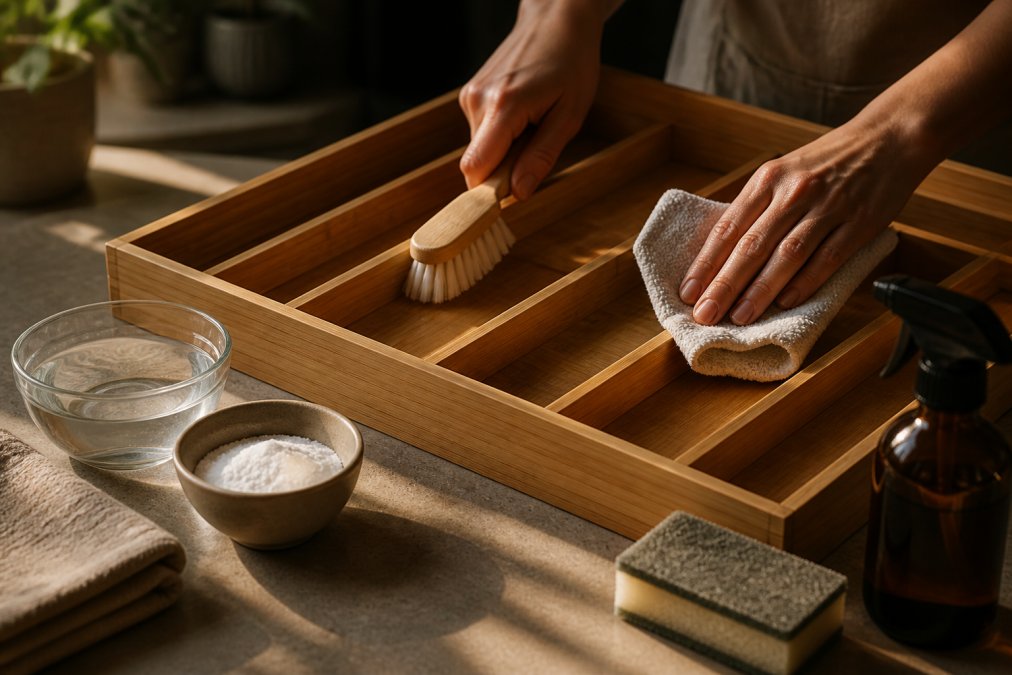
Step-by-Step: How to Clean Bamboo Kitchen Organizers Naturally
The full process runs about 15 minutes per organizer, plus drying time. Work in this order, and never rush the drying step.
Step 1: Remove Loose Debris and Dust
Empty the organizer completely, then brush out crumbs, flour dust, and dry debris with your soft-bristled brush. Work along the wood grain rather than against it. This step matters more than people think: wiping a dusty surface with a wet cloth just grinds grit into the finish.
Step 2: Wipe With a Mild Natural Solution
Mix one part white vinegar with three parts warm water in a spray bottle (pubmed.ncbi.nlm.nih.gov). Dampen a microfiber cloth (don't soak it) and wipe every surface. For everyday cleaning, a few drops of mild soap in warm water works just as well. The cloth should feel barely wet, never dripping.
Step 3: Tackle Stubborn Stains and Odors
For set-in stains, make a paste of baking soda and a little water. Apply it to the spot, let it sit for five minutes, then scrub gently with the soft brush. Lemon juice handles lingering odors from onions or spices. Rinse the paste away with a barely damp cloth, not running water.
Step 4: Air Dry Completely to Prevent Warping
Stand the organizer upright or lay it flat in a well-ventilated spot and let it air dry fully, usually a few hours. Never stack wet bamboo pieces or return them to a closed drawer damp. Moisture control is the single biggest factor in whether bamboo lasts.
Best Natural Cleaners for Bamboo Kitchen Storage
The best natural cleaners for bamboo are white vinegar, baking soda, mild soap, and lemon juice. Each handles a different job, and none of them strip the surface finish the way bleach or ammonia do.
White vinegar is your everyday disinfectant. It cuts grease and handles light sanitization on a porous material without leaving harsh residue. Baking soda is the abrasive you reach for when gentle cleaning isn't enough, and because it's fine, it lifts stains without scratching. Lemon juice brightens and deodorizes. Mild soap lifts everyday kitchen grime.
What most guides miss: you don't need a specialty bamboo cleaner. A vinegar-and-water spray plus one microfiber cloth covers nearly every situation.
| Cleaner | Best For | How to Use |
|---|---|---|
| White vinegar | Everyday wipe-downs, light disinfecting | 1:3 with warm water, damp cloth |
| Baking soda | Stubborn stains, odors | Paste with water, 5 min, soft brush |
| Mild soap | Grease and food residue | Few drops in warm water |
| Lemon juice | Odors, brightening | Direct on spot, then wipe |
How to Oil Bamboo Organizers for Long-Term Protection
Oiling is preventative care, and it's the step almost everyone skips. A food-safe oil replenishes the surface finish, keeps the wood grain from drying and cracking, and makes future cleaning easier. Do it every two to three months, or whenever the bamboo looks dull and dry.
Which Oil to Use (and Which to Avoid)
Not every oil belongs on a surface that touches utensils. Here's how the common options compare:
- Food-grade mineral oil, The most common choice. It's clear, odorless, won't turn rancid, and soaks in evenly. Look for a bottle labeled food-grade or food-safe; hardware-store mineral oil is often the same base oil but isn't rated for food-contact surfaces.
- Beeswax (or a mineral oil and beeswax blend), Beeswax sits closer to the surface and leaves a slightly harder, more water-resistant finish than oil alone. It's a good pick for organizers that see frequent spills. Straight beeswax is stiff, so most people use a blend or warm it slightly before applying.
- Coconut oil, Tempting because it's natural, but it can go rancid over time and leave a faint film. If you use it, apply a very thin coat and expect to reapply more often.
- Olive oil, vegetable oil, and other cooking oils, Skip these. They stay sticky, attract dust, and turn rancid in a warm drawer.
How to Apply It
- Deep-clean the organizer first and let it dry completely. Oil traps moisture, so sealing a damp surface is worse than not oiling at all.
- Pour a small amount onto a clean, lint-free cloth, about a teaspoon is plenty for a standard drawer divider.
- Rub it into the grain with the direction of the wood, covering every surface including the edges and the underside.
- Let it absorb for about 20 minutes.
- Buff off the excess with a second clean cloth. If the surface still feels tacky, you used too much; wipe again.
A thin coat is all bamboo needs. Over-oiling leaves a gummy layer that collects crumbs and defeats the purpose.
How to Remove Mold From Bamboo Drawer Dividers
Mold on bamboo drawer dividers usually comes from moisture trapped in a closed drawer, a damp utensil put away wet, a spill that wasn't fully dried, or humid summer air with no airflow. Because bamboo is porous, mold threads work into the grain rather than sitting on top, which is why most guides' "wipe it with vinegar" advice only solves half the problem.
Step 1: Assess the Damage
Take the divider out of the drawer and look at it in good light. There are two situations:
- Surface bloom, A powdery, fuzzy film that wipes away and leaves clean wood underneath. This is treatable at home.
- Deep-set mold, Dark staining that follows the grain, a musty smell that lingers after cleaning, or soft, spongy spots. Once mold has penetrated the fibers, the piece is generally beyond saving.
Step 2: Work Outside or in a Well-Ventilated Area
Step 3: Kill the Mold, Then Remove It
Step 4: Dry It Completely, This Is the Step That Matters
Step 5: Fix the Cause
Repairing Scratches and Dents in Bamboo Surfaces
Conclusion
Frequently Asked Questions
Can you use vinegar to clean bamboo kitchen organizers?
Yes, white vinegar is one of the best natural cleaners for bamboo. Mix equal parts white vinegar and warm water, dip a microfiber cloth, and wipe the surface gently. Vinegar kills common bacteria and lifts light residue without harsh chemicals. Avoid soaking the bamboo, since excess moisture causes warping and cracks. Wipe dry immediately and let the organizer air dry fully before putting items back.
How often should you oil bamboo kitchen storage?
Oil bamboo organizers when the surface looks pale, feels dry, or absorbs water quickly. Use a food-safe oil like mineral oil or beeswax. Apply a thin coat with a soft cloth, let it sit for 20 minutes, then buff off the excess. Regular oiling keeps the wood grain sealed, prevents cracking, and makes future cleaning easier.
How do you prevent mold on bamboo kitchen organizers?
Prevent mold by keeping bamboo dry and your kitchen dehumidified. Never soak organizers, always air dry them completely after wiping, and avoid stacking damp items on the surface. If mold appears, mix white vinegar with water, scrub with a soft-bristled brush, rinse lightly, and dry in direct sunlight. Re-oil once the bamboo is fully dry to restore the surface finish.
Is it safe to soak bamboo organizers in water?
No. Soaking bamboo organizers in water is one of the fastest ways to ruin them. Bamboo is a porous material that absorbs liquid, which causes warping, cracking, and mold growth inside the wood grain. Stick to hand washing with a damp microfiber cloth and mild soap, then air dry immediately. For deep stains, use a baking soda paste on the spot instead of submerging the whole piece.