

Table of Contents
- Why Homeowners Look Beyond Smartasaker
- Pull-Out Cabinet Baskets and Drawer Organizers
- Best Kitchen Cabinet Organizers for Deep Shelves
- Vertical Storage and Stackable Pantry Containers
- Small Kitchen Organization Ideas Using Turntables and Wall-Mounted Systems
- Durable Storage Bins for Kids and Busy Households
- Material Durability, Installation, and Long-Term Performance
- Conclusion
Last Updated: August 19, 2026
Why Homeowners Look Beyond Smartasaker
Homeowners seeking smartasaker alternatives for kitchen storage often find that one-size-fits-all products don't work for real kitchens. Deep pantry shelves, awkward cabinet depths, and non-standard spacing create gaps that generic organizers can't fill. The Reset Aisle helps solve this by offering curated storage solutions designed for real homes with real constraints.
A drawer organizer that slides perfectly into a standard cabinet might waste space in a deeper unit. A spice rack that looks sleek on a shallow shelf could be too tall for your cabinet clearance. The best smartasaker alternatives for kitchen storage address these pain points directly, they're adjustable, durable, and designed with real kitchen geometry in mind.

Pull-Out Cabinet Baskets and Drawer Organizers
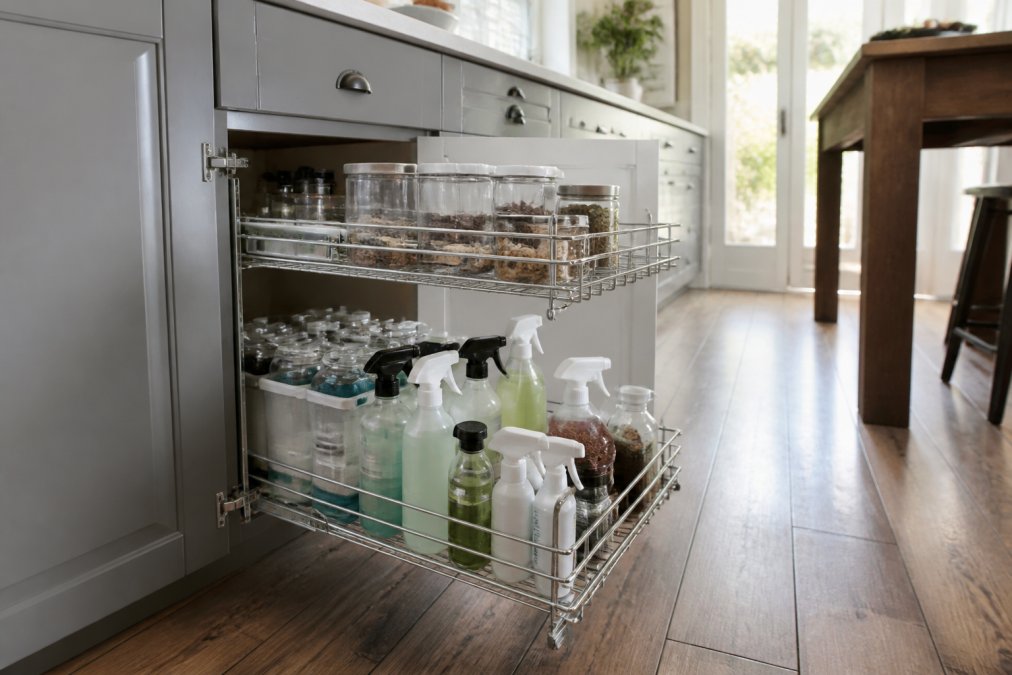
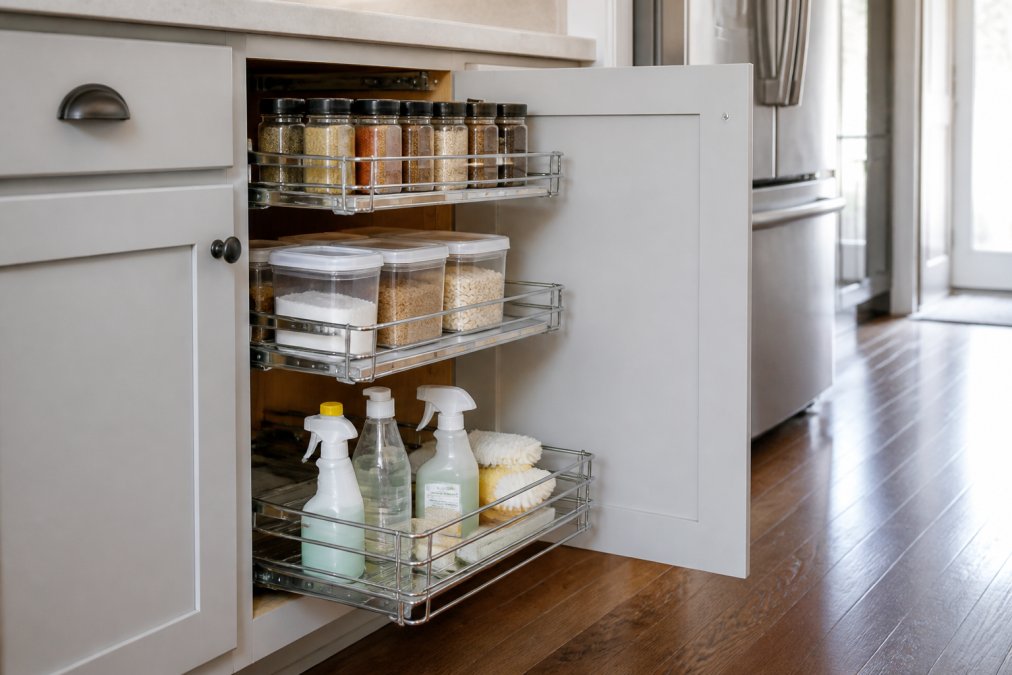
Pull-out cabinet baskets transform deep, hard-to-reach shelves into accessible storage. Instead of reaching to the back of a cabinet and pulling out everything to find one item, a sliding basket brings the contents forward, turning wasted depth into usable space.
A basket sits on sliding rails or glides that mount to your cabinet sides. When you pull the handle, the entire basket extends outward. For pantries with 18-24 inch depths, you see everything at once, no more forgotten items hiding in the back.
Drawer organizers work the same way but fit inside existing drawers. Dividers, small baskets, and compartments let you sort utensils, gadgets, or junk drawer items into zones. They keep things from shifting when you open and close the drawer.
Installation typically takes 15-30 minutes per cabinet. Most pull-out baskets use simple bracket systems that screw into the sides of your cabinet with no special tools needed.
Weight capacity matters. A pull-out basket holding canned goods or heavy pantry staples needs sturdy construction. Look for baskets with reinforced corners and solid glides rated for 25-50 pounds. Cheap baskets sag under weight or derail when pulled too hard.
Best Kitchen Cabinet Organizers for Deep Shelves
Deep shelves create blind spots where items disappear and get forgotten. Vertical stackable organizers solve this by adding a second tier within the same shelf space. A shelf riser lets you use vertical space above existing items, so the front row stays accessible while the back row sits higher and remains visible.
Adjustable shelf dividers create defined zones without removing items. These thin panels slide into slots on either side of your cabinet, letting you separate canned goods from boxes or keep baking supplies in their own zone.
Tiered shelf risers are stepped platforms that sit on your existing shelf and create multiple levels. You see everything at once without reaching deep into the cabinet, though they do trade depth for visibility.
The Reset Aisle recommends combining strategies: start with a shelf divider to create zones, add a tiered riser for frequently used items, and use pull-out baskets for the back row. This layered approach turns a deep shelf into highly functional space.
Metal dividers and risers last longer than plastic and handle weight better. If you're organizing heavy items like canned goods, metal construction prevents sagging.
Vertical Storage and Stackable Pantry Containers
Vertical storage makes small kitchens feel spacious. Instead of spreading items across a wide, shallow area, stack them upward to use the full height of your cabinet and reduce the footprint on your shelf.
Stackable pantry containers are the foundation of vertical storage. Uniform, modular containers let you build up safely. Clear containers are essential so you can see what's inside without opening each one.
Standardization is key, if every container has the same footprint and height, you can stack them safely. Mix-and-match containers lead to unstable towers that collapse. Uniform sets prevent this and look intentional and calm.
For pantries with limited floor space, tall, narrow containers take up less shelf real estate than short, wide ones. A 12-inch-tall by 4-inch-wide container uses less space than a 6-inch-tall by 8-inch-wide one, even with similar volumes.
Stackable containers also solve the lid problem. Containers with matching lids keep everything together, and you can replace just the lid if one gets lost.
Weight distribution is critical, the heaviest items go on the bottom, lighter items on top. This prevents the bottom container from compressing under pressure.
Small Kitchen Organization Ideas Using Turntables and Wall-Mounted Systems
Turntables and lazy susans maximize corner space and improve accessibility. A corner cabinet is notoriously hard to use, but a turntable rotates items into view so you don't have to reach into the back corner.
Double-layer turntables add another tier of storage in the same footprint. The Reset Aisle's Double-Layer Rotating Spice Rack ($24.99) features two tiers of storage that spin independently, fitting 20+ items in a space that would normally hold 8-10.
Wall-mounted organizers take advantage of vertical real estate you're not using. A wall-mounted rack above the counter, beside the sink, or on the inside of a cabinet door adds storage without taking up shelf or counter space. Magnetic strips hold knives, hooks hold measuring cups, and small shelves hold spice jars.
Wall-mounted systems keep frequently used items within arm's reach and visible, which encourages people to use them. Installation varies, some require drilling and anchoring to studs, while others use adhesive strips or magnetic backing. For renters, adhesive-backed systems are ideal, holding surprising weight (often 10-20 pounds) and coming off cleanly.
Wall-mounted systems that let you organize without a drill are a practical option.
Durable Storage Bins for Kids and Busy Households
Busy households with kids need storage that survives daily abuse. Heavy-duty plastic bins with reinforced corners and thick walls last longer than thin-walled alternatives. Look for bins made from polypropylene or high-density polyethylene, which flex without cracking and resist staining.
Stackability is non-negotiable. Kids won't neatly line up bins on a shelf, so a good bin has a flat, stable base and interlocking features that keep stacks from toppling.
Lids are where cheap bins fail. A lid that doesn't seal properly lets dust in, while one that's hard to open discourages kids from putting things away. The best lids snap firmly but don't require adult strength to open.
Clear bins are essential for households with kids. If kids can't see what's inside, they won't know where to put something back. Clear bins also let you see when you're running low on supplies.
Handles make bins portable so kids can carry them from room to room. Handles should be sturdy and positioned so the bin balances when carried.
Material Durability, Installation, and Long-Term Performance
Organization systems fail when they're not built to last. Material durability starts with the base material. Metal (stainless steel, powder-coated steel, or aluminum) lasts longer than plastic and handles heavy loads without sagging.
For kitchen storage, moisture resistance matters. Cabinets under sinks or near dishwashers expose organizers to moisture. Rust-resistant metals and moisture-resistant plastics survive these environments.
Installation difficulty affects whether a system actually gets used. Low-difficulty options like tension rods, adhesive strips, and friction-based systems let people organize without tools.
Adjustability extends the lifespan of a system. If your needs change or you reorganize, an adjustable system adapts. Adjustable shelving, modular containers, and flexible dividers let you reconfigure without replacing everything.
Weight capacity is a real specification. A basket rated for 25 pounds shouldn't hold 40 pounds. Know what you're storing and match the organizer's capacity to the load.
Maintenance and cleaning requirements affect long-term use. Easy-to-clean surfaces like smooth plastic, stainless steel, or powder-coated metal get maintained. Textured or porous surfaces trap dirt and are harder to wipe down.
| Storage Solution | Material | Weight Capacity | Installation | Best For |
|---|---|---|---|---|
| Pull-out baskets | Metal/plastic hybrid | 30-50 lbs | Screw-mounted (15-30 min) | Deep cabinets, pantries |
| Drawer organizers | Plastic, rubber | 10-20 lbs | No installation | Utensil drawers, junk drawers |
| Shelf risers | Plastic, metal | 15-40 lbs | Friction-based | Deep shelves, visibility |
| Stackable containers | Polypropylene | 5-15 lbs each | No installation | Pantry items, dry goods |
| Turntables | Plastic, wood | 25-35 lbs | Friction-based | Spices, condiments, corners |
| Wall-mounted racks | Metal, plastic | 10-30 lbs | Adhesive or screw-mounted | Small spaces, frequent access |
The Reset Aisle's Under Sink Organizer with Sliding Shelves ($34.99) demonstrates how smart material choices extend durability. The two-piece design uses reinforced plastic shelves with metal rails. The metal handles the weight and movement while the plastic resists moisture and corrosion, creating a system that survives the harsh environment under a sink.

Long-term performance comes down to honest specifications and realistic expectations. A storage system is an investment in maintaining your home's organization for years.
Organizing a kitchen isn't about finding the perfect product, it's about choosing solutions that fit your space and your life. Smartasaker alternatives for kitchen storage range from simple drawer dividers to complete cabinet systems. The best choice depends on your specific challenges: deep shelves, limited space, heavy loads, or frequent reorganization.
The Reset Aisle helps you navigate these choices by focusing on practical, durable solutions that actually work in real homes. Whether you need pull-out baskets for a deep pantry, stackable containers for a small kitchen, or turntables for corner cabinets, the goal is the same: transform chaotic storage into a system that brings calm and order to your space.
Frequently Asked Questions
What are the best kitchen storage alternatives if I have deep, awkwardly-spaced shelves?
Pull-out cabinet baskets, adjustable shelf risers, and stackable containers work best for non-standard shelf spacing. Pull-out mechanisms let you access items at the back without removing everything in front. Adjustable dividers and stackable designs accommodate irregular depths. Under-sink organizers with sliding shelves also adapt to varying cabinet dimensions. The Reset Aisle's Under Sink Organizer with Sliding Shelves ($34.99) handles this problem directly, with two-piece modular construction that fits different cabinet sizes.
How do I choose the right kitchen cabinet organizers for my space?
Measure your cabinet depth, shelf height, and weight capacity before purchasing. Prioritize adjustable shelving and modular designs that adapt to your specific layout. Consider pull-out mechanisms if you have deep cabinets, they improve visibility and accessibility. Look for heavy-duty materials like reinforced plastic or metal if you have kids or store heavy items. Test weight limits before loading; many organizers support 15-25 lbs per shelf. Renter-friendly, installation-free options like stackable containers and tension rods work well if you can't modify cabinets.
What materials are best for durable storage bins that last in busy households?
Heavy-duty polypropylene and reinforced plastic resist cracking and maintain grip over time. Metal frames with plastic bins offer superior durability for high-traffic areas. Avoid thin plastic that becomes brittle after a few years. Check for grippy feet that prevent sliding and protect cabinet surfaces. Look for bins with secure lids and stackable designs that won't collapse under weight. Products rated for 25+ lbs per unit work better in households with kids. Inspect hinges and handles for reinforcement, these fail first in busy homes.
Are lazy susans and turntables still useful for kitchen organization?
Yes. Lazy susans maximize visibility and accessibility in corner cabinets and deep shelves where items get lost. They're especially effective for spices, condiments, and frequently used items. Rotating turntables reduce the need to reach deep into cabinets, improving kitchen ergonomics. The Reset Aisle's Double-Layer Rotating Spice Rack ($24.99) doubles capacity while maintaining easy access. Turntables work best on flat surfaces; avoid using them on tilted or uneven shelves. They're ideal for small kitchen organization when cabinet space is limited.
How long do kitchen storage organizers typically last before needing replacement?
Quality organizers last 3-5 years with regular use in busy households. Heavy-duty options with reinforced frames and grippy feet extend lifespan to 5-7 years. Cheaper alternatives often fail within 1-2 years due to plastic brittleness and hinge wear. Regular cleaning and avoiding overloading extends durability significantly. Metal-framed systems outlast plastic-only designs. Check warranty periods, products backed by 2+ year warranties typically indicate better construction. Maintenance matters: wipe down shelves monthly, ensure proper weight distribution, and replace worn feet or liners promptly.
This article was written using GrandRanker