

Table of Contents
- Quick Comparison Table
- 1. Over-the-Door Shoe Organizers
- 2. Stackable Shoe Containers
- 3. Vertical Shoe Storage Ideas for Tight Spaces
- 4. Wall-Mounted Shoe Racks
- How to Maximize Closet Space for Shoes
- What to Consider Before Buying
- Conclusion
Last Updated: August 15, 2026
Quick Comparison Table
| Organizer Type | Best For | Space Efficiency | Installation | Capacity |
|---|---|---|---|---|
| Over-the-door | Renters, tight spaces | High | No tools needed | 12-24 pairs |
| Stackable containers | Deep closets, bulk storage | Medium | Stacking only | 20-40 pairs |
| Vertical shelving | Floor space optimization | Very high | Hardware required | 30-60 pairs |
| Wall-mounted racks | Entryways, display | High | Drill required | 8-16 pairs |
1. Over-the-Door Shoe Organizers
Over-the-door shoe organizers use existing vertical space without consuming floor area. These organizers hang directly on your closet door with clear pockets that keep shoes visible and accessible.
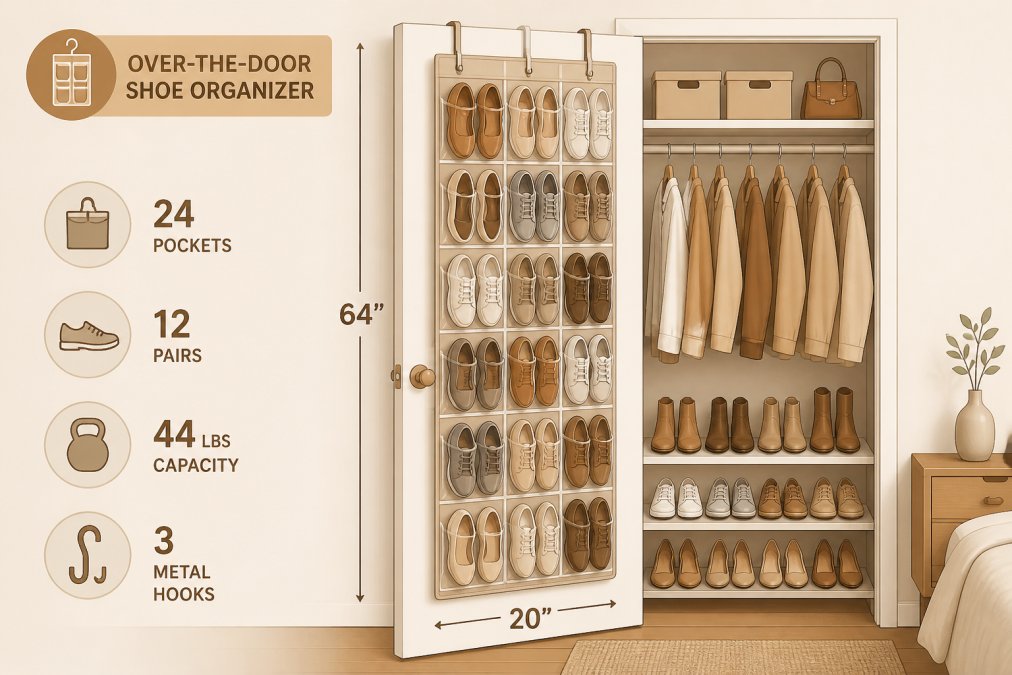
The appeal is simplicity: no drilling, no permanent installation, no measuring. For renters or anyone hesitant about structural changes, over-the-door organizers solve the problem immediately. Most models hold 12 to 24 pairs depending on pocket depth and shoe size.
Check your closet door's weight capacity before purchasing. Heavy footwear like boots and winter shoes adds up quickly, and inadequate weight distribution can strain hinges over time. Look for organizers with reinforced pockets and sturdy construction.
Ventilation matters for preventing odor and mildew, especially in humid climates. Clear plastic pockets work better than solid fabric because they allow air circulation while protecting shoes from dust. If you live in a humid area, leaving pockets partially unzipped or choosing mesh-backed designs helps significantly.
Consider whether your closet door swings inward or outward, an outward-swinging door works best since the organizer won't block access to items inside.
2. Stackable Shoe Containers
Stackable shoe containers work best when you have vertical depth available in a deep closet shelf, corner, or above existing shelving. They let you build upward rather than outward, essential when floor space is limited.
A single stack of four containers can hold 20 to 40 pairs depending on shoe size. Transparent containers mean you can see exactly what you own, eliminating the need to hunt through opaque boxes. This visibility drives better decisions about which shoes to keep.
Quality matters significantly. Cheap plastic cracks under weight, warps when stacked, and becomes brittle in temperature fluctuations. Look for containers with reinforced corners and thicker plastic walls. The investment in durable containers pays off because you're stacking weight on weight.
Even stackable containers consume floor or shelf space. If your closet is cramped, you're trading one problem for another. Combine stackable containers with other storage methods: use them for seasonal shoes or overflow pairs, and store everyday shoes using wall-mounted or vertical solutions.
Moisture control is important, especially in basements or humid closets. Shoes trapped in sealed plastic without airflow develop odor and mildew. Store containers with lids off or partially open, or add moisture-absorbing packets inside. This prevents the musty smell that develops in closed containers over weeks.
Setup requires no installation, simply stack and label if desired. The challenge comes when accessing shoes at the bottom of a stack, which is why many people reserve stackable containers for seasonal storage or infrequently worn pairs.
3. Vertical Shoe Storage Ideas for Tight Spaces
Vertical storage transforms small closets by pulling shoes upward instead of spreading them across limited floor space. This approach works with wall-mounted shelving, tension rods, or pegboards designed for shoe organization.
Wall-mounted shelving is the most effective vertical solution. Floating shelves installed above your existing closet rod create a second tier of storage without consuming footprint. A single shelf holds 15 to 25 pairs depending on depth and spacing. Stack two or three shelves vertically and you've accommodated 40 to 60 pairs in previously unused wall space.
Installation requires basic tools and wall anchors appropriate for your wall type. Drywall needs heavy-duty anchors or studs for weight-bearing shelves. Plaster walls need specialized anchors. Concrete or brick requires a drill and concrete anchors. Proper installation prevents shelves from pulling away under shoe weight.
Tension rods offer a tool-free alternative for renters. Installed horizontally between closet walls, they create a hanging system for shoe bags or special organizers. This method works for lightweight storage but won't accommodate heavy boots or shoes.
Pegboards designed for closet organization provide modular vertical storage. You arrange hooks, baskets, and shelves to create a custom layout matching your collection. The flexibility is valuable, you can adjust spacing as needs change. However, pegboards require wall installation and work best with a dedicated wall section.
Vertical solutions create a psychological shift: shoes stored vertically feel less cluttered than the same number scattered across floor space. Your brain perceives organized vertical storage as more spacious and orderly.
The trade-off is accessibility. High shelves require a step stool, which discourages daily access. Reserve high shelves for seasonal shoes or pairs worn occasionally. Keep everyday shoes at eye level for practical daily use.
4. Wall-Mounted Shoe Racks
Wall-mounted shoe racks are ideal when you want shoes visible and accessible while freeing up floor and shelf space. These racks mount directly to walls in various styles, from simple metal bars to elaborate tiered systems accommodating dozens of pairs.
The primary advantage is display. Wall-mounted racks turn shoes into part of your closet's visual organization. You see every pair at a glance, which means you're more likely to wear the shoes you own. This visibility also creates accountability, it's harder to justify keeping shoes you never wear when they're visible daily.
Installation is non-negotiable. You need to locate studs or use appropriate wall anchors for your wall type. Shoes are heavy, and inadequate installation leads to racks pulling away and shoes crashing down. Proper installation involves drilling into studs when possible or using heavy-duty anchors rated for the weight.
Capacity varies widely. A simple wall-mounted bar might accommodate 8 to 12 pairs. A tiered rack system can hold 20 to 40 pairs depending on design. The trade-off is wall space, you're using valuable closet area that could otherwise hold shelving or hanging rods. Wall-mounted racks work best in entryways, mudrooms, or dedicated closet walls rather than small bedroom closets.
Material durability matters significantly. Metal racks withstand heavy shoes better than plastic. Powder-coated steel or stainless steel resists rust and lasts longer than painted alternatives. In humid climates, rust prevention becomes important for longevity.
Wall-mounted racks with visible shoes can make a small closet feel busier and more cramped visually, even though they technically save floor space. If your goal is creating a calm, organized environment, closed storage like containers or shelving with doors might feel more spacious psychologically.
How to Maximize Closet Space for Shoes
Maximizing closet space for shoes requires a strategic approach combining multiple storage methods rather than relying on a single solution. The most effective systems layer different organizers to use every available dimension.
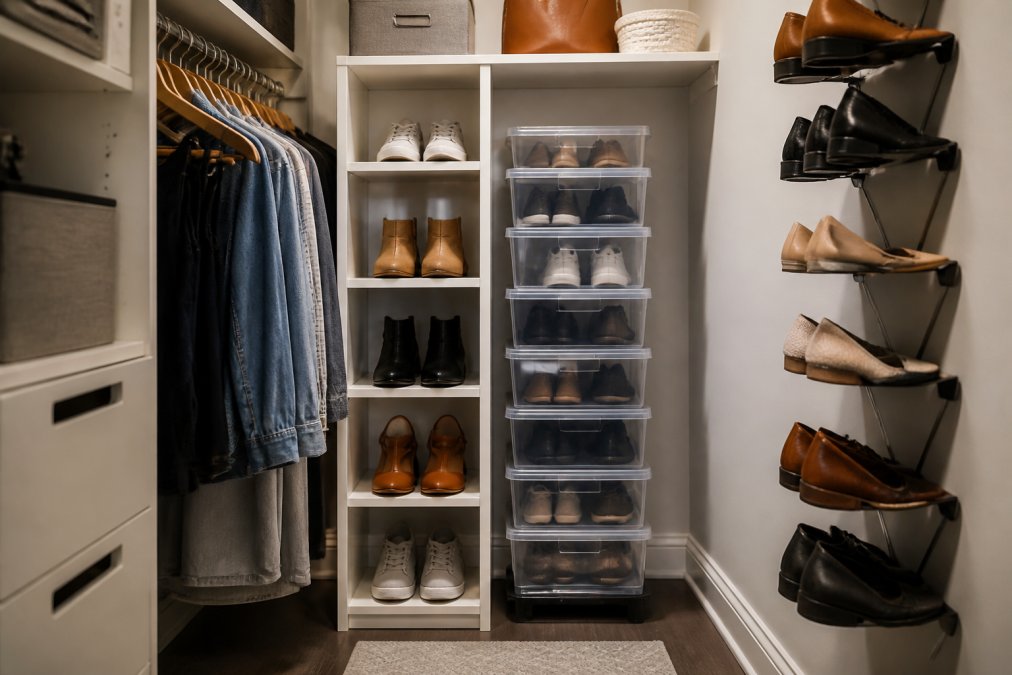
Start by assessing your closet's dimensions and identifying unused vertical space. Most small closets have wasted space above existing shelves, on closet doors, and on walls beside hanging rods. Measure carefully, awkward dimensions and slanted ceilings are common, and custom solutions often work better than standard products.
Declutter before organizing. Evaluate every pair you own. Keep shoes you wear regularly, shoes that fit your lifestyle, and shoes in good condition. Donate or discard shoes with broken heels, worn soles, or styles you haven't worn in a year. This step alone often frees up significant space.
Combine storage methods strategically. Use over-the-door organizers for frequently worn shoes, wall-mounted racks for shoes you want visible, vertical shelving for moderate-use pairs, and stackable containers for seasonal shoes. This layered approach accommodates more shoes while keeping everyday pairs easily accessible.
Vertical shelving works particularly well as a foundation. Install shelves above your existing closet rod to create a second tier. This doubles your closet's usable surface area without expanding the footprint. Pair vertical shelving with stackable containers to maximize capacity while maintaining organization.
Accessibility matters for long-term success. Shoes stored in difficult-to-reach places tend to be forgotten. Keep shoes you wear regularly at eye level or slightly below. Reserve high shelves and deep containers for seasonal shoes or pairs worn occasionally.
Ventilation prevents odor and mildew, especially in humid climates. Avoid completely sealing shoes in airtight containers for extended periods. Choose organizers with breathable materials when possible. If using sealed containers, open them periodically or add moisture-absorbing packets.
Label your storage system if using containers or higher shelves where shoes aren't immediately visible. This prevents opening multiple containers searching for a specific pair and reduces frustration that leads to abandoning your system.
What to Consider Before Buying
Choosing the right shoe organizer requires evaluating several factors beyond just capacity. The wrong choice leads to unused organizers and frustrated returns.
Closet dimensions and layout are foundational. Measure your closet width, depth, height, and ceiling slope. Note where your closet door swings and whether it opens inward or outward. Identify obstacles like pipes, outlets, or HVAC vents. An organizer that works in a standard closet might be completely impractical in your specific space.
Weight capacity becomes critical if you own heavy footwear like boots or winter shoes. Over-the-door organizers have weight limits based on door construction. Wall-mounted racks need proper installation to handle shoe weight. Stackable containers require sturdy base construction. Exceeding weight capacity leads to structural failure and damaged shoes.
Accessibility determines whether your system works long-term. If shoes are difficult to access, you'll stop using the organizer. Everyday shoes need to be reached easily without moving other items. Seasonal or occasional shoes can be stored less accessibly.
Durability and material quality affect longevity and shoe protection. Cheap plastic cracks under weight and becomes brittle in temperature changes. Thin fabric tears easily. Metal corrodes in humid environments. The Reset Aisle focuses on durable construction because organizing solutions that fail within a year create more frustration than they solve.
Moisture and ventilation matter in humid climates or when storing damp shoes. Sealed containers trap moisture, promoting mold and odor. Breathable organizers allow air circulation, keeping shoes fresher longer. This is especially important for leather shoes, which deteriorate quickly in damp conditions.
Aesthetic fit influences whether you maintain your system. If your organized closet looks chaotic, you're more likely to abandon it. Consider whether you prefer closed storage that hides shoes or open storage that displays them.
Installation requirements matter if you're renting or uncomfortable with tools. Over-the-door organizers require no installation. Stackable containers need only stacking. Wall-mounted solutions require drilling. Understand what your chosen organizer requires before purchasing.
Budget considerations extend beyond initial purchase. Quality organizers cost more upfront but last longer and protect shoes better. Calculate the cost per year of use rather than just the purchase price.
Conclusion
Small closets don't require accepting scattered shoes and constant searching. The right combination of organizers, layering over-the-door solutions, vertical shelving, stackable containers, and wall-mounted racks, creates functional shoe storage even in the tightest spaces.
The Reset Aisle specializes in practical storage solutions designed for small spaces. Our organizers emphasize durable construction, breathable materials that protect footwear, and space-saving designs that fit non-standard closet dimensions. Rather than forcing products designed for average closets into your specific space, The Reset Aisle helps you create an organized system that works with your home's unique layout.
Start with an honest assessment of your closet dimensions and the shoes you actually wear. Declutter ruthlessly. Then implement a layered storage approach combining multiple organizer types to maximize both capacity and accessibility. An organized closet transforms your daily routine, finding shoes becomes effortless, and your space feels calmer and more controlled.
Get started with The Reset Aisle and discover how the right organizers turn shoe chaos into an efficient, peaceful closet system.
Frequently Asked Questions
What is the best shoe organizer for small spaces?
The best choice depends on your closet layout. Over-the-door organizers work well if you have clear door space, while stackable containers maximize vertical storage when floor space is limited. Wall-mounted racks suit closets with available wall area. Consider your closet dimensions, the number of pairs you own, and accessibility needs. Most small-space organizers hold 8-20 pairs and require minimal installation.
How do you store shoes in a tiny closet without a rack?
Use stackable shoe containers that fit under hanging clothes or on shelves, hang an over-the-door organizer on the inside of your closet door, or install floating shelves vertically along one wall. Shoe cubbies and tiered risers also work in tight spaces. The key is using vertical storage rather than spreading shoes across the floor, which consumes precious floor space in small closets.
Are over-the-door shoe organizers good for small closets?
Yes, over-the-door organizers are excellent for small closets because they use space that would otherwise sit empty. They keep shoes visible and accessible without consuming floor or shelf space. However, they work best if your closet door opens fully without obstruction. Check weight capacity and door thickness before purchasing, as heavier footwear may require reinforced models.
What features should I prioritize when buying shoe organizers for a small closet?
Prioritize durability, pair capacity relative to footprint, and ease of installation. Look for organizers with breathability to prevent moisture buildup, adjustable shelving if available, and clear visibility so you can see what you own. Weight capacity matters if you store heavy boots. Also consider whether the organizer fits your closet's dimensions, measure your space before purchasing to avoid gaps or wasted space.
This article was written using GrandRanker