

Last Updated: October 26, 2026
Quick Summary
You can organize a small pantry on a budget by emptying and sorting everything first, then measuring shelf depth, shelf height and door clearance before buying anything. Clear bins, can racks, tiered organizers and door racks each cost under $40, and repurposed boxes and jars are free.
- Clear storage bins cost under $30 and help you see what you own.
- Stackable can racks cost under $25 and hold canned goods and sodas.
- Use first in, first out: put new groceries behind older ones.
- Shoeboxes, glass jars and cartons make free bin dividers and trays.
- Do a two-minute tidy each week to keep the pantry organized.
Table of Contents
- 7 Ways to Organize a Small Pantry on a Budget
- Small Pantry Organization Ideas That Cost Under $100
- How to Maximize Pantry Space with Vertical Storage
- How to Organize Deep Pantry Shelves Without Losing Items
- DIY Pantry Organizers You Can Make from Repurposed Items
- 7 Ways to Organize a Small Pantry on a Budget: Step-by-Step
- Start Your Reset: Build a Pantry That Stays Organized
- Frequently Asked Questions
7 Ways to Organize a Small Pantry on a Budget
A cramped pantry is not a storage problem. It is a visibility problem. When you cannot see what you own, you buy duplicates, food expires in the back, and every meal starts with a frustrating dig through the shelves.
A common frustration is trying to organize a pantry and finding that the system does not stick. A practical layout can focus on how you use a small pantry. This guide covers 7 ways to organize a small pantry on a budget, with real costs and fit advice, so you can fix the layout instead of just shuffling the mess.
Below, we walk through each method, what it costs, and how to set it up in an afternoon. The goal is simple: a small pantry where everything is visible, reachable, and easy to put back.
Small Pantry Organization Ideas That Cost Under $100
You do not need a full makeover to fix a small pantry. Most affordable fixes fall into four groups: clear bins, stackable racks, tiered shelves, and door storage. Each one solves a different problem.
| Method | Typical Cost | Best For | Effort |
|---|---|---|---|
| Clear storage bins | Under $30 | Seeing what you own | Low |
| Stackable can racks | Under $25 | Canned goods, sodas | Low |
| Tiered shelf organizers | Under $20 | Spices, sauces, small items | Low |
| Over-the-door racks | Under $40 | Awkward gaps, renters | Medium |
| Repurposed boxes | Free | Tight budgets | Medium |
A common mistake is buying one big bin and calling it done. Consider how the size and layout of your storage will work in your pantry. If you are weighing cheap options, it helps to compare alternatives to over the door pantry racks before you spend.
How to Maximize Pantry Space with Vertical Storage
Vertical storage is the fastest way to add shelf space without adding shelves. For a deeper walkthrough, see how to maximize vertical space in a deep pantry so you stop buying duplicates. Most small pantries waste the air above and below each shelf. A two-tier organizer turns one flat shelf into two usable levels.
Start with the tallest items you own and work down:
- Stack cans two high on a riser
- Use a two-tier shelf for spices and sauces
- Hang small items from hooks or the door
For cabinets with dead space above the counter, an expandable kitchen storage shelf adjusts to fit different cabinet and countertop spaces and adds a second tier without drilling.

Watch out: do not overload a freestanding riser. Keep heavy cans on the bottom and lighter boxes up top, or the whole thing tips when you reach for the back row.
How to Organize Deep Pantry Shelves Without Losing Items
Deep shelves are where food goes to die. The fix is to stop storing things front-to-back and start grouping them in zones you can pull forward.
Use the "first in, first out" rule. New groceries go behind older ones, so nothing expires unseen. Then give each deep shelf a job:
- Back row: bulk backups and unopened packages
- Middle: daily cooking staples
- Front: snacks and what you reach for most
A double-layer rotating spice rack spins a full 360 degrees, bringing jars within reach. It has two tiers and is designed for spices, seasonings, and condiments.

DIY Pantry Organizers You Can Make from Repurposed Items
The cheapest organizers are already in your house. Before you buy anything, look at what you can reuse. This is the no-buy angle most pantry guides skip, and it matters most when the budget is tight.
- Shoeboxes: cut down and covered, they make sturdy bin dividers and drawer-style trays. Fit check: trim to shelf depth so they do not overhang.
- Glass jars: perfect for spices, baking supplies, and snacks. Reuse jars from pasta sauce or pickles only if the lid is not rusted and the jar is not chipped.
- Repurposed cartons: trim the tops for drawer-style bins that hold foil, wraps, and snack bars.
- Wooden crates: stack them for open shelving, but anchor the stack or keep it on the floor so it cannot topple.
- Tension rods: a spring rod across a shelf gap creates a divider that keeps boxes upright and stops stacks from sliding forward.
- Binder clips and S-hooks: clip bags closed and hang small items from a rod or the door rack.
One caution: not every container is suitable for every use. Learn why choosing non-toxic storage for pantry organization matters when repurposing containers for food. Consider the container's condition and intended use before reusing it.
Label everything. A marker and a roll of tape can help organize boxes. Rotate older items to the front.
Double-Layer Rotating Spice Rack →
7 Ways to Organize a Small Pantry on a Budget: Step-by-Step
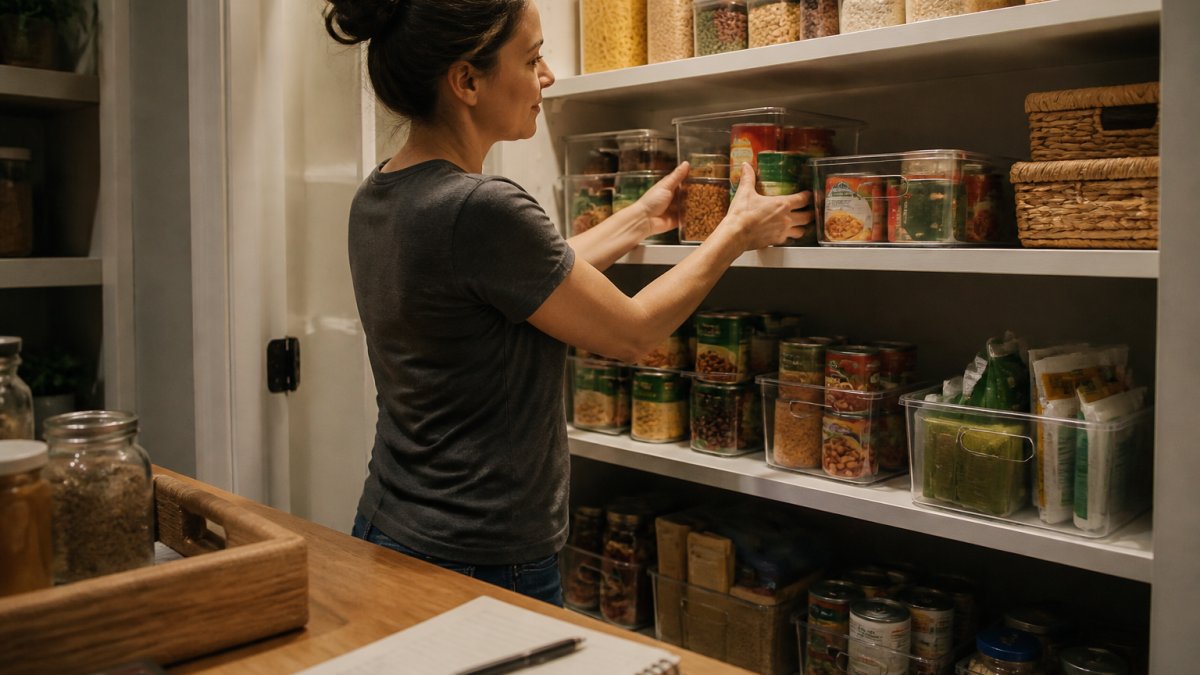
Here are seven methods to consider, along with free or no-buy alternatives and fit checks to help you assess your space.
1. Empty, sort, and measure. Pull everything out and group it into categories: canned goods, baking supplies, snacks, sauces, spices, drinks. Set duplicates aside. Then measure before you buy: record shelf depth, the height between shelves, and door clearance. Write the numbers on tape and stick them inside the door so you shop your own pantry, not a product photo.
2. Add clear storage bins. Clear bins let you see what you own without pulling everything forward. Match bin height to the shelf gap so lids clear the shelf above. Consider leaving clearance on each side so bins can slide out.
3. Consider a can rack. Before buying an organizer, check whether its dimensions suit your shelf.
4. Consider a tiered shelf organizer. Check the shelf dimensions and the organizer's listed dimensions before choosing a place for it.
5. Consider a rotating turntable. Check the shelf dimensions and the turntable's listed dimensions before choosing a place for it.
6. Consider whether the door can provide additional storage. Check the organizer's listed dimensions and your door clearance before choosing one.
7. Label and organize. Label zones and bins to help keep items arranged. You can also rotate older items to the front.
Work top to bottom as you set up, and put the least-used items on the highest shelf. Label each zone as you go so the system is obvious to everyone in the house, not just the person who built it.
Start Your Reset: Build a Pantry That Stays Organized
The hardest part is not the first setup. It is keeping it that way a month later. The system that sticks is the one that is easy to put back, not just easy to arrange.
Three habits keep a small pantry organized:
- Do a two-minute tidy each week
- Put new groceries behind old ones
- Re-check labels and dates once a month
The Reset Aisle offers curated, space-saving organization solutions, including the expandable shelf and rotating spice rack. The focus is on making the items you already own work more effectively.
Get started with The Reset Aisle and turn your smallest, messiest space into one that stays under control.
Frequently Asked Questions
How can you organize a small pantry without spending much?
Start with what you already own: shoeboxes, repurposed cartons, and glass jars can become DIY pantry organizers at no cost. Add organizers as your budget allows. The Reset Aisle's Double-Layer Rotating Spice Rack costs $24.99 and the Expandable Kitchen Storage Shelf is $29.99, so you can upgrade key zones without a full makeover. Focus your budget on the areas that cause the most daily frustration, such as spices or canned goods.
What are the best low-cost containers for pantry organization?
Clear plastic bins can help you see what you have. Look for stackable organizers that fit your shelf height, and measure before buying. Repurposed glass jars and shoeboxes can be considered for small items. Add containers as your budget allows. The goal is visibility and accessibility, not a perfect showroom look.
How do you keep a small pantry organized long-term?
Set a five-minute weekly reset: put items back in their zones, wipe shelves, and check expiration dates. Label shelves and containers so everyone in the household knows where things belong. Use a first-in, first-out rule by moving older canned goods and sauces to the front. Consider whether a tiered shelf organizer or rotating turntable suits your pantry. Also, consider your available space when deciding what to store.
What should you not store in a small pantry?
Consider the storage instructions for each item and the available space in your pantry.
