

Table of Contents
- Why Deep Shelves Demand Different Organizers
- How to Organize Deep Pantry Shelves: A Measurement-First Approach
- Pull-Out Pantry Drawers: Accessibility Without the Reach
- Lazy Susans for Deep Cabinets: Spinning Storage That Works
- Clear Bins and Stackable Containers: See What You Have
- Vertical Shelf Dividers and Back-to-Front Organization
- Labeling Systems and Inventory Management
- Making It Stick: Why Organization Systems Fail and How to Prevent It
Last Updated: August 28, 2026
Why Deep Shelves Demand Different Organizers
Deep pantry shelves create a unique storage challenge that standard organizers can't solve. When shelves extend 18 inches or deeper, items stored in the back become invisible, leading to forgotten purchases, duplicates, and expired goods (peer-reviewed research). Deep shelves also waste vertical space if not organized strategically, a single row of items leaves 12+ inches of empty space above, while goods crammed forward leave the back inaccessible.
Deep shelves demand organizers that bring items forward, create multiple layers, or provide pull-out access. Generic solutions designed for standard 12-inch shelves won't work. You need systems that turn depth into an asset rather than a dead zone.
How to Organize Deep Pantry Shelves: A Measurement-First Approach
Before buying any organizer, measure your shelf. This single step prevents purchasing products that don't fit or leave awkward gaps. Most pantry organization failures happen because people skip this step.
Measure Your Shelf Depth and Width First
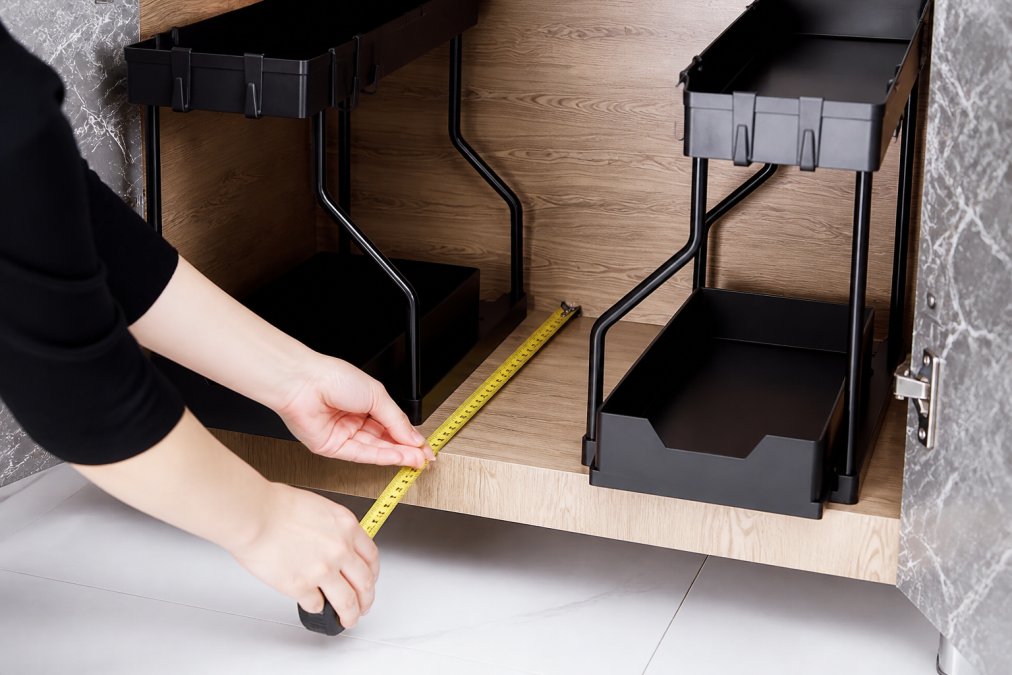
Start with a tape measure and notepad. Measure the depth from the front edge to the back wall, and the width from left to right. Note any obstructions: pipes, electrical outlets, or uneven surfaces. Shelf depth typically ranges from 12 to 24 inches, and this measurement determines which organizers will work.
Write down exact measurements and take a photo with the tape measure visible. This becomes your shopping reference. Also check the vertical clearance between shelves. If you have 8 inches of height, a tall organizer won't fit.
Check Weight Capacity Before Buying
Deep shelves have weight limits. A typical wooden pantry shelf holds 25-50 pounds per linear foot, while metal shelves generally handle 75-100 pounds per linear foot. Before filling organizers, calculate the weight. A box of canned goods weighs 20-30 pounds; a large clear bin filled with pasta and baking supplies easily reaches 40+ pounds (usda.gov).
Overloading shelves causes sagging and eventual structural failure. If shelves feel soft or flex when pressed, they're near capacity. Check manufacturer specifications or original pantry documentation for exact limits.
Pull-Out Pantry Drawers: Accessibility Without the Reach
Pull-out drawers solve the accessibility problem directly. Instead of reaching to the back of a deep shelf, you pull the entire drawer forward, bringing everything within arm's reach. This eliminates the "out of sight, out of mind" problem that plagues deep shelves.
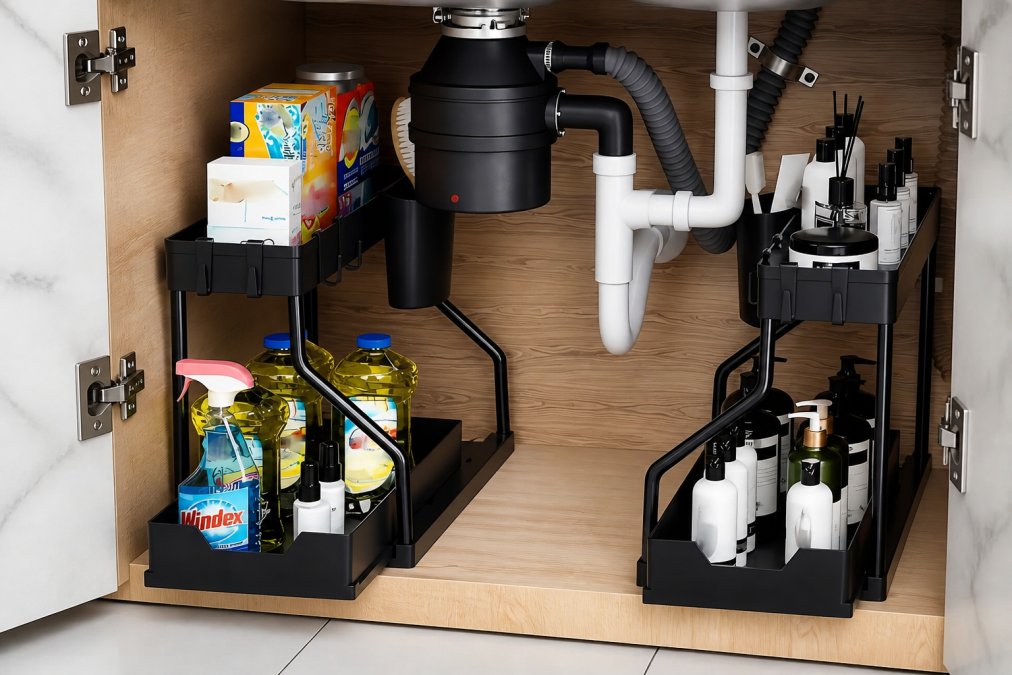
Pull-out systems come in two types: sliding shelves that attach to existing shelves, and standalone drawer inserts. Both work for deep shelves but serve different purposes. The Under Sink Organizer with Sliding Shelves from The Reset Aisle ($34.99) demonstrates how sliding shelves transform access. The two-piece design fits most shelf depths and handles heavy items without sagging.

Pull-out systems work best for frequently accessed items: spices, oils, baking essentials, or snacks. Reserve them for high-traffic zones. Items used once yearly can stay in fixed containers at the back.
Lazy Susans for Deep Cabinets: Spinning Storage That Works
A lazy susan or rotating turntable brings items from the back to the front with a single spin. This prevents expired products and duplicate purchases by exposing what's hiding. Lazy susans work best for items stored in jars or bottles: spices, condiments, oils, and baking ingredients.
The Double-Layer Rotating Spice Rack from The Reset Aisle ($24.99) solves the problem of spice jars that get knocked over or expire unopened. The double-layer design is critical for deep shelves, a single-tier turntable wastes vertical space, while two tiers use the full height available and double storage capacity.

Turntables require clearance to spin freely. Measure at least 2 inches of clearance on each side and ensure the shelf above doesn't restrict rotation. Quality models use rubber feet or adhesive pads to keep everything stable and prevent sliding when you reach for items.
Clear Bins and Stackable Containers: See What You Have
Visibility is the foundation of pantry organization. If you can't see what you have, you'll buy duplicates and waste food. Clear bins create defined zones and let you see contents at a glance.
For deep shelves, stackable containers use vertical space efficiently. A single bin holds 5 pounds of pasta flat, but stacked bins triple storage capacity in the same footprint. Choose bins with secure lids to keep items fresh and prevent spills when pulled out. Lids also make stacking safer.
Transparent polypropylene or polycarbonate bins last longer than cheaper alternatives and resist cracking when stacked. Avoid thin plastic that becomes cloudy over time, you lose the visibility advantage that makes clear bins worthwhile.
Vertical Shelf Dividers and Back-to-Front Organization
Vertical shelf dividers prevent items from toppling forward and establish boundaries that maintain organization. For deep shelves, pair dividers with a back-to-front strategy: place frequently used items toward the front and less frequent items toward the back.
Adjustable dividers are preferable to fixed ones, allowing you to resize zones as needs change. Look for dividers with non-slip feet so they don't slide when you reach for items. The best organizers for deep shelves combine dividers with other storage methods, dividers keep bins in place while bins bring items forward and create visibility.
Labeling Systems and Inventory Management
Labels transform organization into a sustainable system. When every bin and shelf section has a label, family members know exactly where items belong. Effective labeling includes what's in the container and when it was opened or purchased.
Use a label maker or waterproof markers to ensure labels stay readable. Handwritten labels on regular paper fade and smudge. For deep shelves, consider labeling the shelf itself, not just containers, to give family members a visual reference for where items should go.
Digital inventory management apps complement physical labels. Photograph your organized pantry and use an app to track what's stored where. Some apps let you scan barcodes as you remove items, creating real-time inventory, especially useful for deep shelves where items easily get lost.
Making It Stick: Why Organization Systems Fail and How to Prevent It
Most pantry organization systems fail within 3-6 months (peer-reviewed research). Items drift back to their original state, new purchases don't integrate into the system, and the pantry reverts to chaos. Understanding why prevents this outcome.
Organization systems fail because they don't match how people actually use their pantry. A system requiring 20 minutes of weekly maintenance will fail. If it takes 10 seconds to put an item in the right place, it has a chance of lasting. Poor visibility is the second reason, if you can't see what you have, you won't use the system. Inadequate capacity is the third, if organizers are too small, new items have nowhere to go.
To prevent failure, start small. Organize one shelf or category first, then expand once that zone is stable. Schedule quarterly reviews to assess what's working and make small adjustments. Finally, involve your household. If only one person maintains the system, it will fail. Clear labels and intuitive placement make this possible for everyone.
Frequently Asked Questions
How do I prevent items from getting lost in the back of a deep pantry shelf?
Use a combination of pull-out drawers, lazy susans, and clear bins to bring back-row items forward. A rotating turntable like the Double-Layer Rotating Spice Rack ($24.99) eliminates the need to reach, items spin to you instead. For non-rotating items, organize back-to-front with the oldest stock in front and newest behind. Label everything so you know what's there without digging.
What's the best way to organize a 24-inch deep pantry shelf?
Start by measuring your exact shelf depth and width. A 24-inch deep shelf works well with pull-out drawer systems that pull out 18-20 inches, giving you full access. Pair these with clear stackable containers in the front and modular organizers in the back. The Under Sink Organizer with Sliding Shelves ($34.99) works for deep cabinets too, its pull-out design ensures nothing gets buried. Always check weight capacity before loading.
Are pull-out drawers or clear bins better for deep pantry shelves?
Both solve different problems. Pull-out drawers excel for accessibility, they bring items to you without reaching. Clear bins let you see contents at a glance and stack efficiently. The best approach combines both: use pull-out drawers for frequently accessed items and heavy goods, and stack clear bins in remaining space. This hybrid method maximizes both visibility and accessibility on deep shelves.
How do I organize a deep pantry shelf for aging or mobility-impaired users?
Prioritize accessibility over density. Use pull-out drawer systems to eliminate reaching into deep spaces. Position frequently used items at eye level (48-60 inches high) and avoid anything above shoulder height. Lazy susans reduce the need to lean or stretch. Keep shelf depth under 20 inches if possible, or use sliding shelf organizers that extend forward. Consider lightweight containers so items are easy to lift.
Why do pantry organization systems fail, and how can I make mine last?
Systems fail when they don't match your actual habits or shelf dimensions. To prevent this: measure before buying, choose organizers that fit your shelf depth exactly, and create zones based on how you cook (baking together, snacks together). Label everything and do a monthly inventory check. Use containers that stack properly and don't tip. The Kitchen Reset bundle ($52.99) pairs complementary tools to handle two major problem spots at once, making maintenance simpler.
The best pantry organizers for deep shelves aren't about buying the most products or the fanciest systems. They're about matching your specific shelf depth with organizers that bring items forward, create visibility, and require minimal daily maintenance. Measure first, choose strategically, and start small. The Reset Aisle's curated organizers are designed to solve exactly these problems. Start your reset with products that actually fit your space and your lifestyle.
This article was written using GrandRanker