

Table of Contents
- Closet Organization vs Dresser Storage: A Direct Comparison
- What to Hang vs. What to Fold: Making the Right Choice
- Closet Organization Systems That Maximize Hanging Space
- Dresser Storage: Pros, Cons, and Space-Saving Strategies
- Best Practices for Folding Clothes and Drawer Organization
- Wardrobe Decluttering Tips Before You Organize
- How to Decide: Closet Organization or Dresser Storage for Your Home
- Conclusion
Last Updated: August 30, 2026
Closet Organization vs Dresser Storage: A Direct Comparison
Closet organization and dresser storage serve fundamentally different purposes. Your closet excels at visibility and accessibility, hanging clothes let you see everything at a glance. A dresser protects delicate fabrics, saves vertical space, and keeps smaller items contained. The real efficiency comes from knowing which clothes belong in which storage method, then organizing both spaces to work together.
Most people fail at wardrobe organization not because they lack storage, but because they treat closet and dresser space as interchangeable. The Reset Aisle's approach flips this: decide first what each piece of clothing needs, then place it in the storage method that serves it best.
Comparison Table: Key Differences
| Aspect | Closet Organization | Dresser Storage | Best For |
|---|---|---|---|
| Visibility | High, see all items at once | Low, items stacked or hidden | Quick outfit selection vs. space efficiency |
| Space Efficiency | Uses vertical space | Uses horizontal/drawer depth | Large wardrobes vs. small closets |
| Fabric Protection | Exposes to dust, wrinkles | Protects delicate items | Everyday wear vs. knitwear, lingerie |
| Accessibility | Immediate, grab and go | Requires opening drawers | Frequent wear vs. occasional pieces |
| Organization Tools Needed | Hangers, rods, shelf dividers | Drawer dividers, organizers, folding method | Budget and space constraints |
| Best For | Blouses, dresses, pants, jackets | Socks, underwear, sweaters, scarves | Depends on garment type |
What to Hang vs. What to Fold: Making the Right Choice
The single biggest mistake people make is hanging clothes that should be folded, and folding clothes that should be hung.
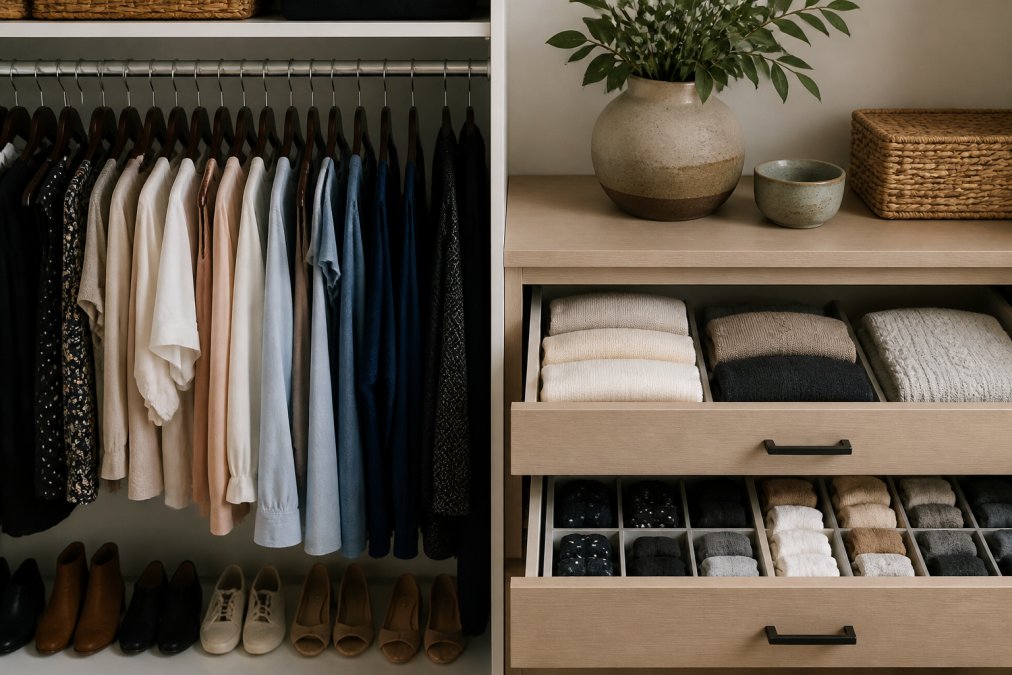
Hang these: Blouses, button-up shirts, dresses, skirts, blazers, lightweight jackets, and dress pants. These pieces maintain their shape when hung, stay wrinkle-free, and remain visible so you actually wear them.
Fold these: Sweaters, knitwear, t-shirts, jeans, leggings, and delicate fabrics like silk camisoles. Knit fabrics stretch and lose shape when hung; folding preserves their structure. Delicate fabrics stay protected in a drawer away from dust and direct light.
When you sort by storage method first rather than by color or season, you're more likely to maintain your system long-term because the logic is intuitive and requires less daily decision-making.
Closet Organization Systems That Maximize Hanging Space
If your closet is small or packed, the problem usually isn't that you have too many clothes, it's that you're not using the space efficiently.
Slim hangers are the foundation. Switching from standard plastic hangers to slim velvet or wooden hangers can free up rod space immediately. Multi-clip hanger systems multiply this effect: The Reset Aisle's Space Saving Pant Hanger holds 40 pairs of pants or leggings on 10 strong clips, using the space that a single hanger would occupy.

Double hanging rods work if you have vertical clearance. Installing a second rod 18-24 inches below the first doubles your capacity (the CDC). Use the upper rod for longer items and the lower rod for shorter pieces.
Shelf dividers and vertical storage prevent the stack-and-collapse problem. Dividers create compartments so each folded item stands upright and visible, making it easy to grab what you need without toppling a pile.
Over-door organizers and hooks use typically empty space. The back of your closet door can hold scarves, belts, lightweight jackets, or shoe organizers, freeing up rod and shelf space for heavier pieces.
Closet organization systems work best when they multiply your existing infrastructure rather than replace it. A space-saving pant hanger costs under $20 and solves the problem of pants consuming rod space.
Dresser Storage: Pros, Cons, and Space-Saving Strategies
A dresser is a space-efficient alternative to closet hanging when you don't have closet rod space, but it only works if you organize it strategically.
Pros of dresser storage: Dressers protect delicate fabrics and knitwear from dust, wrinkles, and fading. They save closet rod space, which matters in small bedrooms.
Cons of dresser storage: Drawers hide items, which means you forget what you own and stop wearing pieces. Without dividers, drawers become disorganized within weeks.
Space-saving strategies: Use fabric drawer organizers to create compartments for different garment types. The Reset Aisle's Fabric Drawer Organizers divide a drawer into sections for socks, underwear, bras, and ties, keeping everything visible.

Fold using the vertical method: fold items and stand them upright in the drawer like files. This lets you see every item without moving things around.
Assign drawers by category: top drawer for underwear and socks, second for t-shirts, third for sweaters. This logic is consistent and easy to maintain.
Best Practices for Folding Clothes and Drawer Organization
The vertical fold method works best for most garments. Fold your item in half lengthwise, then fold it in thirds or quarters lengthwise, then fold it in half widthwise. Stand it upright in the drawer like a file. This method lets you see every item without moving others around.
For sweaters and delicate knitwear, fold without hanging them. Lay the sweater flat, fold the arms across the chest, then fold in half. Store it standing up or in a shallow stack; never hang knitwear, as the weight stretches the fibers.
For t-shirts and casual tops, use the same vertical fold. Consistency is key: if everyone folds the same way, the system stays intact.
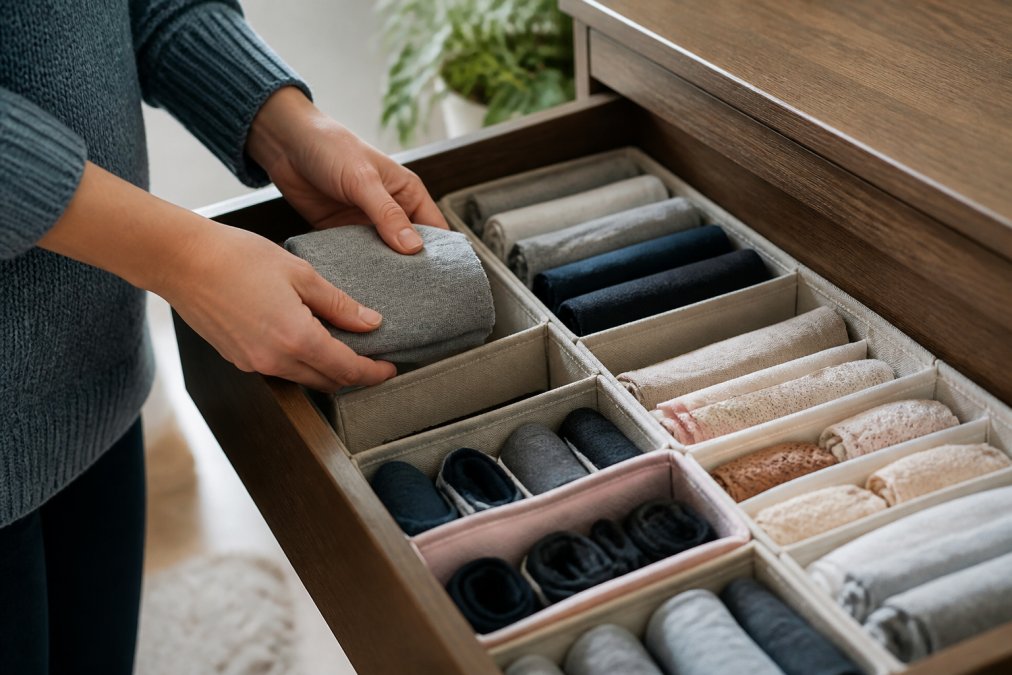
Use drawer dividers or fabric organizers to maintain compartments. Without them, even perfectly folded items will shift and topple. The Reset Aisle's Fabric Drawer Organizers are designed to stay in place and keep compartments separate.
The real secret to long-term drawer organization is the rule system. Assign each drawer a category and commit to it. This consistency means you don't have to think about where something goes; decision fatigue drops dramatically.
Wardrobe Decluttering Tips Before You Organize
Before you build your closet and dresser organization system, you need to know what you're actually organizing. Most people try to organize a closet full of clothes they don't wear, which guarantees failure.
Start with a ruthless edit. Pull everything out and sort into three piles: wear regularly (at least once a month), wear occasionally (a few times a year), and never wear. Donate or discard the never-wear pile. Move occasionally-worn items to secondary storage.
The wear-regularly pile is what gets organized. This is your active wardrobe, and it should be small enough to fit comfortably in your closet and dresser without feeling crowded. Aim for a capsule wardrobe of 30-50 pieces in your active rotation (peer-reviewed research).
Decluttering also surfaces the real storage gaps. Once you've removed items you don't wear, you can see what you actually need to store and organize.
How to Decide: Closet Organization or Dresser Storage for Your Home
The answer depends on three factors: your space constraints, your lifestyle, and the composition of your wardrobe.
If you have limited closet rod space: Prioritize dresser storage for items that don't need hanging. Use your closet rod for pieces that must hang.
If you have limited floor space: Prioritize closet organization and vertical storage. A closet rod uses zero floor space; a dresser takes up floor space.
If you have a large, well-organized closet: Use it as your primary storage. Hang everything that benefits from hanging, fold delicate items on shelves.
If your wardrobe is mostly knitwear and casual pieces: Dresser storage is ideal. These items don't need hanging and deteriorate when hung.
If your wardrobe is mostly structured pieces: Closet organization is the priority. These pieces benefit from hanging.
Most people benefit from a 60/40 or 70/30 split: 60-70% of your active wardrobe hangs in the closet, and 30-40% folds in the dresser (peer-reviewed research). The Reset Aisle's Closet Reset bundle ($56.99) pairs a Space Saving Pant Hanger with two Fabric Drawer Organizers, designed exactly for this split.
Closet organization and dresser storage aren't competitors; they're partners in a system that only works when each piece of clothing lives where it belongs. The closet handles visibility and quick access. The dresser handles protection and space efficiency.
Start with decluttering to reduce overwhelm and identify your actual active wardrobe. Then decide your storage ratio based on your space and lifestyle. Finally, invest in organization tools that match your system: slim hangers, multi-clip pants hangers, and fabric drawer dividers. With the right tools and a clear system, your closet and dresser become functional spaces where you can find anything in seconds.
Start your reset today. A well-organized wardrobe isn't about having more storage; it's about using the storage you have strategically and intentionally.
=== FAQ ANSWERS (audit these too, same rules) ===
Frequently Asked Questions
Q: What items should be stored in a closet versus a dresser?
A: Hang items that wrinkle easily and are worn frequently: blouses, dresses, jackets, and pants. Fold and store in a dresser: knitwear, sweaters, t-shirts, underwear, socks, and delicates that benefit from gentle storage. The key is matching the garment's fabric and wear pattern to the storage method. Delicate fabrics like silk and cashmere stay better preserved in drawers with proper support, while structured pieces like button-ups maintain their shape on a closet rod.
Q: How do you decide which clothes to hang and which to fold?
A: Consider wrinkle resistance, frequency of use, and fabric type. Hang anything you wear weekly that shows wrinkles easily. Fold items you access less often or that maintain their shape when folded. Lightweight fabrics like cotton tees and underwear fold well; heavier items like coats and dresses hang better.
Q: What is the best way to organize a small closet when space is limited?
A: Maximize vertical storage with slim hangers and multi-clip pants hangers that hold up to 40 pairs on a single rod. Use the top shelf for off-season items or less-used pieces. Add drawer organizers to any built-in dresser space to create compartments for socks, ties, and accessories. Consider a combination approach: hang your most-worn items and fold the rest in a standalone dresser. The Space Saving Pant Hanger ($19.99) reclaims significant rod space, and Fabric Drawer Organizers ($22.99) keep small items visible and accessible.
Q: Is it better to use a closet or a dresser for storing delicate fabrics?
A: Delicate fabrics like silk, cashmere, and lace are better stored in a dresser with proper drawer dividers and support. Hanging delicates can stretch them over time, especially if they're heavy or prone to slipping off hangers. Drawers protect delicates from dust, sunlight, and humidity fluctuations. Use fabric drawer organizers with compartments to keep delicates separated and prevent friction between garments, which extends their lifespan and maintains their quality.
This article was written using GrandRanker