

Last Updated: October 25, 2026
Quick Summary
The best eco friendly toy storage materials depend on the job: recycled plastic wins on cleanability and cost, solid wood on longevity and repairability, washable cotton and canvas on softness, and metal on portability and recyclability. No single material wins everything, so most organized playrooms mix two or three. Match the material to your mess level and your child's age.
- Recycled plastic is best for high-traffic playrooms and homes with kids under five.
- Recycling changes feedstock, not additives, so a recycled bin may still contain colorants and stabilizers.
- Jute and seagrass shed fibers and suit only low-traffic, decorative spots.
- The Global Recycled Standard verifies recycled content but not chemical safety.
- Start with one room, measure shelf depth and height, and buy fewer, better bins.
Table of Contents
- Eco Friendly Toy Storage Bin Materials: A Side-by-Side Comparison
- Non-Toxic Toy Storage: What to Check Before You Buy
- Recycled Plastic Storage Bins: Do They Live Up to the Label?
- Sustainable Toy Storage Baskets in Cotton, Canvas and Jute
- Plastic-Free Toy Storage Ideas Using Wood, Bamboo and Metal
- How to Read Certifications and Verify Recycled Content Claims
- Matching Bin Materials to Your Child's Age and Your Space
- Choosing Your Toy Storage Reset
- Frequently Asked Questions
Eco Friendly Toy Storage Bin Materials: A Side-by-Side Comparison
At The Reset Aisle, we think a lot about eco friendly toy storage because the bin is the piece parents touch every day, and the piece that either survives toddlerhood or ends up cracked in a landfill.
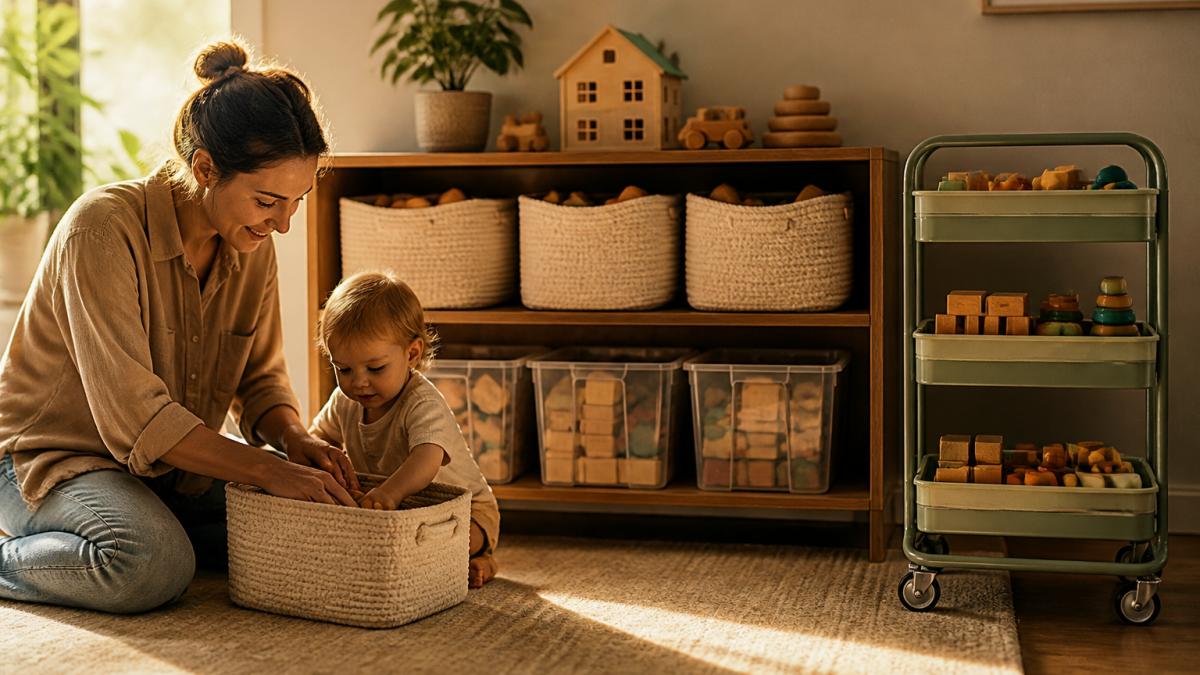
Here's the tension most guides skip: the most sustainable-sounding material isn't automatically the safest or most durable. A jute basket that composts beautifully sheds fibers every time a toddler drags it across carpet.
How We Compared the Materials
We scored every material on six criteria: chemical safety, durability under kid use, cleanability, environmental footprint, cost, and fit for small hands and rooms. That last one matters, a bin a four-year-old can't lift independently stops being storage and becomes decoration.
We also weighed lifecycle factors, recycled content, repairability, recyclability, biodegradability, and lifespan, rather than treating one sustainability label as a complete measure, and noted age-specific risks like tipping, pinch points, sharp edges, lid entrapment, small parts, and bin weight.
| Material | Safety Notes | Durability | Cleaning & Moisture | Lifecycle & End-of-Life | Cost Signal | Best For |
|---|---|---|---|---|---|---|
| Recycled plastic | Look for certified recycled content; recycling changes feedstock, not additives, colorants and stabilizers may still be present | High; rigid polypropylene resists drops, sitting, dragging | Wipe or rinse; non-porous, resists mold and dust buildup | Diverts material from landfill; recyclability varies by local programs; long lifespan | Low to moderate; often the cheapest per bin | Playrooms, messy rooms, homes with kids under five |
| Solid wood | Check finish and formaldehyde emission class; solid wood avoids engineered-panel adhesives | Very high; can last through multiple children | Wipe only; avoid soaking; humid rooms can warp | Repairable and refinishable; biodegradable if untreated; long lifespan | Moderate to high; heirloom potential | Open shelving, heirloom use |
| Bamboo | Often laminated with adhesives; ask for adhesive type | High; lighter than hardwood | Wipe only; avoid prolonged moisture | Fast-renewing material; lamination complicates recycling; moderate lifespan | Moderate | Lightweight open bins |
| Cotton and canvas | Washable, breathable; organic cotton avoids conventional pesticide load | Medium; collapses when pulled | Machine wash; absorbs spills and odors; can harbor dust mites if not washed | Biodegradable; organic options have lower input footprint; moderate lifespan | Low to moderate | Soft toys, bedrooms, reading corners |
| Jute and seagrass | Natural fibers, can shed; rough on small hands | Medium; fibers loosen with dragging | Spot clean only; moisture can cause mold | Biodegradable; low-input fibers; shorter lifespan in high traffic | Low | Decorative, low-traffic spots |
| Metal | Powder-coat quality varies; chips expose edges to rust | High; handles narrow spaces and portability | Wipe; powder coat resists spills but chips need attention | Recyclable at end of life; long lifespan if coating holds | Moderate | Rolling carts, narrow spaces |
The short version: recycled plastic wins on cleanability and cost, wood on longevity and repairability, fabric on softness and washability, metal on portability and recyclability.
A note on "eco friendly": the term has no single legal definition for storage bins. A material can be bio-based but not biodegradable, recycled but not recyclable locally, or natural but finished with synthetic coatings.
Non-Toxic Toy Storage: What to Check Before You Buy
Non-toxic toy storage is made without harmful levels of chemicals that can migrate into a child's environment.
Finishes matter most on wood. Paints, lacquers, and stains can off-gas VOCs, and formaldehyde-based adhesives show up in engineered wood like MDF and plywood.
Adhesives hide in bamboo and laminated panels too.
Recycled content is the third trap. "Made from recycled materials" is a marketing phrase until someone shows you certification.
Watch out: a bin labeled "BPA-free" tells you almost nothing.
For a deeper look at why material choice matters in household storage generally, our guide on why non-toxic storage matters for pantry organization walks through the same logic applied to food storage areas.
Recycled Plastic Storage Bins: Do They Live Up to the Label?
Recycled plastic storage bins are the workhorse of playroom organization: light, stackable, wipeable, and cheap enough to buy in matching sets.
Here's what most guides miss: recycled plastic isn't automatically lower-toxicity plastic. Recycling changes where the feedstock came from, not what additives go into the final product, a recycled bin can still contain colorants and stabilizers you'd want disclosed.
What to look for on the label:
- The percentage of recycled content, stated as a number
- Whether it's post-consumer or post-industrial
- A certification covering the recycled claim, not just a green leaf icon
- A disclosure of what the bin is made from beyond "plastic"
Durability is where recycled plastic shines.
Best for: high-traffic playrooms and homes with kids under five. Skip if: you want a material that can be composted or easily repaired.
Sustainable Toy Storage Baskets in Cotton, Canvas and Jute
Sustainable toy storage baskets are soft-sided containers made from plant or cotton fibers, suited to bedrooms, reading corners, and anywhere a rigid bin would look out of place.
Cotton and canvas are the practical picks. Both are typically machine washable, which matters when a bin holds stuffed animals and snacks.
Jute and seagrass are the aesthetic picks.
A common mistake is buying a full set of fabric baskets for a playroom with toddlers.
Best for: bedrooms, nurseries, and soft-toy storage. Skip if: the bin will hold craft supplies, snacks, or anything wet.
Plastic-Free Toy Storage Ideas Using Wood, Bamboo and Metal
Plastic-free toy storage ideas usually come down to three materials: solid wood, bamboo, and metal. Each has a different failure mode, and knowing it is how you avoid buying the wrong one.
Solid wood is the longevity champion, a well-finished hardwood bin or shelf can last through multiple children and still look good.
Bamboo is lighter and often cheaper than hardwood, and it's fast-renewing.
Metal shines for portability. A powder-coated steel rolling cart handles narrow closets and odd corners rigid shelving can't reach, and moves between rooms as needs change.
Watch out: "natural wood" on a label doesn't mean unfinished or untreated.
If you're weighing a full built-in system against simple bins, our comparison of professional closet systems versus budget bins covers the cost and durability trade-offs in detail.
How to Read Certifications and Verify Recycled Content Claims
Certifications are only useful if you know which one covers which claim. The one that matters most for recycled plastic is the Global Recycled Standard, which verifies recycled content and traces it through the supply chain.
Here's what certifications do and do not establish:
- Recycled-content certifications (like the Global Recycled Standard) verify the percentage and chain of custody of recycled material. They do not verify chemical safety, additive disclosure, or whether the bin is recyclable in your local program.
- Organic fiber certifications verify growing and processing standards for cotton. They do not verify dyes, finishes, or flame retardants added later.
- Formaldehyde emission classes (such as CARB Phase 2 or TSCA Title VI for composite wood) set limits on formaldehyde emissions from engineered wood. They do not cover other adhesives or finishes.
- Safer-chemical programs (like the EPA's Safer Choice) evaluate ingredient profiles for certain product categories. They are not a general toy-storage safety certification.
A product claiming recycled content without a certification covering that claim is asking you to take its word, as are "non-toxic," "natural," and "eco-friendly," which are marketing terms unless tied to a named, checkable standard.
Here's a verification checklist you can run in a couple of minutes:
- Does the listing state a recycled content percentage as a number?
- Is the claim backed by a named certification, not just an icon?
- Does the certification cover recycled content specifically, or only something adjacent?
- For wood, is the finish and formaldehyde emission class disclosed?
- For fabric, is the fiber content and any organic claim certified?
- Can you find the maker's material disclosure outside the product page?
- Does the certification body have a public database or label lookup you can search?
The Global Recycled Standard administered by Textile Exchange is a good starting point for understanding what a recycled-content certification actually verifies. For chemical safety in consumer products more broadly, the Consumer Product Safety Commission publishes guidance on recalls and product safety standards that apply to children's items. And the Environmental Protection Agency's Safer Choice program explains how it evaluates safer chemical ingredients, which helps you interpret "safer chemicals" claims on storage and household products.
A contrarian point: a certification you can verify beats a longer list you can't. One named, checkable standard is worth more than five logos.
Matching Bin Materials to Your Child's Age and Your Space
Age changes everything about which material works. Under three, kids pull, climb, and chew, so you want rounded edges, no small detachable parts, and wipe-clean materials.
Space shapes the choice too. Deep shelves waste vertical room unless you use small-sized bins that pull forward. Narrow closets do better with a rolling cart than fixed shelving. Slanted ceilings and awkward corners are where portable storage earns its keep.
The bins that get used are the ones a child can reach and lift alone. If a bin is too heavy or too high, it becomes a place things go to disappear.
Choosing Your Toy Storage Reset
Start with one room, not the whole house.
If you want a rotation system to go with those bins, our guide on toy rotation steps to cut clutter fast shows how to keep the toy count manageable so the storage stays functional.
That's the whole method: match the material to the job, verify the claims that matter, and buy fewer, better bins.
Frequently Asked Questions
What materials are best for eco-friendly toy storage bins?
There is no single best material, only the best fit for your room and child. Solid wood and bamboo offer durability and no plastic, but check for formaldehyde-free adhesives and water-based finishes. Cotton and canvas baskets are soft, washable and light, though they hold less weight. Recycled plastic bins are easy to wipe clean and stack, so look for certified recycled content. Metal carts last for years and recycle well. Weigh safety, cleaning, cost and end-of-life before choosing.
Are recycled plastic storage bins a sustainable choice for toy storage?
They can be, if the recycled content is real and verified. Look for a stated percentage of recycled material and third-party certification such as the Global Recycled Standard, then check the certifying body's public database to confirm the claim. Recycled plastic bins are wipeable, stackable and resist moisture, which suits playrooms and busy households. Their weakness is end-of-life: most curbside programs do not take rigid plastic bins, so check local recycling rules before you buy.
What should I look for in non-toxic toy storage?
Start with the finish and the adhesive, not just the material name. For wood and engineered wood, ask whether the board is formaldehyde-free and whether the finish is water-based. For fabric, look for undyed or low-impact dyes and a washable cover. Avoid strong chemical odors out of the box, which can signal emissions. Check for independent certifications rather than marketing language, and confirm the bin has no sharp edges or small detachable parts for young children.
How do you clean natural-fiber toy baskets?
Shake out dust weekly and spot clean with a damp cloth and mild soap. Cotton and canvas baskets with removable liners can usually go in the washing machine on cold, then air dry to prevent shrinkage. Jute and seagrass should stay dry: vacuum with a brush attachment and blot spills immediately, since soaking can cause mildew. Set baskets in direct sun occasionally to freshen them, and keep them off damp floors in humid rooms.
The hardest part of organizing isn't picking bins. It's building a system that survives a Tuesday afternoon. At The Reset Aisle, we focus on practical, space-saving storage that helps you make the belongings you already own work harder, with curated solutions for pantries, closets, and playrooms and a calm, minimalist approach that reduces daily overwhelm. Start your reset with The Reset Aisle and turn the cluttered corner into a space that stays under control.
