

Table of Contents
- Measure Your Cabinet Depth and Height First
- Empty Everything and Decluttering Kitchen Cabinets
- Group Items by Workflow, Not by Category
- Best Kitchen Cabinet Organizers for Deep Shelves
- Vertical Storage Solutions for Cabinets You Own
- Use Cabinet Doors and Awkward Corners
- Rental-Friendly Hacks That Respect Weight Limits
- Conclusion: Build a System That Lasts
- Frequently Asked Questions
Last Updated: September 6, 2026
Most kitchens waste roughly a third of their available storage because the space inside the cabinets is poorly configured (energy.gov). The real challenge isn't the square footage you have, but how effectively you use the vertical space and cabinet depth sitting unused behind the front row of items.
At The Reset Aisle, we focus on how items are accessed, not just where they're stored, to help transform chaotic pantries into calm, efficient spaces. Below, we'll walk through a step-by-step system that covers measurement, decluttering, and the best organizers to finish the job.
Measure Your Cabinet Depth and Height First
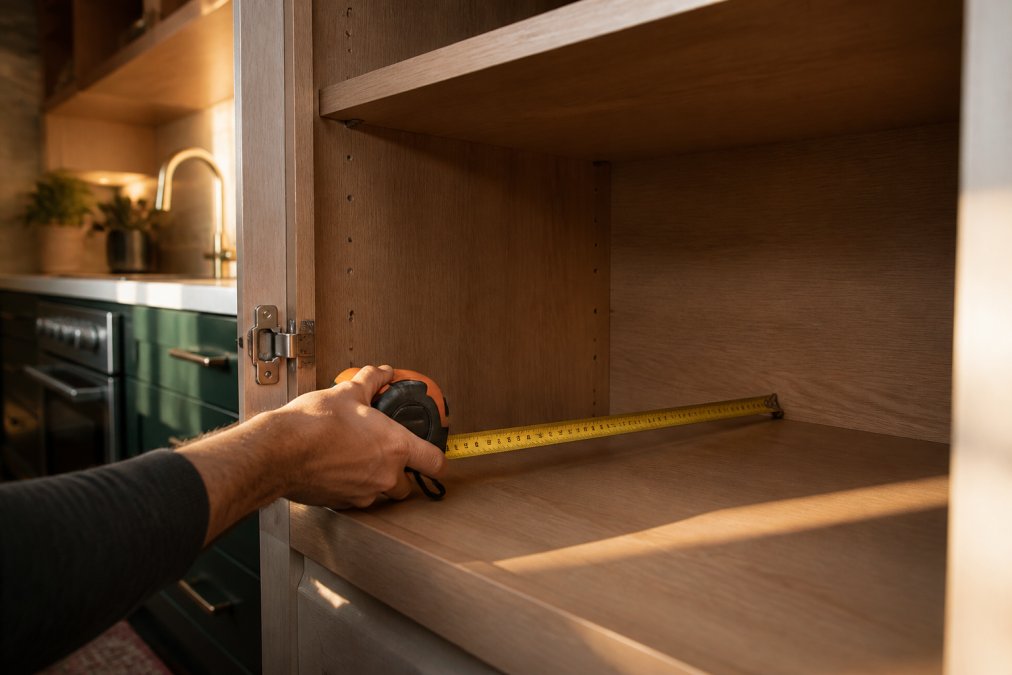
Measuring your cabinet interiors before buying any organizer prevents the most common and expensive mistake: purchasing storage solutions that don't fit. Grab a tape measure and record the interior width, depth, and height of each cabinet, noting any obstructions like plumbing pipes, hinges, or shelf brackets that could limit what you can install.
A common approach is to measure only the shelf surface, but the vertical clearance matters just as much. For example, a cabinet shelf that is 12 inches deep can hold a lazy susan, but a pull-out tray needs an extra few inches of clearance to slide forward without hitting the cabinet door.
Empty Everything and Decluttering Kitchen Cabinets
Decluttering kitchen cabinets is the single most effective step in this entire process, and it must happen before you organize anything. Pull every single item out and place it on your countertop or table, then sort everything into three piles: keep, donate, and toss. Be honest about the duplicate measuring cups and the blender you haven't touched in two years.
Organizing clutter just gives you a neater pile of stuff you don't need. When you remove expired spices, chipped mugs, and unused gadgets, you free up real space for items you actually reach for daily.
Group Items by Workflow, Not by Category
Grouping items by how and when you use them, rather than by what they are, is the difference between a kitchen that looks organized and one that actually functions well. This ergonomic approach means your coffee mug collection lives near the coffee maker, not in the cabinet farthest from it.
Think about your kitchen workflow as a series of zones: prep, cooking, baking, and cleaning. Items used together should be stored together, reducing wasted motion and making cooking feel less like a treasure hunt.
Best Kitchen Cabinet Organizers for Deep Shelves
The best organizer for a deep shelf is the one that eliminates the 'black hole' at the back, the zone where items get pushed out of sight and forgotten for months. But before you buy anything, understand the structural reality of your cabinet. Most framed cabinet shelves are built from 1/2-inch or 5/8-inch plywood or particleboard. A rotating spice rack loaded with glass jars can easily hit 15 to 20 pounds, so check for sagging over time, especially on shelves spanning more than 30 inches without center support.
The rotating rack trade-off. A double-layer rotating spice rack uses vertical space and spins 360 degrees, but it occupies a circular footprint. In a standard 12-inch-deep cabinet, a 10-inch-diameter rack leaves dead space in the front corners. If your cabinet is 18 inches wide or wider, that corner space is enough for a slim caddy holding oils or vinegar bottles. With a narrower cabinet, a tiered step riser might serve you better, it holds more linear feet of jars and lets you see every label at a glance.
The under-sink reality. Under-sink cabinets are a different beast entirely. The plumbing trap, garbage disposal line, and P-trap consume the center of the space, leaving only the sides and the area directly under the sink bowl usable. A sliding shelf organizer works well here, but only if you measure the depth from the front of the cabinet frame to the back wall, and the height from the cabinet floor to the bottom of the sink bowl. Most under-sink organizers are 16 to 18 inches deep, which fits standard 24-inch-deep cabinets, but you must subtract the space the plumbing occupies. A common mistake is buying a two-tier sliding unit without checking whether the top tier clears the drain pipe.

A safer, rental-friendly alternative. If you cannot drill into the cabinet floor or walls, tension-based shelf risers and stackable wire grids are your best bet. They rely on vertical pressure between the shelf above and below, and remove cleanly without leaving holes. They are not ideal for very heavy cast-iron cookware, but they handle spices, canned goods, and plastic containers without issue. For under-sink areas, a tension rod mounted horizontally across the cabinet interior can hold spray bottles by their triggers, keeping them off the floor and away from the plumbing.
| Organizer | Best Use | Structural Consideration | Rental-Friendly? |
|---|---|---|---|
| Double-Layer Rotating Spice Rack | Spices, small jars, condiments | Needs a stable shelf; circular footprint wastes corner space | Yes, sits on shelf |
| Tiered Step Riser | Canned goods, jars, small bottles | No installation; check shelf height clearance | Yes |
| Under-Sink Sliding Shelf | Cleaning supplies, toiletries | Must clear the P-trap; measure sink bowl height | Requires drilling or adhesive tracks |
| Tension Rod + Spray Bottle Hooks | Spray cleaners, oils | No drilling; relies on tension between cabinet walls | Yes |
Match the organizer to the actual load and the cabinet's structural limits, not just to the aesthetic of a tidy shelf. A rack that looks great but sags under weight is worse than no organizer at all, it damages the cabinet and creates a safety hazard.
Vertical Storage Solutions for Cabinets You Own
Vertical storage solutions exploit the most underused dimension in your kitchen: the space between the top of your items and the shelf above them. Stackable bins and tiered shelving units turn that dead air into usable storage, allowing you to double the capacity of a single shelf without any permanent modifications.
A common mistake is buying organizers that are too tall, wasting the space above them. Before purchasing stackable bins, measure the vertical clearance in your cabinet and consider what you'll store in each layer. Canned goods work well in tiered racks that let you see every label at a glance, while taller items like cereal boxes belong on shelves with more headroom.
Use Cabinet Doors and Awkward Corners
Cabinet doors and corner spaces are the most overlooked real estate in any kitchen, offering valuable storage for lightweight items that would otherwise clutter your main shelves. Tension rods mounted inside cabinet doors create instant vertical storage for cutting boards, baking sheets, and spray bottles, while small adhesive hooks hold measuring spoons and pot holders within easy reach.
For awkward corner cabinets, lazy susans are the classic solution, since they rotate to bring items from the deep, dark corner into the light. If a full lazy susan doesn't fit, consider half-moon versions or pull-out trays that mount to the cabinet floor and slide straight out. Never leave a corner empty, even a narrow gap can hold a tension rod or a slim caddy for foil and plastic wrap.
Rental-Friendly Hacks That Respect Weight Limits
Rental-friendly organization is not just about avoiding drill holes, it is about understanding the difference between what a cabinet can hold and what a tension rod or adhesive hook can safely support. Most landlords and lease agreements prohibit permanent alterations, but that does not mean you have to live with chaotic shelves. Use gravity, tension, and surface adhesion in ways that do not stress the cabinet structure.
Know your cabinet's real limits. A standard upper cabinet shelf made of 5/8-inch particleboard, spanning 30 inches between side panels, can be affected by the load spread (apawood.org). Concentrating 30 pounds of cast-iron cookware in one spot can cause the shelf to bow permanently within months. Lower cabinets, often built with the same materials but sitting closer to the floor, can handle more weight because the load path is shorter and the cabinet box is reinforced by the countertop above. The practical rule: keep heavy items, small appliances, cast iron, glass storage containers filled with food, on lower shelves or the cabinet floor. Reserve upper shelves for lightweight items like spices, plastics, and paper goods.
Tension rods: the unsung hero. A tension rod rated for 15 to 25 pounds can hold a surprising amount of vertical storage when used correctly. Mount one vertically inside a cabinet door to create a narrow rack for cutting boards and baking sheets. Mount one horizontally under the sink to hang spray bottles by their triggers, keeping them off the floor and away from the P-trap. Check the rod's spring tension, it must be snug enough not to slip but not so tight that it bows the cabinet walls. A rod that is too long for the opening will push outward with excessive force and can crack the cabinet frame over time.
Adhesive hooks and strips: read the fine print. Command-style adhesive strips are rated for specific weights, typically 1 to 5 pounds per hook depending on the product line. They work well on smooth, painted surfaces but fail on textured or laminate finishes. Before mounting, clean the surface with rubbing alcohol and let it dry completely. Press the strip firmly for 30 seconds and wait at least an hour before hanging anything. If mounting inside a cabinet door, remember that the door's own weight and the momentum of opening and closing add stress to the adhesive bond, keep loads at or below 50% of the rated capacity.
**** Rental-friendly storage is not just about avoiding damage, it is about placing items where your body can reach them without strain. A common pattern in kitchen design is to store everyday items between hip and shoulder height, which for most adults is between 30 and 60 inches from the floor (the CDC). In a rental, you cannot move the shelves, but you can use stackable bins and tension rods to create 'micro-zones' at the right height. For example, if your upper shelf is too high for daily-use plates, move those plates to a lower cabinet and use the upper shelf for rarely used serving pieces.
A truly rental-friendly kitchen is one that works well while you live there and leaves no trace when you leave. By respecting the weight limits of both your cabinet structure and your temporary mounting hardware, you can build a system that is safe, functional, and lease-compliant.
Conclusion: Build a System That Lasts
Building a system that lasts requires choosing solutions that match your actual habits and kitchen layout, not just copying what looks good in a photo. The most successful kitchens combine a thoughtful decluttering session with organizers that respect your workflow and your cabinet's structural limits. Start with one cabinet zone, measure carefully, and build momentum from there.
The Reset Aisle is designed for exactly this process, offering curated storage solutions that focus on making your existing belongings work harder for you. From the Double-Layer Rotating Spice Rack at $24.99 to the Under Sink Organizer at $34.99, each product is chosen to reduce overwhelm and bring lasting control to your space. Start Your Reset today and turn your chaotic cabinets into a peaceful, efficient part of your home.

Frequently Asked Questions
What is the best way to maximize vertical space in kitchen cabinets?
Use the full height of your cabinet by adding tiered shelving units or stackable bins for lighter items. Install tension rods vertically to create dividers for baking sheets and cutting boards. For deep cabinets, consider pull-out trays or a double-layer rotating spice rack so the back row stays accessible without climbing over front items.
How do I organize deep kitchen cabinets so things don't get lost?
Deep cabinets hide items in the back. Use pull-out trays or sliding shelves to bring everything forward. For spices and small jars, a 360-degree turntable like the Double-Layer Rotating Spice Rack ($24.99) eliminates the lost back row entirely. Group items by workflow first, then add clear bins so you can see what is stored.
What are the best kitchen cabinet organizers for renters?
Focus on non-permanent solutions: tension rods, stackable bins, and freestanding turntables. Avoid adhesive hooks that can peel paint and drilled shelving that requires patching. An under-sink organizer with sliding shelves ($34.99) fits around pipes without installation. These options add storage without damaging cabinets or violating a lease.
How much weight can kitchen cabinet shelves hold?
The weight capacity of standard framed cabinets varies with construction and mounting. Before loading heavy items like cast iron or small appliances, check the shelf thickness and how it attaches to the cabinet box. Spread weight evenly and place heaviest items on lower shelves to protect the structure.