

Table of Contents
- Assess Your Pantry Layout and Measure Before You Start
- How to Organize Deep Pantry Shelves for Maximum Access
- Install Stackable Pantry Bins for Decluttered Storage
- Vertical Storage Solutions Using Wall-Mounted Pegboards
- Over-the-Door Pantry Organizers for Extra Capacity
- Rotating Spice Racks and Turntable Organizers
- Weight Capacity and Safety Considerations for Vertical Storage
- Rental-Friendly Vertical Storage Options
Last Updated: August 20, 2026
Assess Your Pantry Layout and Measure Before You Start
Before investing in organizers, measure your space precisely. Grab a tape measure and note the height, width, and depth of each shelf. Write down awkward features: pipes, electrical outlets, uneven spacing, or angled ceilings. Measure from the front edge to the back wall, 12 inches of depth is different from 18 inches and determines which organizers will work.
Check your pantry's weight-bearing capacity. Most standard kitchen shelving supports 25-50 pounds per shelf, but older homes or rentals may differ. Look at your shelf brackets and wall studs. If unsure, test with lighter items first.
Take a photo of your pantry from the front and side. This visual reference helps you plan which vertical storage solutions will fit your space and prevents buying items that don't work in your pantry.

How to Organize Deep Pantry Shelves for Maximum Access
Deep shelves are assets or problems depending on how you use them. Items stored in the back become invisible, forgotten, or expire unopened. The solution is creating a system where everything stays visible and accessible.
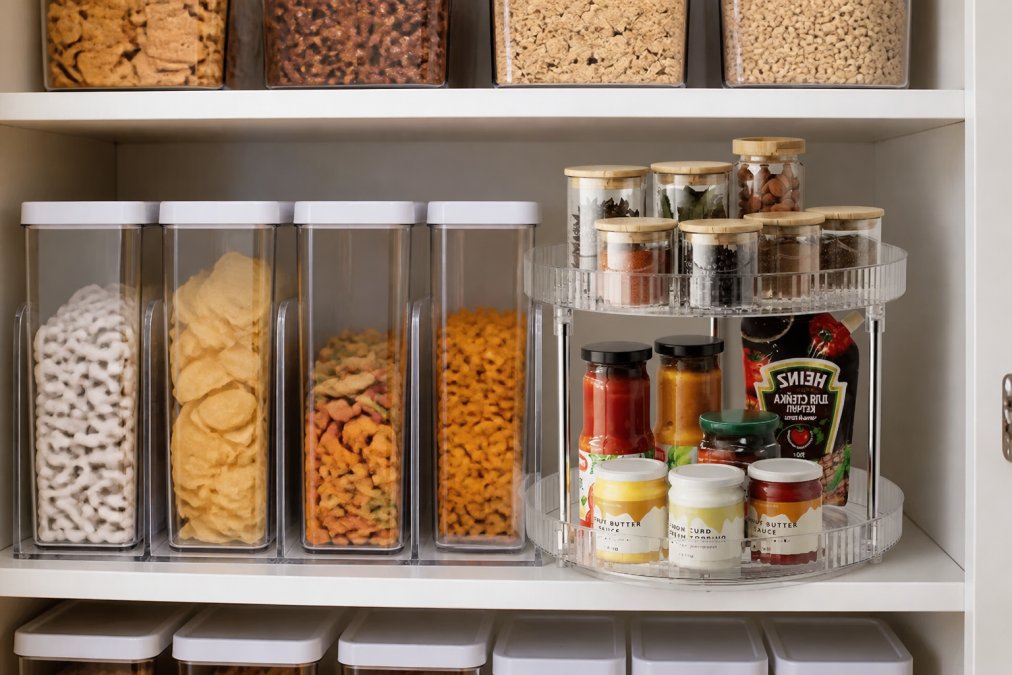
Create Zones by Category
Divide your deep shelves into zones by food category. Group all baking supplies together, all snacks in one area, breakfast items on an easy-to-reach shelf. Within each zone, arrange items front-to-back by frequency of use: daily items in front, weekly items in the middle, seasonal items in back. This prevents reaching past what you need to get what you want.
Use stackable organizers to contain items so they don't topple and to create clear boundaries between zones.
Use Shelf Dividers and Riser Organizers
Shelf dividers create vertical barriers that stop items from sliding backward and getting lost. A simple acrylic divider costs just a few dollars and prevents forgotten duplicates.
Riser organizers, tiered shelves that sit on top of your existing shelf, create a second level of visibility. Instead of stacking items flat, risers let you see everything at once. Adjustable shelf risers let you customize height to match your actual shelf spacing, eliminating gaps and wasted air space.
Install Stackable Pantry Bins for Decluttered Storage
Stackable bins contain loose items, create visual order, and maximize vertical space by letting you stack containers on top of each other.
Choosing the Right Bin Size and Material
Measure your shelf width. If your shelf is 36 inches wide, you might fit three 12-inch bins across or two 18-inch bins. For depth, match your bin depth to your shelf depth whenever possible. Standard pantry shelves are usually 12-14 inches deep.
Material matters. Clear plastic bins let you see contents without opening them. Opaque bins hide clutter but require labels. Wire bins offer visibility and airflow but don't contain crumbs. Fabric bins look nice but can absorb odors. Choose based on what you're storing.
Consider weight capacity if stacking bins. Most plastic bins hold 10-15 pounds safely. The bottom bin must support the weight of bins above it. Reinforced bins cost more but prevent collapse.
Labeling and Inventory Systems
Labels transform bins from mystery boxes into a functional system. Use a label maker or masking tape with permanent marker. Write the category and contents. Add dates to perishable items: "Opened: June 2026" tells you when to replace flour.
Create a simple pantry inventory list and post it inside your cabinet door or on your phone. When you use the last item from a bin, check it off. This prevents "I thought we had more" moments and helps with meal planning.
Vertical Storage Solutions Using Wall-Mounted Pegboards
Pegboards mount directly to your wall and accept any combination of hooks, baskets, and shelves. Unlike built-in cabinets, pegboards work in rentals and adjust instantly if needs change.
Mount your pegboard at eye level, roughly 48-60 inches from the floor. This puts most-used items within easy reach and keeps heavier items from being stored above head height. Use sturdy wall anchors or hit studs directly. A loaded pegboard can weigh 30-40 pounds.
Start with frequently-used items on top: measuring cups, mixing spoons, frequently-used spices. Use the middle section for medium-weight items like small mixing bowls or canned goods. Keep the bottom section for heavier baskets or less-frequently-accessed items.
Pegboard hooks come in various sizes. S-hooks work well for hanging bags of dry goods. Basket hooks hold small bins. Shelf brackets create small display shelves. Mix and match based on what you're storing. Start with fewer hooks than you think you need; overcrowding defeats the purpose.
In rental situations, use adhesive-backed hooks or damage-free mounting strips rated for your pegboard's weight. Test with lighter items first.
Over-the-Door Pantry Organizers for Extra Capacity
Over-the-door organizers mount on the inside or outside of your pantry door and hold surprising amounts of items in a footprint that costs you nothing.
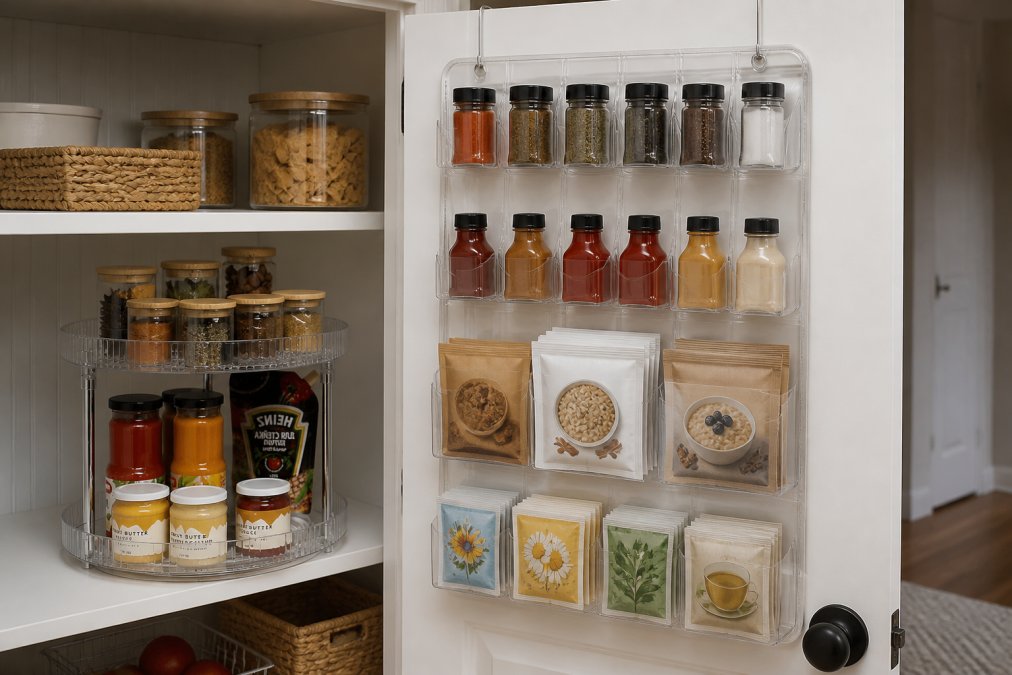
Choose organizers with clear pockets so you can see contents without opening them. A 12-pocket organizer holds roughly 24-30 items. Use it for spices, tea, instant oatmeal, soup packets, or frequently-used small items.
Weight matters with over-the-door organizers. Keep items under 1 pound per pocket. Never store items heavier than 2-3 pounds total. Check your door clearance before buying, some organizers hang 3-4 inches below the door bottom. If your pantry shelves sit close to the floor, the organizer might hit them.
Over-the-door organizers work exceptionally well for rentals. They require no drilling, no wall damage, and install in 60 seconds. When you move, you take them with you.
Rotating Spice Racks and Turntable Organizers
Spices are the pantry item most people struggle with. They're small, numerous, easy to forget about, and take up disproportionate space if not organized. A rotating spice rack brings every jar within reach without digging or searching.
The Double-Layer Rotating Spice Rack from The Reset Aisle holds roughly 24 jars on two tiers and spins a full 360 degrees. Instead of reaching past front-row jars to find what's in back, you spin the rack and the back row becomes the front. This eliminates buying duplicate spices because you forgot you had them.

Turntable organizers work the same principle for any small items: condiments, extracts, baking supplies, or medications. A 10-inch turntable fits on most pantry shelves and uses vertical space efficiently. Because everything rotates to you, you use less depth than a traditional shelf arrangement.
These organizers work best on shelves with at least 12 inches of clearance above them. The advantage is they make inventory visible instantly, so you know what you have and what you need to buy.
Weight Capacity and Safety Considerations for Vertical Storage
Not all vertical storage solutions are created equal. Before loading up your organizers, understand what your pantry can actually support.
Standard kitchen shelving typically supports 25-50 pounds per linear foot. A shelf holding six 2-pound boxes of cereal, four 1-pound bags of flour, and canned goods quickly reaches 30-40 pounds. If using multiple shelves with organizers, weight adds up fast.
Check your shelf brackets. Heavier-duty brackets (typically steel L-brackets with multiple bolts) support more weight than lightweight brackets. If brackets show signs of bending or stress, redistribute weight or upgrade them.
Wall-mounted pegboards need stud-backing for heavy loads. Drywall anchors alone might hold 20-30 pounds. For multiple baskets and items, aim for studs using toggle bolts or lag bolts rated for your pegboard's weight.
Over-the-door organizers should never exceed 3-5 pounds total. Overloading can damage the door frame over time.
Stackable bins present a specific safety concern. If stacking three or four bins, the bottom bin bears the full weight of everything above it. Check manufacturer specifications for stacking capacity, not just weight capacity.
Secure tall organizers to prevent tipping. If you have a pegboard, wire shelving unit, or tall organizer over 4 feet high, anchor it to the wall or cabinet. This is especially important in homes with children or pets.
Rental-Friendly Vertical Storage Options
If you rent, permanent modifications like pegboard installation or shelf replacement aren't options. But you can still achieve significant vertical storage improvements using damage-free solutions.
Adhesive-backed hooks and command strips hold surprising weight when installed correctly. A single command strip rated for 5 pounds can hold a small basket. Multiple strips can support a lightweight shelf. Follow installation instructions precisely: clean the surface, press firmly for 30 seconds, and wait 24 hours before loading.
Tension rods mounted between shelves create hanging space for items in bags or on hooks. Use them to hang spice bags, tea bags, or small pouches. They cost just a few dollars and leave no marks when removed.
Freestanding organizers require no installation. The Double-Layer Rotating Spice Rack from The Reset Aisle sits on a shelf and spins freely without mounting. Wire shelving units stand on their own. These options give you vertical storage control without landlord approval.
Stackable bins and containers don't require installation either. You're simply organizing what's already there. This is the most rental-friendly and often most cost-effective approach.
Over-the-door organizers mount on the door itself, not the wall or frame. They're completely removable and leave no damage, making them ideal for rentals.
The challenge with rental-friendly solutions is they sometimes offer less weight capacity than permanent installations. Plan accordingly and distribute weight across multiple attachment points rather than concentrating it in one spot.
Small pantries feel chaotic because items are scattered across deep shelves, hidden in back corners, or stacked haphazardly. The Reset Aisle's vertical storage solutions, including the Double-Layer Rotating Spice Rack and modular bin systems, turn that chaos into a functional, accessible pantry. By measuring your space, choosing the right organizers, and implementing a simple labeling system, you reclaim control of what's in your pantry and eliminate the overwhelm of searching for items. Start with one shelf, one zone, and one organizer type. You'll see results within a week, and that momentum carries you through organizing the rest of your pantry.
Frequently Asked Questions
How do you utilize vertical space in a pantry?
Start by measuring your pantry height and width, then layer storage upward using stackable bins, adjustable shelving, and wall-mounted organizers. Place frequently used items at eye level, heavier items on lower shelves, and lighter seasonal goods higher up. Use the full floor-to-ceiling space with pegboards or tension rods to hang smaller items. Clear containers and labeling help you see what you have without pulling everything out.
What are the best vertical storage solutions for small spaces?
The most effective solutions combine multiple strategies: stackable pantry bins to maximize shelf depth, over-the-door organizers for unused space, rotating spice racks like the Double-Layer Rotating Spice Rack ($24.99) to reduce footprint, and wall-mounted pegboards for hanging frequently used items. Adjustable shelving lets you customize spacing to fit your items, while under-shelf baskets and drawer organizers capture wasted vertical space between existing shelves.
How do you organize deep pantry shelves efficiently?
Organize deep shelves by creating zones: place daily-use items in the front, backup supplies in the back, and use riser organizers to elevate back-row items for visibility. Shelf dividers prevent items from toppling forward. Group similar categories together and use clear, labeled containers so you can identify contents without opening them. Consider a rotating turntable for frequently accessed items like spices to eliminate the need to reach to the back.
Are rental-friendly vertical storage solutions effective for small pantries?
Yes. Adhesive hooks, tension rods, over-the-door organizers, and free-standing stackable units require no drilling or permanent installation. These options work well in rental spaces and can be moved when you relocate. Avoid wall-mounted pegboards that require anchors; instead, use removable command strips or choose freestanding shelving units. The key is selecting modular organizers that don't rely on permanent fixtures to maximize your vertical footprint.
This article was written using GrandRanker