

Table of Contents
- Why Durable Storage Bins Matter for Busy Households
- Key Features That Make Storage Bins Last
- Best Stackable Storage Bins for Toys and Seasonal Items
- Best Practices for Labeling Storage Bins
- Storage Solutions by Room: Where Bins Work Best
- Durability That Lasts: Weathertight Seals and Secure Latches
- Safety Considerations for Households with Children
- Making Your Storage System Actually Stick
Last Updated: August 23, 2026
Why Durable Storage Bins Matter for Busy Households
Clutter drains mental energy and makes everything feel harder. For busy families juggling work, kids, and endless tasks, the difference between functional storage and failure comes down to durability. Cheap bins crack under weight, lids won't seal, and handles snap off. Real durable storage bins hold up through years of daily use, protecting what matters without constant maintenance.
At The Reset Aisle, we understand that busy families need storage solutions that actually work. You need containers that handle heavy seasonal items, toys moved constantly, pantry goods that shift, and the sheer volume of household stuff. This guide covers what makes durable storage bins last, where they work best, and how to build a system that sticks.
Key Features That Make Storage Bins Last
Material Quality and Impact Resistance
Quality storage bins are made from polypropylene, engineered to resist impact and temperature changes (peer-reviewed research). It won't become brittle in cold basements or warp under sunlight, critical for seasonal spaces.
Impact-resistant polypropylene means bins won't crack when bumped against doorframes, dropped during moves, or stacked with heavy items. Thicker plastic walls resist brittleness over time; thin-walled budget bins fail faster. Look for reinforced corners and substantial-feeling plastic.
Clear polypropylene lets you see contents without opening bins, reducing search time. Opaque bins hide clutter or protect light-sensitive items but require labeling.
Weight Capacity and Load-Bearing Strength
Every durable bin has a weight capacity rating that determines whether it collapses under stacked containers or holds heavy seasonal items. A bin rated for 50 pounds safely holds that weight when stacked (the FDA). Exceeding the rating causes bottom corners to stress and walls to bow inward.
Weight capacity also affects safe stacking height. A weak bin limits you to 2-3 containers high; heavy-duty options stack 5-6 safely. For families storing holiday decorations or winter clothing, items easily weighing 40-50 pounds, adequate weight capacity prevents constant replacement.
Stackability and Space Optimization
True stackability means bins have interlocking features or recessed bases that fit into lids below, creating stability without sliding. Without this design, stacked bins shift and topple, especially when pulling from the middle of a stack.
Nesting capability lets bins fit inside each other when empty, saving space during off-season storage. Some bins do both, ideal for families with variable storage needs.
Best Stackable Storage Bins for Toys and Seasonal Items
Choose bins combining durability with practical family features: secure latches kids can open without breaking, clear sides for finding toys without dumping everything, and sufficient weight capacity for household volume.
The best bins feature molded handles on sides and front, making it easier for kids to pull and replace them. Ergonomic grip design reduces hand fatigue when moving multiple containers.
For seasonal items, prioritize weathertight seals and airtight construction protecting contents from dust, moisture, and temperature fluctuations. A 50-liter bin works for most storage, but families with young children or large seasonal collections benefit from 70-100-liter containers. Remember that bigger bins mean heavier weight when full, so account for load distribution on shelving.
Best Practices for Labeling Storage Bins
Labeling is where most family storage systems fail. Six months after organizing, no one remembers what's in which bin. Suddenly you're opening multiple containers searching for one item.
Use clear, specific labels describing exactly what's inside. Instead of "misc," write "holiday decorations, lights and garland." Instead of "toys," write "building blocks and Legos." Specificity saves time and prevents unnecessary opening.
Use a label maker or waterproof labels that won't fade or peel, especially in humid basements and garages. Label all four sides of bins on high shelves or at closet backs so you can identify contents without moving them.
Color-coding adds another layer. Assign one color to holiday items, another to seasonal clothing, another to toys. This visual system helps busy households find things quickly. Keep a master inventory list documenting what's in each bin, updating it when you reorganize.
Storage Solutions by Room: Where Bins Work Best
Garage Organization and Heavy-Duty Storage
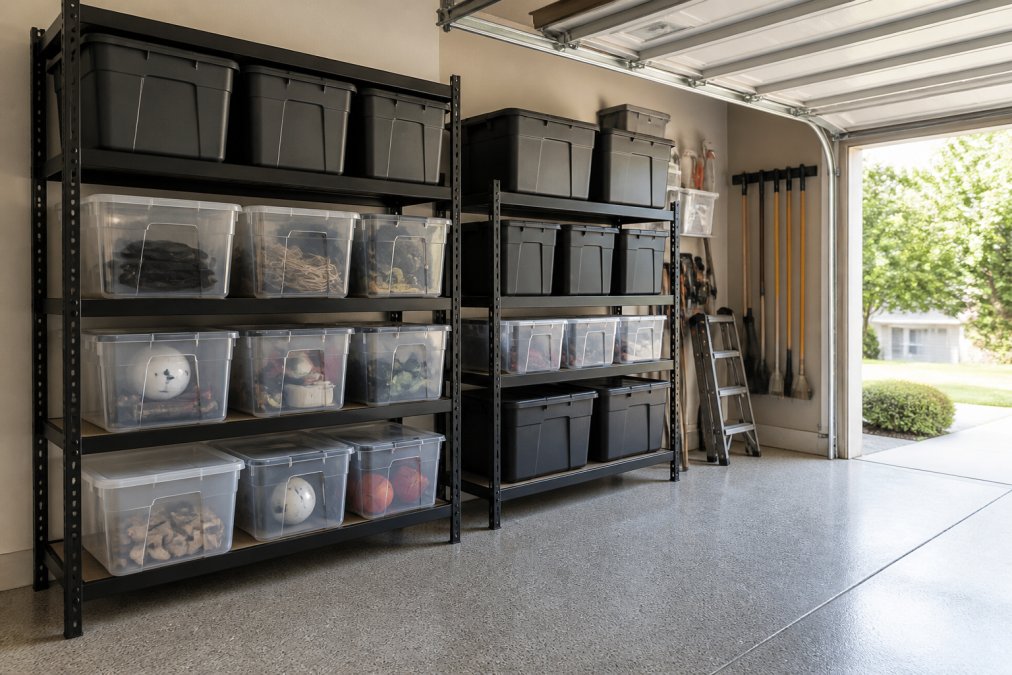
Garages demand heavy-duty, weathertight bins. Temperature swings, humidity, and potential moisture require containers with secure latches and airtight seals. Clear bins work well because garages often have limited lighting, letting you see contents at a glance.
Stackability is crucial in garages with limited vertical space. Metal shelving paired with stackable bins maximizes wall space. Heavy-duty bins rated for high weight capacity prevent collapse when stacking tools, paint cans, or automotive supplies.
Basement and Under-Bed Storage
Basements present moisture challenges with fluctuating humidity and potential water intrusion. Under-bed storage faces limited vertical space and frequent sliding in and out.
For basements, prioritize airtight seals and moisture-resistant materials (the CDC). Weathertight bins protect stored items from mold and mildew. Opaque bins hide dust and protect contents from light exposure.
Under-bed storage requires low-profile bins fitting 8-12 inches of clearance. Look for low-profile stackable options designed specifically for under-bed use with smooth bottoms and wheels for easy sliding. Weight capacity still matters even though bins aren't stacked as high.
Closet Storage and Vertical Space
Closets are prime real estate for vertical storage. Most have wasted space above hanging rods and along upper shelves. Stackable bins transform this into functional storage.
Clear bins maximize closet value because you see contents without opening containers. Closets have stable temperature and humidity compared to garages or basements, so standard polypropylene bins work well. Focus on stackability and secure latches.
Avoid stacking bins so high you can't safely reach the top container. Most people comfortably access bins stacked 4-5 high on closet shelves.
Durability That Lasts: Weathertight Seals and Secure Latches
Weathertight seals create airtight barriers protecting contents from dust, moisture, and pests, critical for seasonal storage and long-term items. Quality seals use rubber gaskets or silicone liners maintaining effectiveness for 5+ years of regular use.
Secure latches keep lids from popping off during transport or stacking. Flimsy latches crack, loosen, or fail to catch properly. Look for reinforced plastic or metal components. Test latches before purchasing; they should feel solid, not loose or wobbly.
Safety Considerations for Households with Children
Heavy bins stacked too high create tipping hazards. Lids requiring excessive force can pinch fingers. Choose bins with smooth edges and rounded corners, especially for young children.
Molded handles should fit small hands appropriately. Secure latches should be child-friendly but not so loose that lids fall unexpectedly. Some families prefer lidless bins for toy storage, eliminating finger-pinching risks while trading dust protection.
Weight capacity matters for child safety. Overstuffed, unstable bins are more likely to tip when children pull them from shelves. Keep frequently used bins at eye level or lower for kids, avoiding step stools that create safety issues.
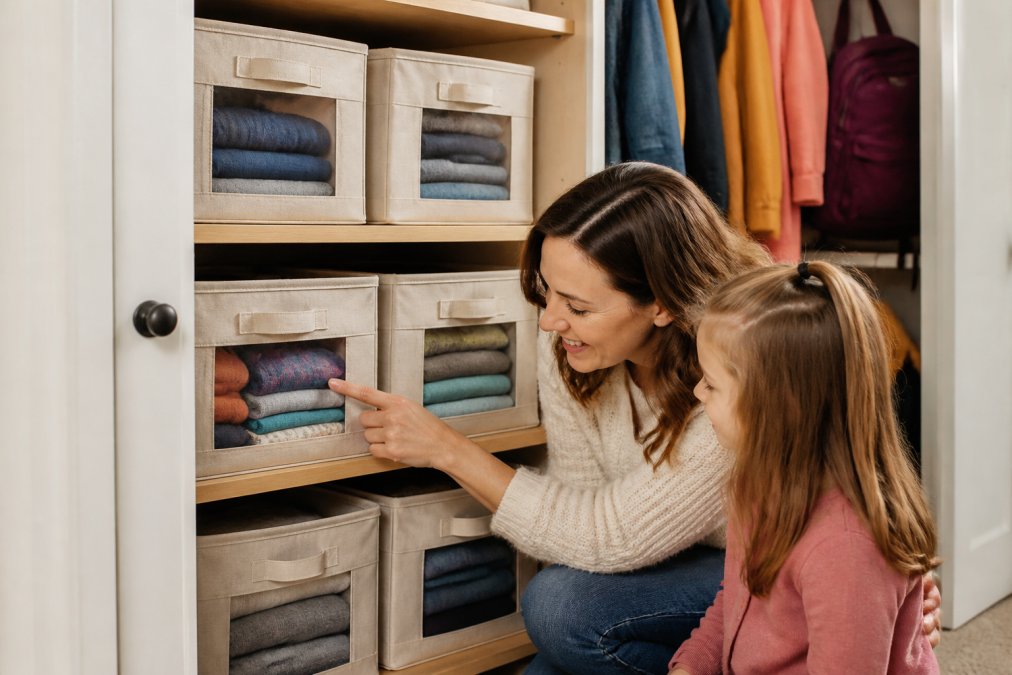
Label bins with pictures and words for younger children who can't read yet, helping them find items and return them independently.
Making Your Storage System Actually Stick
Most family storage systems fail because they become too complicated to maintain. The secret to long-term success is building a system easy enough to maintain without constant effort.
Start by decluttering. Remove broken, outdated, or genuinely unused items before organizing. Create a system working with your family's habits, not against them. Toy bins should be easy to access and simple to put away for young kids.
Assign ownership. When everyone knows whose responsibility a storage area is, the system stays maintained. Review the system quarterly, spending 15 minutes checking that items are where they should be and labels still make sense. This prevents gradual drift that causes systems to fail.
The best storage system is one your family actually uses. Durable bins make this possible by staying functional year after year, but real durability comes from a system simple enough that your family will maintain it.
Building an organized home starts with storage solutions that work as hard as you do. The Reset Aisle offers durable storage bins designed for real family life, containers that handle weight, resist moisture, and keep your belongings protected for years. When you choose bins with impact-resistant materials, secure latches, and stackable design, you're not just organizing your space; you're creating a system that actually lasts. Start your reset with storage bins engineered for durability, and experience the calm that comes with a truly organized home.
Frequently Asked Questions
What features should I look for in durable storage bins?
Look for bins made from heavy-duty polypropylene or resin with reinforced corners and impact-resistant construction. Check the weight capacity to ensure it matches your needs, and verify that lids have secure latches or weathertight seals. Stackable designs with molded handles make them practical for busy families. Clear bins let you see contents at a glance, while opaque options hide clutter. Test the handles for ergonomic grip before purchasing.
Are clear or opaque storage bins better for family organization?
Clear bins work best for frequently accessed items like toys or seasonal decorations because you can quickly find what you need without opening each one. Opaque bins are ideal for closets and under-bed storage where aesthetics matter or for items you rarely access. Many families use both: clear bins for active rotation and opaque for long-term storage. Consider your room's visual style and how often you'll need to locate items.
How do I choose the right size storage bin for kids' toys?
Measure your available space first, then match bin dimensions to that area. For toys, medium to large bins (27-50 gallons) work well because kids can easily reach items and put things back. Smaller bins are better for specific categories like building blocks or action figures. Test that a child can comfortably lift a partially filled bin. Stackable designs help maximize vertical space in small closets or bedrooms without creating a clutter problem.
Can durable storage bins really help my family stay organized long-term?
Yes, but only if the system matches your household's habits. Durable bins prevent the frustration of broken containers that force you to reorganize mid-year. The key is labeling clearly, assigning specific categories to each bin, and involving family members in the system. Start with one room or zone, establish the routine, then expand. Families report that quality bins reduce overwhelm because items stay contained and visible, making it easier to maintain order over time.
This article was written using GrandRanker