

Table of Contents
- Why Pantry Organization Fails (And How to Make It Stick)
- How to Organize Deep Pantry Shelves for Accessibility
- Best Pantry Storage Containers for Longevity
- Create a Pantry Organization Maintenance Checklist
- Establish Zones and Labeling Systems That Last
- Monthly and Seasonal Maintenance Routines
- Common Mistakes That Undo Your Pantry Organization
- Conclusion
- Frequently Asked Questions
Last Updated: September 1, 2026
Why Pantry Organization Fails (And How to Make It Stick)
Most people organize their pantry once and expect it to stay that way. It doesn't. Within weeks, items migrate back to chaos. The real reason isn't laziness, it's that nobody plans for maintenance. You set up a beautiful system, feel accomplished, then move on. Six months later, you're back to digging through expired cans and forgotten jars in the back.
The difference between a pantry that stays organized and one that reverts to chaos comes down to one thing: a maintenance routine. How to maintain pantry organization long-term isn't about buying prettier containers, it's about building habits that stick.
This guide walks you through the exact systems that prevent pantry drift. You'll learn which storage containers hold up over time, how to set up zones that make sense for your household, and the specific maintenance routines that keep everything in place. By the end, you'll have a pantry that works for you, not against you.
How to Organize Deep Pantry Shelves for Accessibility
Deep pantry shelves are a blessing and a curse. They hold more, but items disappear into the back. The best way to organize them is to accept that depth is the enemy and work against it with visibility and layering.
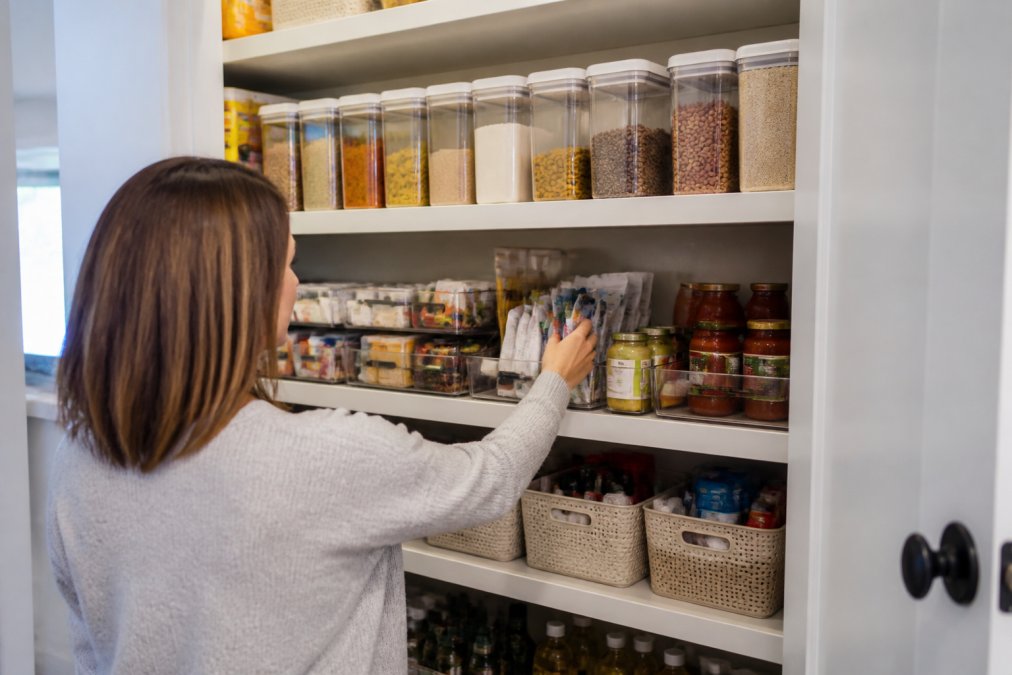
Start by using tiered shelf risers or stacking containers. This lifts the back row forward so nothing gets lost in shadow. A two-tier system means your back row is now visible from eye level. Pair this with clear containers so you can see what's inside without opening anything. Opacity is the enemy of maintenance, if you can't see it, you'll forget it exists and buy duplicates.
Organize by category, not by size. Group all baking supplies together, all snacks in one zone, all canned goods in another. This creates natural boundaries that make restocking intuitive. When someone puts something away, they know exactly where it goes. When it's time to do inventory, you can scan each zone quickly rather than scanning the entire pantry.
Use the FIFO method (First-In, First-Out) on each shelf (usda.gov). Place newer items behind older ones so older stock gets used first. This prevents expired items from accumulating at the back. Label the front of containers with the purchase date if you're storing bulk items. A simple marker on masking tape takes 10 seconds and saves you from discovering mystery containers months later.
For deep shelves specifically, avoid stacking items more than two layers high unless you use pull-out baskets. Stacking creates blind spots where items vanish. A pull-out basket lets you slide the entire layer forward to see what's behind it. The Reset Aisle's organizers are designed for this exact problem, they maximize depth without sacrificing access.
:::pro Deep shelves work best when you treat them as two shallow shelves instead of one deep one. Use vertical dividers to create zones, and your family will actually use the system instead of abandoning it. :::
Best Pantry Storage Containers for Longevity
The container you choose determines whether your system lasts six months or six years. Cheap containers warp, crack, or lose their lids. Good containers are an investment that pays off through consistency.
Clear containers are non-negotiable. You need to see what's inside and how much is left. Opaque containers create a maintenance problem, you'll end up with duplicates because nobody knows what's already there. Pop-top containers work better than lids you have to remove entirely because they're faster to open and close, which means people actually use them instead of leaving items loose.
Look for containers with airtight seals if you're storing anything that goes stale or attracts moisture (the FDA). Baking supplies, flour, and sugar especially benefit from sealed storage. The seal also keeps pantry pests out, which is a long-term maintenance issue most people don't think about until they have one.
Stackable containers save vertical space, but only if the stack is stable. Wobbly stacks get knocked over, spilling contents and creating frustration. Better to use fewer containers that don't shift than many that do. Modular storage systems let you add containers as you need them without committing to a full set upfront.
Size matters more than aesthetics. A container that's slightly too large for your shelf creates wasted space. One that's too small means you'll need multiple containers for the same item, which defeats the purpose of organization. Measure your shelves before buying. The Reset Aisle's container selection is designed to fit standard shelf depths and widths, so they work the first time without gaps or awkward spacing.
Avoid containers with complicated locking mechanisms. Every extra step reduces the chance people will actually put things back properly. Simple, intuitive containers get used consistently. Complex ones get abandoned.
Create a Pantry Organization Maintenance Checklist
A maintenance checklist is what separates pantries that stay organized from ones that gradually fall apart. Without it, you're relying on memory and good intentions. Both fail.
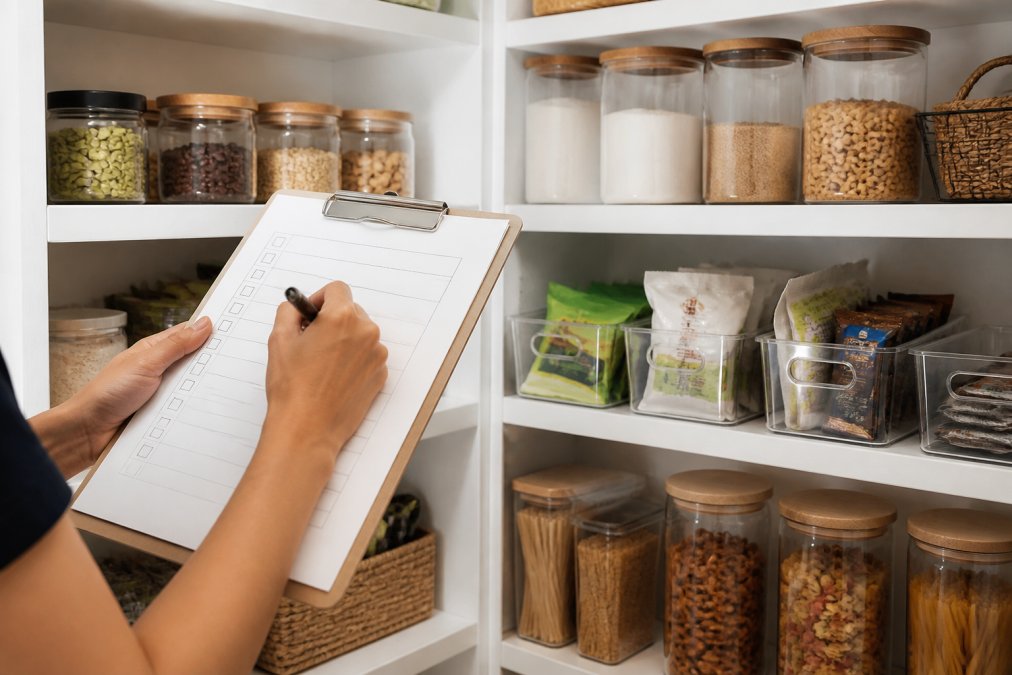
Your checklist should have two components: a weekly quick scan and a monthly deep check.
Weekly Quick Scan (5 minutes):
- Check that items are in their designated zones
- Wipe up any spills or crumbs
- Verify that containers are sealed properly
- Return any items that migrated to the wrong shelf
Monthly Deep Check (20-30 minutes):
- Check expiration dates and remove expired items
- Reorganize any zones that have drifted
- Refill containers that are running low
- Take inventory of what you're running out of
- Clean shelves and containers
Print this checklist and post it inside your pantry door. Assign it to a specific day of the week so it becomes routine. Many families do it on Sunday evening or Monday morning. The specific day matters less than consistency.

A maintenance checklist prevents the slow decay that turns an organized pantry into a chaotic one. Without it, small problems accumulate. One item out of place becomes two becomes five, and within weeks, the entire system has drifted. A 20-minute monthly check stops that drift before it starts.
Establish Zones and Labeling Systems That Last
Zones create order. Without them, people put things wherever they fit, and your system collapses. With zones, restocking becomes automatic, people know exactly where things go.
Create zones based on how your household actually uses the pantry, not how it's supposed to work theoretically. If your kids grab snacks constantly, put the snack zone at their eye level. If you bake weekly, put baking supplies together at a convenient height. If you meal prep, keep proteins and grains in one accessible area.
Label everything. Use a label maker or a simple marker on masking tape. Labels serve two purposes: they tell people where things go, and they tell you what's supposed to be there when something's missing. When a label is empty, it's time to restock. Without labels, people guess, and guessing is how systems fail.
Label containers with contents and purchase date. Label shelves with category names. Label zones with what belongs there. This seems excessive until you realize it's the difference between a system that works and one that requires constant correction.
Use consistent label placement, always on the front left corner of containers, always at eye level on shelves. Consistency makes the system intuitive. When everything follows the same pattern, people follow it without thinking.
Accessibility matters for long-term maintenance. If your pantry has awkward corners or hard-to-reach shelves, items will accumulate there and get forgotten. Use those spaces sparingly, only for items you access infrequently. Frequently used items should be at arm's reach. This isn't just about convenience, it's about preventing decay. Items that are easy to access get used and restocked. Items that are hard to reach get forgotten and expire.
Monthly and Seasonal Maintenance Routines
Consistency beats perfection. A simple routine done every month beats a complicated one done once a year.
Monthly Routine (third Sunday of each month works well):
Start with the expiration date check. Go through each zone and pull anything past its date. This takes 10-15 minutes and prevents the slow accumulation of expired items that makes pantries feel chaotic.
Next, reorganize zones that have drifted. Items migrate. Snacks end up with baking supplies. Canned goods get mixed with pasta. Spend 10 minutes putting everything back in its zone. This is maintenance, not reorganization, you're not changing the system, just resetting it.
Finally, do a quick inventory of what's running low. Make a note of items you'll need to buy soon. This prevents the frustration of running out of essentials and having to make emergency trips.
Seasonal Routine (spring and fall):
Twice a year, do a deeper clean. Remove everything from one shelf at a time, wipe down the shelf and containers, check for pests or damage, and put everything back. This catches problems early, a small pest issue or a cracked container becomes obvious during a seasonal clean.
Check your labeling system. Faded labels need refreshing. Labels that no longer match the contents need updating. This keeps your system accurate and trustworthy.
Assess whether your zones still match how your household actually uses the pantry. Seasons change eating patterns. Summer might mean more snacks and grains for salads. Winter might mean more canned goods and baking supplies. Adjust zones seasonally if it makes sense.
Common Mistakes That Undo Your Pantry Organization
Understanding what fails helps you avoid the same traps. Most pantry systems don't fail because they're poorly designed, they fail because people make predictable mistakes during maintenance.

The first mistake is buying containers before measuring shelves. You end up with containers that don't fit, creating gaps and wasted space. Measure first. Buy second.
The second mistake is using opaque containers. You can't see what's inside, so you buy duplicates. Within weeks, you have three half-full containers of the same item scattered across the pantry. Visibility prevents this immediately.
The third mistake is creating zones that don't match how your household works. If you create a "baking zone" but your family never bakes, that zone will become a dumping ground for everything else. Design zones around actual behavior, not ideal behavior.
The fourth mistake is over-complicating the system. If your maintenance routine takes more than 30 minutes per month, you won't stick with it. Simple systems survive. Complex ones get abandoned.
The fifth mistake is not labeling. You think you'll remember where things go. You won't. Your family definitely won't. Labels are the difference between a system that works on autopilot and one that requires constant correction.
The sixth mistake is treating organization as a one-time event. You organize once, feel proud, and then ignore it. Six months later, chaos has returned. Organization isn't a destination, it's a maintenance practice. The system only works if you maintain it.
The seventh mistake is storing items you don't actually use. Expired spices, forgotten ingredients, and specialty items you bought for one recipe accumulate. They take up space and create clutter. Before organizing, purge. Declutter expired items, donate things you won't use, and keep only what actually gets used.
Conclusion
A pantry that stays organized requires two things: a system that matches how your household actually works, and a maintenance routine that takes 30 minutes per month. The Reset Aisle helps you build both. Our storage containers are designed for deep shelves and awkward spaces, with clear visibility so you always know what you have. Our organizing systems pair with a simple maintenance checklist that prevents the slow decay most pantries experience.
Start your reset with The Kitchen Reset, which combines a double-layer rotating spice rack and under-sink organizer to tackle two of the worst clutter spots in any kitchen. From there, build your zones, establish your labels, and commit to a 30-minute monthly check. That's how to maintain pantry organization long-term, not through willpower, but through systems that make the right choice the easy choice.

| Task | Frequency | Time Required |
|---|---|---|
| Weekly quick scan | Every week | 5 minutes |
| Monthly deep check | Once per month | 20-30 minutes |
| Seasonal refresh | Twice per year | 45-60 minutes |
| Expiration date purge | Monthly | 10-15 minutes |
| Zone reorganization | Monthly | 10 minutes |
Frequently Asked Questions
Q: What are the best storage containers for maintaining pantry organization long-term?
A: Clear, airtight containers work best because you can see what's inside and how much remains, reducing duplicate purchases and food waste. Look for stackable, durable options with secure seals that protect against moisture and pests. Pop-top containers are ideal for frequently used items like cereals and snacks. Avoid flimsy plastic that cracks easily or containers without clear visibility, these fail within months because you can't see what you have.
Q: How often should you reorganize your pantry to maintain the system?
A: A full reorganization isn't necessary if you maintain it properly. Instead, do a 15-minute weekly check to return items to their zones and wipe spills. Once monthly, purge expired items and check labeling. Deep clean and reorganize seasonally, roughly every three months, to catch items pushed to the back and adjust zones based on what you actually use. This rhythm keeps chaos from building up.
Q: What's the best way to label pantry items for long-term maintenance?
A: Use waterproof labels with large, clear text that includes the item name and expiration date. Label both the container and the shelf zone it belongs to. This prevents items from getting lost in deep shelves and makes it easy for anyone in your household to return things correctly. Update labels when you reorganize, faded or incorrect labels cause the system to break down quickly.
Q: How do you keep a pantry organized when you have kids or a busy household?
A: Simplify zones to match how your household actually uses items, snack station, baking supplies, bulk items, rather than overly complex categories. Use clear containers so kids can see options without opening everything. Place frequently grabbed items at eye level and within easy reach. Set a family rule: return items to their zone immediately after use. Make it easier to do the right thing than to leave things out, and the system will maintain itself.
This article was written using GrandRanker